

Top News
Report: War on Iran Hinders Trump's Gaza Plan Talks
SadaNews - Talks aimed at advancing U.S. President Donald Trump's plan regarding the Gaza Strip have stalled since last week, following the U.S.-Israeli attack on Iran, which has widened the scope of the war in the Middle East to include Lebanon and Gulf countries.
Reuters reported today, Monday, citing three informed sources, that negotiations mediated by regional and international parties have faltered with the outbreak of war on Iran, including discussions concerning several key files in the plan, such as the disarmament of Hamas.
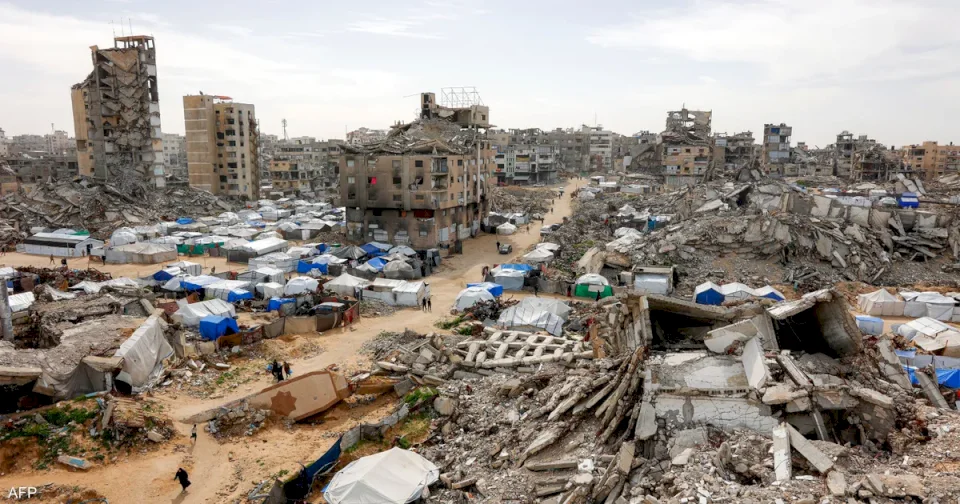
This plan is part of a broader initiative proposed by Trump to end the war on Gaza, which he considers one of the key objectives of his foreign policy. The halt comes at a time when the plan had recently secured commitments of billions of dollars for the reconstruction of Gaza from Gulf countries, which are currently facing the repercussions of military confrontations in the region.
The American plan is, in part, based on a proposal that calls for Hamas to surrender its weapons in exchange for amnesty, a step that Washington believes could open the door for reconstructing the sector and expanding Israeli military withdrawal. In this context, intermediaries from the White House have been engaging in undeclared and indirect communications between Israel and Hamas to discuss this file.
The three sources, who requested anonymity, indicated that talks related to this issue and others have stopped since the outbreak of war with Iran on February 28, noting that the matter of the halt in disarmament negotiations had not been previously disclosed.
In contrast, a U.S. official denied that the talks had stopped, stating that "discussions on disarmament are ongoing and positive," adding that the intermediaries consider this step "vital to enabling the reconstruction of Gaza."
However, Zaha Hassan, a researcher at the Carnegie Endowment for International Peace in Washington, indicated that Gulf countries such as the UAE and Qatar, which pledged to provide funding for the peace council mission established by Trump, may reconsider these commitments in light of the current situation.
She added that these countries may question whether this "is a worthwhile expenditure at a time when they are trying to avoid rocket fire."
One source familiar with the work of Trump's "Peace Council" described the halt in negotiations as a "short and slight delay," explaining that disruptions in air travel in the region hinder the movement of intermediaries and representatives participating in negotiations, which were held frequently in Cairo.
The source added that the council believes, in the long run, that war could expedite the resolution of the disarmament issue by "weakening Iranian influence," which it claims has provided long-term financial support to Hamas.
Hamas Confirms Halt of Talks on Trump's Plan
Another source, a Palestinian official familiar with mediation efforts, stated that Hamas was preparing to hold a meeting with Egyptian, Qatari, and Turkish intermediaries on the same day that war broke out, but the meeting was canceled and no new date has been set.
A Hamas official also confirmed that talks related to Trump's plan for Gaza have been frozen for the time being, without providing additional details, while there was no immediate comment from the Israeli government.
A Trump administration official said that "the situation in the region has affected some flights, but discussions are ongoing and there is progress."
On the ground, the Israeli army continues its strikes in the Gaza Strip despite the outbreak of the war on Iran, citing what it describes as threats from Hamas, while Israeli aircraft continue to carry out raids in Iran and Lebanon.
According to health officials in Gaza, at least 20 Palestinians have been martyred in the sector since February 28.
Talaal Hamouda (46), who lives with his wife and five children in Jabalia in the northern sector, stated, "The moment the war ends, he (the Israeli) will come back to us at the same pace and the same violence."
Meanwhile, Hamas continues to assert its control over the areas it manages in Gaza since the outbreak of the war. Sources close to the movement indicated that its fighters have recently set up several ambushes for armed groups supported by Israel in the north and south of the sector, leading to the death of at least two individuals.
Concerns of a Possible Attack on Coordination Center in Kiryat Gat
Trump's Gaza plan began with a ceasefire in October and involves arrangements whereby Israel would control more than half of the territory of the sector, while other areas would remain under Hamas management. This initiative appeared to gain momentum in the weeks leading up to the war, including the reopening of the Rafah border crossing between Gaza and Egypt and new commitments for reconstruction.
A large part of the international coordination led by the United States regarding its policy towards Gaza takes place from a military complex led by Washington in Kiryat Gat, southern Israel. Foreign diplomats working there stated that the momentum accompanying the plan has diminished with the escalation of war with Iran.
Three diplomats added that the civilian-military coordination center has minimized its operations since the outbreak of war amid fears of a possible targeting by Iranian missiles.
The diplomats noted that senior U.S. officials are currently focusing on the war on Iran, which has led to less attention being given to the Gaza issue, despite ongoing discussions at the working level among the participating countries in hopes of resuming progress in the plan after the war ends.
Nathan Sachs, a fellow at the Middle East Institute in Washington, noted that "the ongoing interest from the Trump administration is the only thing that can keep the plan on track, and the war on Iran may undermine that." He added that the absence of this interest could lead to "very different outcomes and possibly a resumption of fighting."
 Follow the latest Sada News via Google News
Read Also

12 Martyrs in Gaza Strip since Dawn Today

A Series of Important Decisions Taken.. The Cabinet Discusses Developments in the Deterior...

Organizations of the Temple Prepare for the Largest Raid on Al-Aqsa on What is Called the...

Smotrich: Israel Has No Interest in Joining the War Against Iran

Occupation Issues Military Order to Seize 5 Dunams of Land in Jaba'

Axios: Proposal for a 10-day Ceasefire Between Washington and Tehran and Two Options for M...

In a Rapid Pace.. The Occupation Builds a Huge Earth Barrier Inside Gaza
