

Clive Crook: Iran War Raises Risks to the U.S. Economy to 'Acute' Level
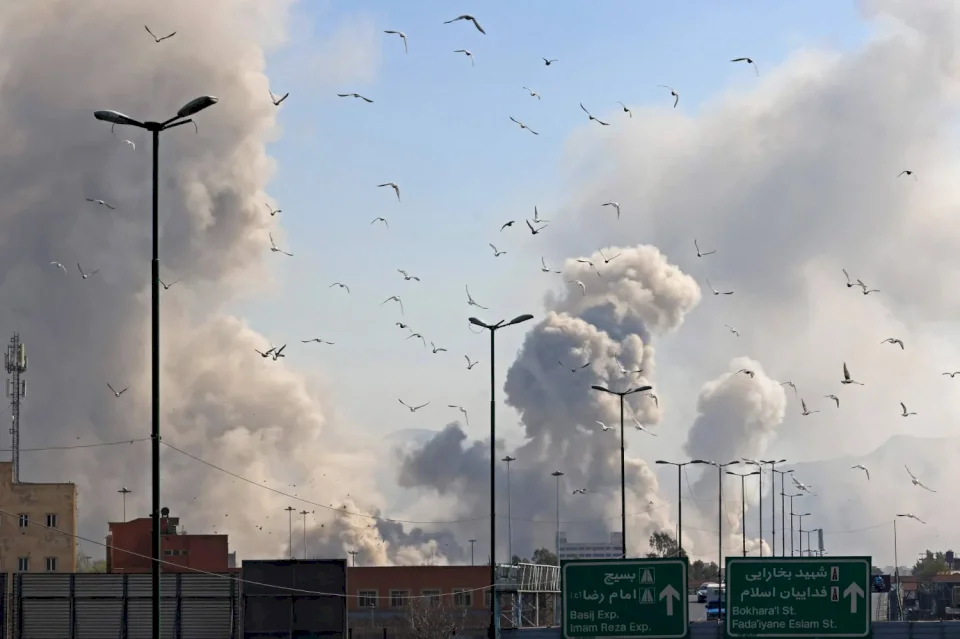
SadaNews - U.S. President Donald Trump's unprecedented decision to strike Iran and risk igniting a wider conflict in the Middle East raises the level of risk that the U.S. economy faces from "very high" to "acute." This new shock is not happening in isolation but adds additional pressures to a series of significant challenges already confronting the economy, reducing the chances of emerging from this phase without damage.
The immediate danger is the possibility of a sharp decline in financial markets that spirals out of control. In fact, such a correction had been anticipated for some time, given the apparent overvaluation of U.S. stocks, the burden imposed by the tariffs the administration has placed on the economy, along with deteriorating public finance outlooks and persistently high inflation. Now, the potential for a sharp increase in energy prices, disruption of trade flows, and rising political unrest globally is added to this mix.
U.S. Inflation Remains High
Inflation data released last week was already a cause for concern. The core Producer Price Index, which excludes food and energy, rose by 0.8% in January, a level much higher than expected. The components of this index play a role in the preferred measure of the Federal Reserve for gauging inflation, the core Personal Consumption Expenditures Index, which stood at 3% over the twelve months ending in December, significantly above the Federal Reserve's 2% target. The Institute for Supply Management on Monday also provided further evidence of pricing pressures, noting that manufacturing input prices are rising at the fastest rate since 2022.
If the surge in energy prices leads to a new wave of inflation, it would add to these already concerning pressures. Energy prices have risen with the onset of strikes on Iran, and analysts expect oil prices to exceed $100 a barrel, compared to around $65 before the attack began. As always, there is an optimistic scenario: if the campaign ends quickly followed by a new government in Tehran, the risk of future conflicts may reduce, and confidence in global energy infrastructure might improve, potentially pushing oil prices to levels lower than they were before the war. However, if the conflict drags on and expands, and energy facilities face ongoing attacks, or if the Strait of Hormuz is closed, a $100 per barrel price may be a more optimistic estimate than seems reasonable.
The specter of stagflation re-emerges
Echoes of the 1970s: sustained high oil prices could lead to a period of stagflation, meaning rising inflation alongside slowing growth, which is a conundrum that the Federal Reserve finds difficult to manage. While it's true that the United States has become a net exporter of oil today, which may mitigate the shock's impact on domestic growth compared to past experiences, the shock will still be global, and its net effect on the U.S. economy will remain inflationary and growth-stifling at the same time, as well as exacerbating existing inflationary pressures.
Such negative scenarios raise questions about fiscal policy's ability to absorb the shock. Whether the United States still possesses this capacity is highly questionable. Even before the Supreme Court struck down the tariffs that the administration imposed under the so-called "reciprocal treatment" policy, government borrowing forecasts were already approaching their limits. A budget deficit at 6% of GDP, despite the economy not suffering from high unemployment and interest rates being relatively stable, means that public debt - which is already nearing record levels - will continue to grow at a faster pace than the economy. This is the practical definition of what is called "unsustainability."
Cancellation of tariffs deprives the government of significant revenue
The court's cancellation of the administration's use of the International Emergency Economic Powers Act (IEEPA) will deprive the government of about $150 billion a year in expected revenue, an amount slightly more than could be raised by raising all income tax rates by a single percentage point. The government may also have to refund tariffs it has already collected. To make up for this shortfall, Trump announced a new global tariff of 10% rising to 15% under Section 122 of the Trade Act of 1974, and promised to conduct new "investigations" that could lead to additional taxes under other authorities, steps that threaten to disrupt trade agreements made with many partners. In short, the court ruling guarantees two things: lower revenues than anticipated, and a greater level of uncertainty regarding the future tariff regime.
However, the tariffs imposed under Section 122 cannot be applied for more than 150 days without congressional approval. They are also likely illegal because their justification - which is addressing "fundamental international payment issues" such as a large balance of payments deficit - does not actually apply to the United States. While the U.S. does have a large current account deficit, it is funded by a similar surplus in the capital account, meaning that there is no "balance of payments deficit" in the traditional sense of the term. Additionally, the other authorities available for imposing tariffs are also legally questionable as they largely depend on the presence of an urgent need to disrupt trade, a claim that is difficult to prove at the moment.
Uncertainty... the knockout blow?
Nevertheless, Congress does not seem overly concerned with this broad use of trade powers by the president. After granting the White House this limited authority theoretically, it now stands by watching as questionable emergencies are declared one after another. However, the lawsuits, along with a cautious stance from the Supreme Court, are beginning to play the role that Congress was supposed to fulfill. The recent ruling reveals the fragility of the administration's broader tariff strategy. As long as revenues from import taxes cannot be relied upon as a source of income, and as long as Congress is not compelled to seriously engage with budget management, the revenue gap will widen and financial uncertainty will remain at peak levels. As a result, Washington may find itself with very limited - or no - fiscal space to address any major economic shock via tax cuts and increased government spending.
In the end, unprecedented uncertainty may be the knockout blow. At some point, confidence may be tested once again, and suddenly everything begins to collapse. The question is: how much can the U.S. economy, despite all its strengths, endure this level of disruption? The trade and budget policies adopted by the Trump administration have already been a dangerous gamble that could lead to a financial crisis. With the strikes on Iran, it seems the White House has once again decided to double down on this risk.
 Follow the latest Sada News via Google News
Strait of Hormuz Approaches Maritime Paralysis After American and Iranian Strikes

Oil Prices Surge as US Airstrikes on Iran Renew

Gold Holds Steady Near $4080 Amid Middle East Escalation

The IMF Forecasts a Contraction in the Middle Eastern Economy This Year and a Faster Recov...

6000 Sailors Still Stranded in the Gulf

Floating Iranian Oil Faces Uncertain Fate After U.S. Exemption Cancellation

Brent Surpasses $76 After U.S. Strikes on Iran