

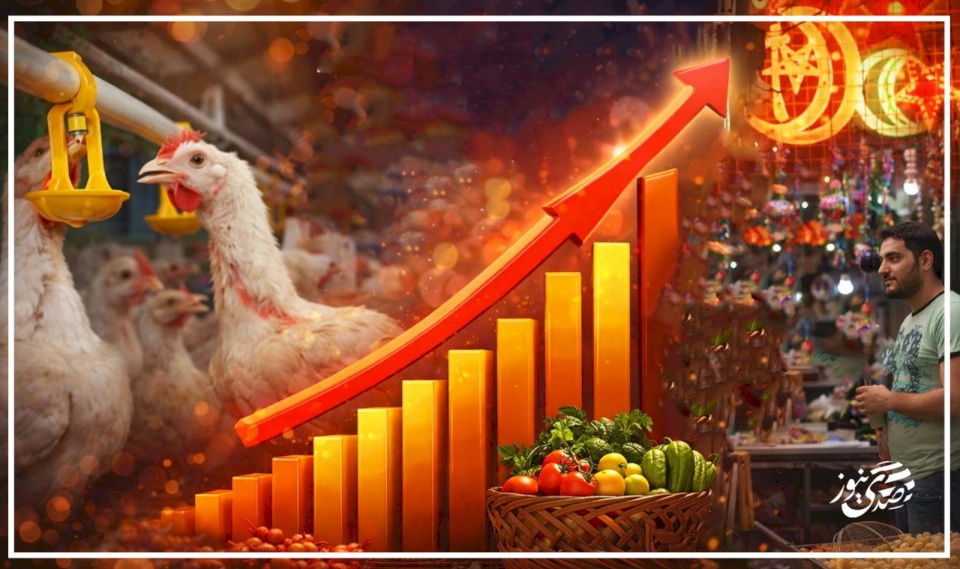
Ramadan with Empty Pockets.. Chicken Prices in the West Bank Equal Those in Tel Aviv Despite Income Disparity
Exclusive to SadaNews: Mohammed Omar (37 years old) has been unemployed since the events of October 7, 2023, when he was working inside the Green Line. Since then, he has joined the ranks of unemployment, using his TikTok account as a platform to showcase the conditions of unemployed workers and discuss public issues.
In the days leading up to the blessed month of Ramadan, this platform transformed into a call to organize a charitable campaign to assist needy families and to collect food parcels for the poor amid increasingly difficult economic conditions.
He says: "Many Palestinian families have entered a state of severe need, with the rising unemployment rate, and this campaign aims to connect those who are able to give with those whose economic situation has become dire," noting that the campaign focuses on providing food parcels to those families in need.
He emphasized the importance of embodying social solidarity during the holy month of Ramadan amidst these challenging circumstances that worsen day by day.
Palestinians in the West Bank are welcoming the month of Ramadan this year under complicated economic conditions. A joint report from the Palestinian Central Bureau of Statistics and the Monetary Authority revealed that the Palestinian economy suffered from a "deep recession" in the year 2025, with unemployment affecting about half of the workforce and a significant poverty rate reaching the level of famine and food insecurity.
The report indicated that the Gross Domestic Product decreased by 24% compared to its level in 2023, pointing out that this decline reflects the cumulative damage to the economy since the onset of the Israeli war, which has impacted production capacity and caused continued bottlenecks in economic activities.
The report also pointed out that the unemployment rate in the West Bank increased to about 31%, up from 18% in 2023, while the financial crisis of the Palestinian National Authority has affected the living conditions of employees who have not received their full salaries since November 2021.
Official Preparations
Regarding official preparations for the blessed month of Ramadan, Ibrahim Al-Qadi, Director General of the General Directorate for Consumer Protection at the Ministry of National Economy, told SadaNews that the ministry has been working recently to ensure the availability of essential goods in markets in quantities that meet demand.
He stated: "There are good quantities of essential goods such as rice, sugar, and canned products, and prices will be reasonable."
He noted that the ministry has prepared a plan for the month of Ramadan, which has been approved by the Cabinet, aimed at ensuring the quantity and safety of products and their compliance with specifications, while ensuring stable prices and preventing any price increases before the holy month begins, emphasizing that the ministry has implemented this plan in cooperation with various partners through ongoing efforts.
He adds: "There will soon be a consumer guideline list."
The second part of the plan includes deploying patrols and inspection committees to cover all geographical areas, whether in cities or villages, emphasizing the need to intensify market supervision in various Palestinian governorates.
Empty Pockets
For his part, economic expert Dr. Thabet Abu Al-Rous told SadaNews: "In my estimation, Palestinians are welcoming the holy month with empty pockets and a lack of clarity regarding the payment of public sector salaries due to the occupation's withholding of tax revenues, which are the main income source for the National Authority, in addition to the unemployment of tens of thousands of workers as a result of Israel preventing Palestinian workers from going to their jobs inside the Green Line.
He pointed out that soaring prices for many goods are looming on the horizon, highlighting the rise in chicken prices and some types of vegetables just days before Ramadan.
Abu Al-Rous stated: "Palestinians are welcoming Ramadan amid unprecedented economic difficulties, in addition to the harsh restrictions imposed by the occupation on the West Bank, and this will cast a shadow over the atmosphere of the holy month this year."
He noted that Palestinian family expenses typically increase during Ramadan, but the current conditions make many heads of households unable to provide for their families' basic needs.
The most significant challenges Palestinians face include movement difficulties due to Israeli checkpoints, especially as family visits increase during Ramadan, noting that insecurity poses a real problem for Palestinian families, in addition to the fact that the vast majority of families will be unable to exchange gifts during visits as they used to in the past, and some families will not be able to meet their basic needs, especially since the Iftar meal during Ramadan has its unique customs.
He pointed out that some difficulties stem from the decline in the value of the dollar, as those earning income in dollars have seen their salaries erode, which will reflect on their expenditures during the holy month.
Abu Al-Rous emphasized the necessity of enhancing social solidarity during this month by encouraging wealthy individuals to pay zakat and to be sensitive to the needs of poor families, calling for a focus on eliminating ostentation in feasts and sticking to essentials.
He demanded that Ramadan Iftars be directed to those in need and not to wealthy individuals, and that any surplus food be given to the poor through charitable associations, calling on the relevant ministries, especially the Ministry of Social Development, to oversee distribution processes to ensure fairness in the distribution of assistance.
Abu Al-Rous reaffirmed the need to monitor markets and prevent price increases by traders, as well as to prevent some traders from monopolizing essential goods to achieve higher profits through illegal means.
Fears of Price Increases
Days before the holy month, public fears have increased regarding further price hikes on essential goods, with the beginning of rising prices for some types of vegetables and poultry. The price of chicken per kilogram in some West Bank markets has reached about 20 shekels or more in some stores, matching the prices observed by SadaNews in Tel Aviv, despite significant differences in income levels; the average salary in Israel in May of last year was 13,417 shekels, while the average wage in Palestine does not exceed 2,200 shekels. This means that the income of an Israeli is practically six times that of a Palestinian.
Weekly local consumption during Ramadan is estimated at about 2.2 million chickens, compared to 1.6 million under normal conditions.
SadaNews attempted to contact the spokesperson for the Ministry of Agriculture several times to obtain a comment from the ministry regarding the reasons for the rise in chicken and vegetable prices and the steps the ministry has taken concerning Ramadan, but no response was received.
 Follow the latest Sada News via Google News
Soaring Oil Prices Burn the Pockets of the Palestinian Citizen "The Poor"

Millions of Dollars in Losses.. "SadaNews" Reveals Shocking Figures for Traders from Pales...

The Problem of Shekel Overcrowding Worsens.. Fuel Station Owners Threatened with Closure o...

The Palestinian Economy at a Crossroads: 4 Files Awaiting Resolution

Government Debt Puts Health Sector on the Brink of Collapse

Currency Exchange Rates Against the Shekel (April 3)

Public Debt: Did the Palestinian Government Violate the New Law by Raising the Debt Ceilin...
