

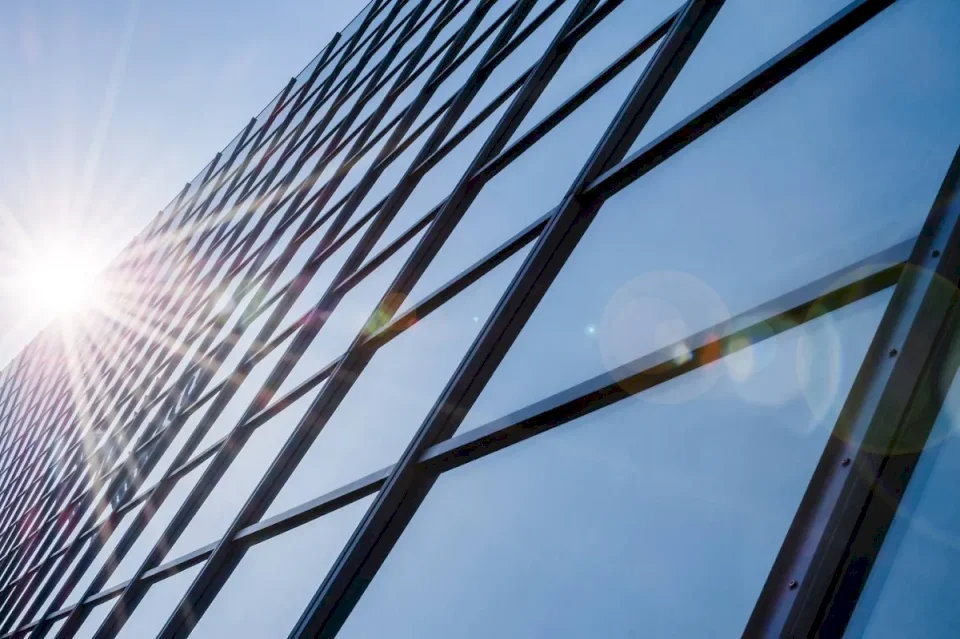
Windows and Doors Generate Electricity.. An Innovation that Changes the Future of Cities
SadaNews - Recent scientific research has revealed a promising technology that could redefine the look of solar panels, transforming them from traditional functional elements into an aesthetic part of home and building designs.
Researchers from the Hebrew University of Jerusalem have successfully developed flexible and semi-transparent solar cells that can have their colors and levels of transparency controlled using 3D printing.
Unlike traditional solar panels that often come in limited colors like blue, dark gray, or black, this new technology seeks to solve a long-standing issue faced by exposed solar installations, especially in urban areas, where ordinary panels do not harmonize with the architectural character of the buildings, according to a report published by "digitaltrends" and reviewed by "Al Arabiya Business".
Solar Cells Designed Like Decorative Elements
The new technology relies on perovskite solar cells, known for their high ability to absorb light and convert it into energy.
However, instead of using flat layers as is the case with traditional panels, the researchers have printed the perovskite in the form of vertical micro-columns, resembling a small forest of microscopic energy-absorbing structures.
By controlling the height of these columns, the distances between them, and their density, scientists can adjust the amount of light that passes through the cells, thereby controlling their transparency. The microscopic structure also allows for the reflection and absorption of specific wavelengths of light, giving the cells visible colors that can be designed as needed.
The advantage is not only in the appearance; this non-flat structure makes the cells flexible and bendable without cracking, opening up possibilities for their use on windows, glass facades, curved walls, and even unconventional surfaces while continuing to generate electricity.
From Windows to City Facades
Researchers believe these cells can be easily integrated into residential buildings, offices, and luxury hotels, where glass is a fundamental architectural element.
Moreover, their appearance can be modified to match the design of the building or even with specific seasonal themes.
This technology opens the door to futuristic ideas, such as printing solar cells on car windows to generate energy used to charge small devices, or eliminating large panels on rooftops, relying instead on windows that quietly produce energy without affecting the overall appearance of the building.
Promising Performance with Upcoming Challenges
Tests have shown that the flexible solar material can achieve an energy conversion efficiency of up to 9.2%, while maintaining an average visible transparency of about 35%. The cells have also demonstrated stable performance and structure during long operating periods, even after being subjected to repeated bending.
Despite these encouraging results, the efficiency is still lower than that provided by traditional solar panels, posing a challenge for their widespread commercial adoption. The research team is currently working on improving the durability and lifespan of the material in preparation for transferring it from laboratories to actual use.
If these efforts succeed, we may soon witness cities generating energy from their windows and facades, where sustainability blends with beauty in a new architectural scene.
 Follow the latest Sada News via Google News
After Deschamps' Departure... Zinedine Zidane Tops the Candidates to Lead France

Mbappe Surpasses Messi and Becomes the All-Time Top Scorer in the World Cup

England Defeats France and Achieves Largest World Cup Achievement Since 1966

Messi Refused to Play for Spain and Missed 3 World Cups

Publishers Sue Google for Allegedly Using Books to Train Artificial Intelligence

Google Expands Capabilities of Google Search Console to Support Social Media Accounts

The Mediterranean Table... An Ancient Diet Revealing Its New Secrets for Health and Longev...
