
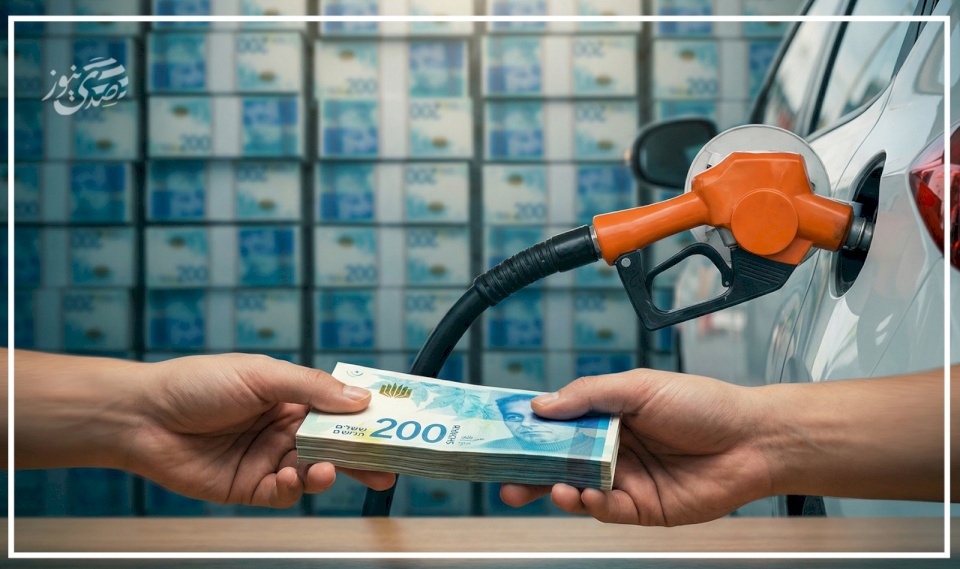
The Problem of Shekel Overcrowding Worsens.. Fuel Station Owners Threatened with Closure or Efforts to Break the Cash Limitation Law?
Exclusive SadaNews: Repeatedly, "Halimah has returned to her old ways" as owners of fuel and gas stations announce once again the possibility of their closure, claiming that banks refuse to accept the money from fuel sales.
This statement comes a few days after the Monetary Authority announced amendments to the draft law to reduce cash usage, which is currently subject to broad community discussion.
The owners of fuel and gas stations stated in a press release: "We do not import fuel from abroad, nor do we control its source or its price. Our main and only source is the Palestinian Petroleum Authority affiliated with the Ministry of Finance, and the Ministry of Finance is part of the Palestinian government".
They added: "On the other hand, the main source of fuel comes from the other party, and we are obliged to continue providing a lifeline for the people. Today, we are facing a real and unprecedented stifling crisis, as banks refuse to accept money from fuel sales. Our checks are issued by the Petroleum Authority, our obligations are ongoing, and there is no real solution or pressure from the Monetary Authority on the banks or the other party to solve the crisis".
The statement continued: "We have done everything required of us, knocked on every door, and participated in all meetings aimed at reaching a solution in previous periods toward achieving a fair solution acceptable to all parties, but to no avail," stressing that any potential closure of the stations is not our choice or desire but a forced result of the lack of solutions.
The statement pointed out that stopping this sector means complete paralysis in all aspects of daily life, calling on official and institutional bodies to pressure the supplying companies from the other party to press their governments to find a solution to this crisis before it's too late.
The Cash Deposit Crisis Threatens Fuel and Gas Stations
Samer Abu Hadeed, head of the fuel station owners, told "Sada News" that the station owners do not produce fuel but import it through the general authority for petroleum, and that official bodies must intervene to facilitate the deposit of the daily fuel bill for each station," pointing out that this issue has drained fuel station owners as the current mechanism is not practical and that fuel station owners cannot force citizens to pay in cash, which is the government's and the Monetary Authority's responsibility.
For his part, Osama Muslih, head of the gas station owners, confirmed to "Sada News" that an emergency meeting was held yesterday for all fuel and gas station owners in the West Bank, pointing to issues with the banks related to accepting cash deposits in shekels, in addition to pending issues with the Ministry of Finance regarding several regulations and laws.
He noted that they met with the general authority for petroleum, which was contacted to resolve some of the pending issues, but the cash deposit issue presents a significant problem.
He indicated that the fuel and gas station owners are committed to a previous agreement with the Monetary Authority for deposits to be 70% in cash and 30% electronic payment, but the banks do not comply with this, noting that some stations have not accepted more than 50% in cash from the banks.
He added: The bill from the general authority for petroleum must be paid in full, and after the banks limited checks, cash flow increased by 200%. They no longer accept check deposits at a rate of 30%, therefore fuel station owners are obligated to pay the bill in full either in cash or checks, which is the responsibility of the Monetary Authority and the government".
It is noted that there are about (350) fuel and gas stations in the West Bank, while monthly consumption ranges between 90 to 100 million liters of fuel, whereas the average monthly consumption of gas in the West Bank is about 4500 tons, while in the winter seasons, it reaches about 15,000 tons.
Banks Confirm Compliance with Deposit Ratios
For its part, a banking source told "Sada News" that banks are committed to the agreement with fuel station owners to accept cash deposits at a rate of 50% and 50% non-cash transactions, before increasing the percentage of cash deposits in recent months due to the crisis to about 70%.
He noted that the price of the bill from the general authority for petroleum for fuel and gas is paid to the Israeli side regularly, and there is no problem with this matter.
He added: There are no changes regarding banks' dealings with fuel station owners despite the shekel overcrowding crisis we are suffering from, and the agreement made regarding receiving 50% of payments in cash, and the rest through electronic payment tools," expressing surprise at this position from fuel station owners, which appears to want to undermine the agreement in this regard.
He continued: "The agreed-upon percentage is 50% in cash, and the rest through electronic payment tools, and when the crisis occurred last September, we agreed to make the percentage 70% in cash for 15 days, and since that time we have been committed to what was agreed upon," noting that the issue of settling obligations with checks is settled on time according to the rules.
The Monetary Authority recently opened a community discussion regarding the law to reduce cash usage, which prohibits conducting any financial transactions above 20 thousand shekels without official approval, within the framework of the Monetary Authority's tendencies to limit the use of "cash", one of whose goals is to address the issue of shekel overcrowding in bank vaults, which recently reached approximately (15) billion shekels that the Israeli side refuses to accept, disrupting banking operations and preventing banks operating in Palestine from replenishing their accounts in shekels with Israeli correspondent banks.
The Monetary Authority revealed recently that about 96% of bank deposits in Palestine are below 20 thousand shekels, while it indicated that about 50% of cash deposits come from four sectors: fuel, real estate, tobacco, and gold.
It should be noted that many economic sectors from the private sector, including the Union of Chambers of Commerce and fuel station owners, have expressed their opposition to the approval of a law to limit the use of "cash".
The Monetary Authority confirmed recently that it has completed the technical and legal amendments to the draft law to reduce cash usage, in light of the extensive dialogue meeting it held to discuss the project, with wide participation from representatives of the official, economic, financial, legal sectors, civil society institutions, and the private sector.
The Monetary Authority mentioned that it documented and cataloged all the observations received from the public on the draft law through the legislative platform of the Ministry of Justice and also through its website, in addition to documenting the contributions of participants in the dialogue meeting held on 8/12/2025, studying them, and taking the necessary notes for the purpose of completing the final formulation of the draft law.
The Monetary Authority clarified that its technical and legal teams worked to incorporate the proposed amendments to the draft law based on the discussions and recommendations arising from the dialogue meeting, as the legal team prepared the legislative policy memorandum, the explanatory memorandum, and the legislative needs model in preparation for completing the necessary legislative and legal procedures to raise the revised draft law to the esteemed Council of Ministers for necessary action in this regard.
The Monetary Authority indicated that it had prepared the timeframe and phased timetable for implementing the provisions of the law, taking into account the specificity of the various economic sectors, ensuring a gradual and balanced application.
The question remains: Is the action of fuel and gas station owners a genuine warning of closure, or is it an indirect expression of a desire to undermine the cash limitation law?
 Follow the latest Sada News via Google News
The Problem of Shekel Overcrowding Worsens.. Fuel Station Owners Threatened with Closure o...

Report: Detainees in Ofer and Negev Prisons Face Extremely Difficult Humanitarian Conditio...

Young Man Injured by Occupation Gunfire in Birzeit Town North of Ramallah

280,000 Foreign Tourists Visited Palestine in 2025

Police: Arrest of a Person in Possession of $27,000 in Counterfeit Money in Ramallah

President Abbas: A Comprehensive Reform Program to Establish the Rule of Law and Strengthe...

Police: Arrest of 3 Suspects for Attacking a Church in Jenin
