

US sanctions may force Venezuela to close oil wells within days
SadaNews - Venezuela may soon have to start closing some oil wells due to a lack of storage capacity, following the seizure of a tanker last week and the United States' plans to prevent other sanctioned ships.
According to people familiar with the situation who requested anonymity because the information is private, the main oil storage facilities in the country and the tankers docked at its stations are filling up quickly and could reach maximum capacity in about 10 days.
If that happens, the state-owned company "Petroleos de Venezuela", which is nearing production of one million barrels per day, may be forced to close some wells.
Chevron's production continues
Chevron stated that it continues to produce from its joint ventures with "Petroleos de Venezuela" without "any disruption" and is committed to all applicable laws, according to the major oil company on Wednesday.
While the company uses non-sanctioned tankers to export crude to the U.S. Gulf Coast, it remains unclear what indirect effects may arise if "Petroleos de Venezuela" is forced to close wells.
Trump's campaign to dry up oil revenues
The increasing pressures reflect the intensification of Trump's administration's campaign to strangle the oil revenues received by President Nicolás Maduro's regime. U.S. President Donald Trump announced on Tuesday a "complete blockade" on all sanctioned tankers entering and leaving Venezuela, designating the regime as a "foreign terrorist organization".
Although the administration has not yet issued details or guidance on these two steps, shipping activity has effectively frozen, with market participants reluctant to transport crude to avoid seizure risks, according to the sources.
Chevron stated in a statement that it is committed to "the sanction frameworks provided by the U.S. government. Any questions regarding the security situation in Venezuela should be directed to the relevant authorities in the U.S. government".
Half of the company's production of 200,000 barrels per day of Venezuelan oil goes to "Petroleos de Venezuela" under contract terms. Chevron operates in the country under a license from the U.S. Treasury that exempts it from oil sanctions under restrictive conditions.
Shipping restrictions and potential production decline
"Petroleos de Venezuela" stated that its crude exports continue to operate normally, sailing with full security and technical support and operational guarantees, according to the company's statement.
However, the new restrictions on shipping Venezuelan oil and the import of the diluent "Petroleos de Venezuela" needs to produce and transport its extra-heavy crude mean that "storage could fill up very quickly", according to Shrayner Parker, partner and head of emerging markets at research firm Rystad Energy. He added that once that occurs, "we may certainly see production volumes decline very rapidly".
During Trump's first term, "maximum pressure" sanctions led to a collapse in Venezuela's production to below 500,000 barrels per day, according to Parker. "Petroleos de Venezuela" partially recovered by swapping its crude for a type of diluent from Iran. He noted, "This is not a viable option this time with the U.S. patrolling the Caribbean".
Oil tankers pile up
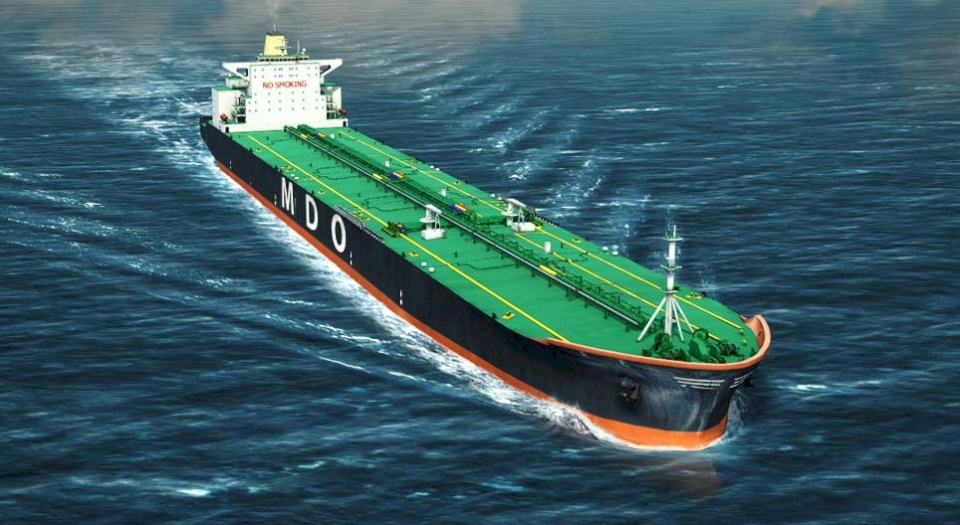
According to people, satellite images, and a shipping report prepared by "Bloomberg", at least three giant tankers, which are ships capable of carrying a total of 6 million barrels of oil, have already been loaded but remain in Venezuelan waters.
Venezuela relies heavily on what is known as a "shadow fleet" whose ships turn off their lights or spoof transponder signals to hide their location and sail undetected. According to "Bloomberg's" calculations, the three stranded vessels in Venezuela are loaded with heavy Venezuelan oil worth approximately $300 million.
The vessels "Crag" and "Galaxy 3", operating under fictitious names, loaded last week and are still in Venezuelan waters. Another giant tanker, "Killy", which turned off its transponder a week ago, finished loading in the past few days. A fourth ship sailing under the alias "Romana" is currently loading 1.9 million barrels of Venezuela's main "Miri 16" crude.
Chevron was able to load shipments despite a recent cyberattack targeting "Petroleos de Venezuela", which the company stated disrupted its administrative operations at the ports but did not affect its ability to produce or ship oil.
Venezuela accounts for less than 1% of global oil production, limiting the current disruption's impact on prices.
 Follow the latest Sada News via Google News
London Stock Exchange Enters the Era of 24/7 Trading

Shamaran Petroleum: Suspension of Oil Production in Duhok Fields in the Kurdistan Region o...

Dollar Steadies Near One-Week High Amid War Developments

Trump Imposes Tariffs on Canadian Imports... Ottawa Vows to Respond

Oil Prices Drop After Reports of Mediation Efforts Between the U.S. and Iran

Gold Price Rises Supported by Increased Buying Amid Lower Prices

Due to "Hazardous and Counterfeit Products".. Europe Fines "AliExpress" $627 Million
