

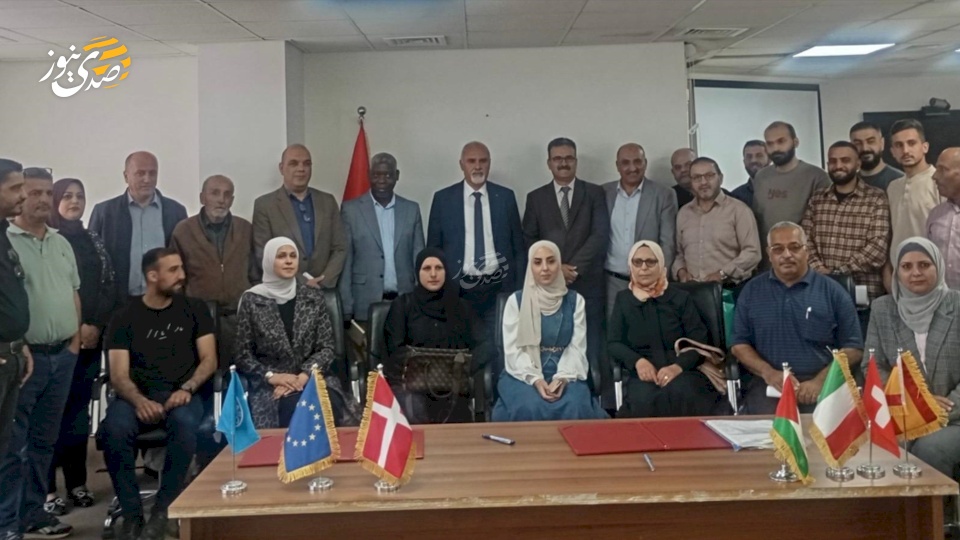
The Ministry of Agriculture and FAO Sign 25 Agricultural Investment Agreements Worth 7.4 Million Shekels to Support Food Security
SadaNews - The Ministry of Agriculture and the Food and Agriculture Organization of the United Nations (FAO) have signed 25 agreements for agricultural investment projects as part of the fourteenth round of the Multi-Partner Agricultural Business Program (MAP II), with total investments exceeding 7.49 million shekels. The aim is to enhance market-driven investments and innovations and develop a sustainable agricultural and food system in Palestine.
The agreements were executed with financial support from the governments of Denmark, Switzerland, Spain, and the European Union, along with parallel funding from the Italian government.
The projects covered the governorates of Tulkarm, Tubas, Qalqilya, Jenin, Ramallah and Al-Bireh, Hebron, and Nablus, with the program contributing approximately 3.46 million shekels, versus over 4.03 million shekels contributed by the beneficiaries, reflecting a support rate of 46% of the total investments.
The projects varied between plant and animal production and food processing, including the development of agricultural greenhouses, strawberry farms, dairy production units, beekeeping, solar energy systems, food manufacturing, and olive mills, in addition to innovative agricultural projects that respond to local market needs and contribute to strengthening food security.
Agriculture Minister Rizq Salimieh stated that the selection of beneficiaries was based on criteria and mechanisms adopted by the funding partners, confirming the importance of these projects in supporting the resilience of farmers and ensuring their presence on their lands.
Salimieh appreciated the support provided by the Food and Agriculture Organization of the United Nations and funding partners for the agricultural sector in the West Bank and Gaza Strip, emphasizing that agriculture represents a fundamental pillar for national resilience and food security, and is capable of adapting to economic and social crises and challenges.
He indicated that the ministry enhanced its field presence by opening 43 agricultural offices and departments in various governorates, with the aim of expanding the scope of agricultural and advisory services and reaching a larger number of farmers.
For his part, the Director of the MAP II program in the FAO, Thembi Sibanda, praised the level of cooperation and coordination with the Ministry of Agriculture, confirming the importance of adhering to the implementation of projects according to the terms of the agreements, noting that the technical teams will continue to follow-up with beneficiaries and provide the necessary support throughout all implementation phases.
He affirmed that these investments will contribute to developing agricultural production, enhancing job opportunities, and improving the income of beneficiaries, in addition to supporting the sustainability of the Palestinian agricultural sector.
The agreements fall under two projects implemented by the FAO in partnership with the Ministry of Agriculture, titled "Enhancing Market-Driven Investments and Innovations for Sustainable Food and Agriculture Systems" and "Enhancing Innovative and Sustainable Market-Driven Investments in the Agricultural Food Sector in the West Bank," aimed at promoting sustainable agricultural development and elevating the level of food security in Palestine.
 Follow the latest Sada News via Google News
Soaring Oil Prices Burn the Pockets of the Palestinian Citizen "The Poor"

Millions of Dollars in Losses.. "SadaNews" Reveals Shocking Figures for Traders from Pales...

The Problem of Shekel Overcrowding Worsens.. Fuel Station Owners Threatened with Closure o...

The Palestinian Economy at a Crossroads: 4 Files Awaiting Resolution
Fuel Crisis in the West Bank: Supply Disruption or Liquidity Shortage?

Government Contact Center Issues Clarifying Statement Regarding the Establishment of a Gov...

Exchange Rates of Currencies Against the Shekel Today, Wednesday (July 22)..
