

"Mas": Israeli Industrial Zones in the West Bank: An Economic Distortion Hindering Palestinian Development
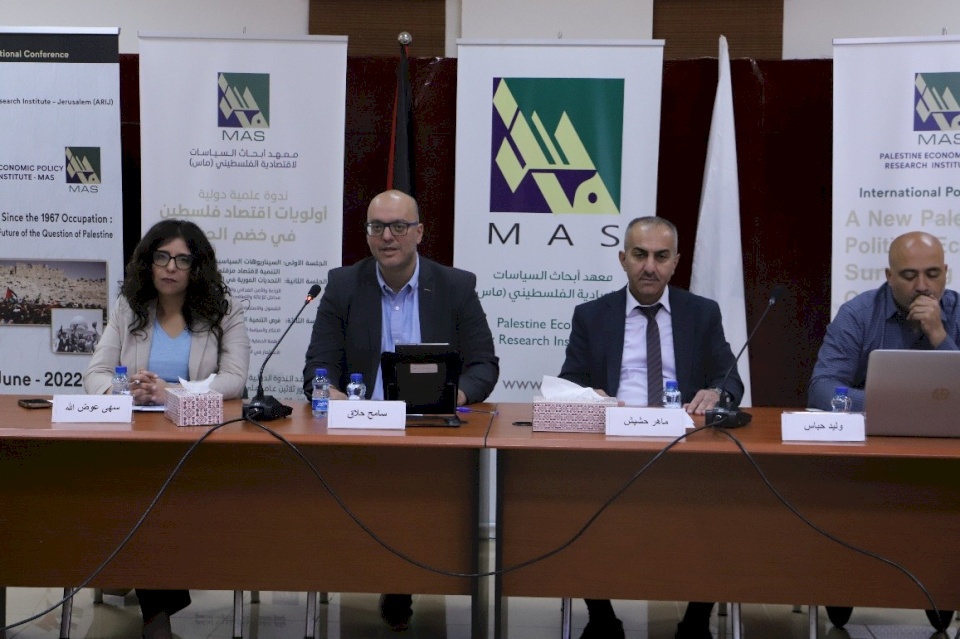
SadaNews - The Palestinian Economic Policy Research Institute (Mas) held its second roundtable meeting of the year 2026 to discuss "The Economic Impacts of Israeli Industrial Zones in the West Bank: Employment, Environmental Pollution, and Disruptions to Palestinian Logistics." The meeting took place both in-person at the institute's headquarters and via Zoom. The background paper was prepared by Dr. Walid Habash, a researcher at the Palestinian Center for Israeli Studies (Madar), and interventions and comments were presented by Dr. Maher Hashish, Advisor to the Minister of Industry, and Dr. Suha Awadallah, Secretary-General of the General Union of Palestinian Industries.
At the beginning of the meeting, Dr. Sameh Hallak, the research coordinator at the institute, welcomed the participants from various sectors and experts, emphasizing the great importance of discussing this topic, which reveals the complex nature of these industrial zones. He noted that their role goes beyond mere production, serving as a tool for economic control and resource reallocation, thereby applying direct pressure on opportunities for Palestinian development and calling for urgent attention.
Researcher Habash presented a comprehensive analysis of the economic impacts of Israeli industrial zones in the West Bank, describing them as part of an expansive settlement environment that encircles geographic space and harms the Palestinian economy at multiple levels. He pointed out that there are about 35 industrial zones in the West Bank, including areas for heavy industries such as metals, chemicals, plastics, and cement, in addition to industrial parks, technology hubs, commercial complexes, and service areas. He indicated that these zones contribute to strengthening the economic connection between the settlements and Israel and are linked to bypass roads and main corridors.
The researcher clarified that the paper identifies five main impacts on the Palestinian economy. First, deepening the dependency of Palestinian labor through an unequal labor market characterized by low wages and legal fragility. Second, attracting some Palestinian investments to these zones, reflecting the lack of serious oversight. Third, disrupting trade movement due to the fragmentation of Palestinian geography and high transportation and trade costs. Fourth, escalating environmental pollution from transferring polluting industries to these areas amid weak regulatory oversight. Fifth, the confiscation of agricultural lands and the deterioration of natural resources, which negatively impacts agricultural production and threatens food security.
The researcher concluded his presentation with a series of recommendations calling for the necessity of adopting a clear official Palestinian stance regarding the relationship with the Israeli industrial zones, addressing the reasons that drive Palestinian capital to shift towards settlements, and working to protect workers, while also calling for holding Israel accountable for environmental crimes. In this context, the recommendations emphasize the importance of developing a long-term developmental and sovereign approach that enhances the Palestinian national economy and limits economic dependency.
In his remarks on the paper, Hashish affirmed that the Palestinian government places great importance on the studies provided by Mas. He pointed out that Israeli policies encourage settlement by providing incentives and facilities for the industrial zones established in the settlements, considering that this Israeli investment is part of a project aimed at displacement and an attempt to legitimize settlement.
Hashish also indicated that the Palestinian government pays significant attention to Palestinian industrial zones for the resilience they provide and to create job opportunities, noting that the Jenin Industrial City will soon come to fruition and will serve as a kickoff for the Palestinian economy with the participation of Palestinian investors from the territories of 1948. He added that the Palestinian government compels national Palestinian products in tenders and focuses on supporting renewable energy in Palestinian industrial zones to reduce production costs.
For her part, Awadallah stated that the involvement of some Palestinian investors and workers in Israeli industrial zones does not necessarily reflect an acceptance of the settlement project, but rather highlights the significant gap between the constrained Palestinian investment environment and the opportunities provided by Israeli industrial zones in terms of infrastructure, stability, and ease of access to markets.
She emphasized the necessity of building a Palestinian economic alternative by developing Palestinian industrial zones, improving infrastructure, reducing production costs, and linking the Palestinian economy to Arab and regional markets, stressing that any policy should combine pressure with the provision of economic alternatives and job opportunities.
Participants emphasized the need to highlight the environmental damage caused by industrial zones in the settlements, in addition to the need to cover the extent of Palestinian investment in these Israeli industrial zones in the West Bank and the level of Palestinian presence within them.
 Follow the latest Sada News via Google News
Soaring Oil Prices Burn the Pockets of the Palestinian Citizen "The Poor"

Millions of Dollars in Losses.. "SadaNews" Reveals Shocking Figures for Traders from Pales...

The Problem of Shekel Overcrowding Worsens.. Fuel Station Owners Threatened with Closure o...

The Palestinian Economy at a Crossroads: 4 Files Awaiting Resolution

Exchange Rates of Currencies Against the Shekel on Tuesday (July 21)

Inflation Expectations in Israel Stabilize at 1.5%

Ministry of Economy Announces the Opening of Import Application Submissions for Commodity...
