

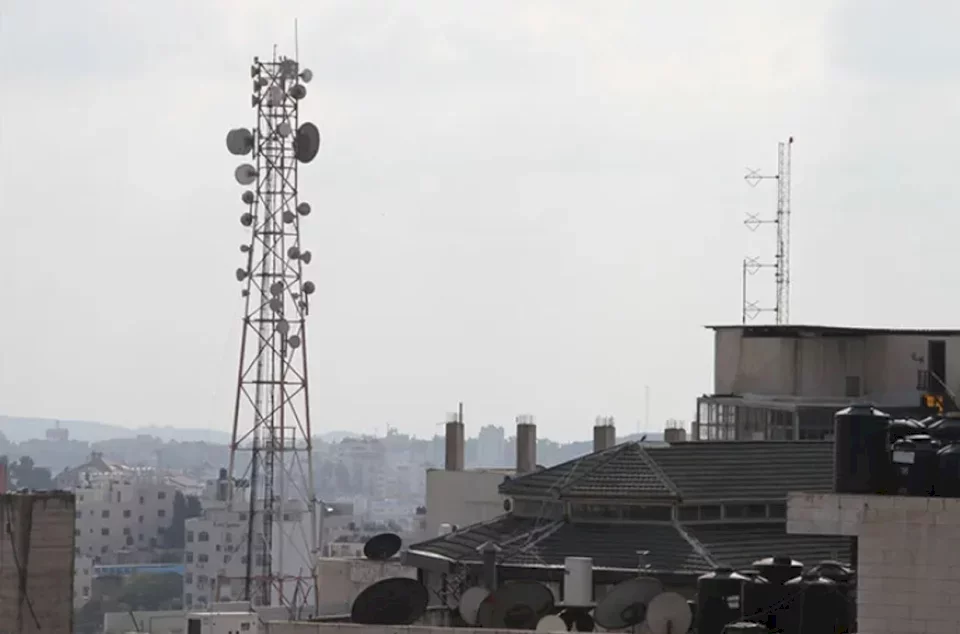
Joint Statement for World Telecommunication Day 2026: The Reality of the Palestinian Telecommunications Sector Between the Hammer of Crises and the Quest for Recovery
SadaNews - The Palestinian Central Bureau of Statistics, the Ministry of Communications and Digital Economy, and the Telecommunications Regulatory Authority issued a joint press release on the occasion of World Telecommunication and Information Society Day, which falls on May 17.
As stated in the statement:
The Digital Lifeline in Palestine Amidst Development Challenges and Resilience Enhancement
This year's World Telecommunication and Information Society Day comes under the slogan "Digital Lifelines: Enhancing Resilience in a Connected World," affirming that telecommunications is no longer just a service, but a vital lifeline for development and survival. Resilient digital infrastructure forms the foundation for an inclusive world, supporting meaningful connectivity that enables everyone to access the internet safely, affordably, and effectively, while emphasizing the importance of digital resilience that concerns the ability of systems to withstand disturbances, adapt to their consequences, and recover swiftly, ensuring the continuity of essential services and protecting lives and livelihoods.
In this context, the telecommunications and information technology sector constitutes a vital artery to support development pathways in Palestine in general, and in the Gaza Strip in particular, amidst the transformation of the internet into a basic tool for communication, a means for survival and conveying the truth, in addition to its pivotal role in enhancing adaptability, supporting recovery and reconstruction efforts, and stimulating the labor market, as well as serving as an important foundation for economic growth and sustainable development.
Despite Difficulties, Two-Thirds of Gaza Remains Connected to the Internet
Despite the escalating challenges faced by the Gaza Strip, results from the labor force survey conducted during the period from September 3 to October 31, 2025, showed that around 71% of individuals aged 10 years and older managed to access the internet at least once; this figure is comprised of 60% who accessed the internet intermittently and 11% who accessed it permanently. Meanwhile, 29% of individuals were unable to access the internet at all.
Regarding the difficulties that individuals faced while using the internet, 98% reported weak coverage, 97% indicated continuous network disruptions, while 77% reported that mobile phone services stopped or were so weak that it hindered internet access. Additionally, 73% disclosed they faced danger while attempting to access the internet, reflecting a transformation of even the simplest rights into a real threat.
Smartphone Ownership: A Pivotal Tool for Digital Communication
Data from the labor force survey conducted in the Gaza Strip during the period from September 3 to October 31, 2025, indicates a significant decrease in the percentage of individuals aged 10 and older owning smartphones in the Gaza Strip, falling from about 58% on the eve of the Israeli aggression in 2023 to roughly 35% in the three months prior to the 2025 survey. In contrast, the percentage in the West Bank reached 86%, according to data from the first quarter of 2026 for the labor force survey, boosting individuals' capacity for communication and connectivity.
Shifting Towards a More Efficient Internet Model Ready for a Digital Economy
Amidst the rapid global trends towards digital transformation, developing the telecommunications infrastructure emerges as one of the fundamental pillars for enhancing digital readiness and building a more resilient and sustainable economy. In this context, the telecommunications sector has witnessed a notable transformation in subscription patterns over the past three years, as data from the Ministry of Communications and Digital Economy and the Telecommunications Regulatory Authority indicated a significant increase in the number of internet subscribers through fiber optic technology (FTTH), reaching 327,000 subscribers in 2025 in Palestine, marking an increase of approximately 27% compared to 2024. Meanwhile, the number of subscribers using copper network technology (DSL) has gradually declined. This transformation reflects a clear trend towards adopting more efficient digital infrastructures capable of meeting and increasing reliability and demand for connectivity. This development underscores efforts to modernize networks and enhance their readiness to support the digital economy and digital government services.
Despite Challenges, Intensive Efforts to Keep Gaza Connected
As part of the efforts of the Ministry of Communications and Digital Economy and the Telecommunications Regulatory Authority to keep the Gaza Strip connected despite exceptional challenges, a series of urgent interventions were implemented in 2025 to support the resilience of telecommunications infrastructure. 12 emergency points were activated to enhance network continuity, alongside updating the infrastructure database for 94 communication sites, contributing to improving response efficiency and fault management. Additionally, 8 shelters were provided with free internet services; a step aimed at empowering citizens to communicate and access vital services, thereby enhancing community resilience and the continuity of digital life under the current circumstances.
Given the extensive damage inflicted on the Gaza Strip's infrastructure, including telecommunications networks, the importance of digital resilience emerges as a fundamental element in maintaining service continuity and their accessibility to citizens, even at the minimal level possible. Despite the challenges, telecommunications companies have continued to perform their vital role in keeping citizens connected under the slogan "the continuity of communication is no longer an option, but a necessity to protect vital sectors and support community resilience," where the networks operated by the companies serve as the backbone of emergency services and humanitarian response, and are the primary means to ensure communication between relief organizations and the population, amidst their vital reliance on them for crisis management. This underscores the importance of having flexible digital infrastructure capable of adapting to various conditions, and the latest update on mobile network coverage data as of April 2026 indicates a continuous increase in coverage in the central Gaza area, reaching about 96%, with a significant disparity in coverage rates geographically among the various governorates of the Strip. This disparity reflects the magnitude of the challenges associated with the state of infrastructure and changing patterns of population concentration, necessitating targeted interventions to ensure equitable access to telecommunications services.
Deterioration of the Value Added in the Information and Communication Sector in the Gaza Strip
Estimates from the quarterly national accounts for 2025, issued by the Palestinian Central Bureau of Statistics, revealed a degradation in the information and communication activity, particularly in the Gaza Strip, which recorded a collapse of 88% in the value added at constant prices compared to 2023.
While the value added in this sector across Palestine amounted to about $411 million in 2025, compared to about $447 million in 2023 (a decrease of approximately 8%), the West Bank contributed the largest share of value added at around $410 million in 2025, compared to roughly $434 million in 2023 (a decrease of 6%).
As for the Gaza Strip, a notable decline was recorded, where the value added fell from $13 million in 2023 to just $1.6 million in 2025, reflecting a decrease of around 88%. This drop highlights the paralysis that has afflicted one of the most prominent sectors of the knowledge economy due to the direct targeting of telecommunications and information infrastructure amid ongoing Israeli aggression.
The impact of this collapse is not limited to economic losses only, but extends to the loss of foundations for digital development, deepening the digital divide between the Gaza Strip and the world, and isolating the sector from the global economy and knowledge network. It also undermines the digital system and limits its ability to withstand disturbances and recover from them, asserting that digital connectivity is a fundamental right for resilience and survival.
 Follow the latest Sada News via Google News
Soaring Oil Prices Burn the Pockets of the Palestinian Citizen "The Poor"

Millions of Dollars in Losses.. "SadaNews" Reveals Shocking Figures for Traders from Pales...

The Problem of Shekel Overcrowding Worsens.. Fuel Station Owners Threatened with Closure o...

The Palestinian Economy at a Crossroads: 4 Files Awaiting Resolution
Fuel Crisis in the West Bank: Supply Disruption or Liquidity Shortage?

Government Contact Center Issues Clarifying Statement Regarding the Establishment of a Gov...

Exchange Rates of Currencies Against the Shekel Today, Wednesday (July 22)..
