

A Crisis Hits the Gas Market in Israel, Putting Energy Security at Risk
SadaNews - Supply disruptions in the cooking and heating gas market have resurfaced a sharp conflict within the Israeli government, after liquefied petroleum gas supplies were disrupted in recent days, amid mutual accusations between the Ministry of Finance and the Ministry of Energy regarding responsibility for the delay in developing infrastructure, according to a report by "Calcalist".
Supply Disruption
"Calcalist" reported in a recent article that there is a disruption in supplying gas for cooking and heating, with higher demand in winter compared to summer.
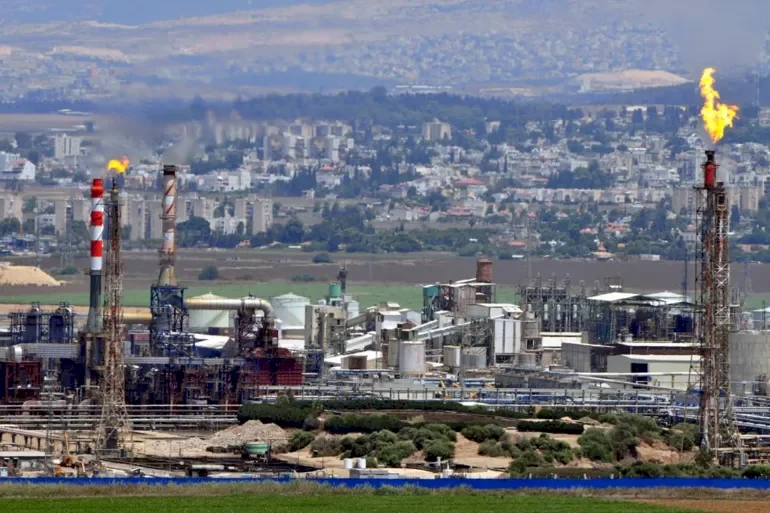
The "Bazan" complex in Haifa covers about 45% of local consumption, while the Ashdod refinery provides about 20%, and the "Katsaa" company imports the remaining quantities.
Consumption increased by 3% in 2025, reaching 572,000 tons compared to 2024.
A ballistic missile from Iran hit the "Bazan" facilities in June 2025, leading to operational stoppages and damage to the internal electricity station, according to "The Marker".
The Ashdod refinery later entered a crisis due to contaminated fuel. "Jerusalem Post" sees that reliance on a limited security stock made the economy "vulnerable to disruptions".
In January, a tanker arrived at the "Katsaa" station to relieve the pressure, while about 60 trucks headed to Ashkelon port to unload gas containers.
"The Marker" reported that the ministry issued an order allowing it to monitor gas quantities at the companies and to prioritize distribution. Hospitals, care homes, food factories, and bakeries will be given priority, followed by hotels and prisons, while households will be last if rationing is activated.
Industrial sources indicated that in the "worst scenarios", consumers may have to wait longer to replace gas cylinders.
Debate Over "Infrastructure Fees"
The budget division in the Ministry of Finance accused the Ministry of Energy of obstructing a settlement to include an "infrastructure fee" mechanism on gas imports through maritime ports to fund storage facilities.
"Calcalist" quoted an official as saying that there is "fear that energy security could fall victim to delays in decision-making".
On the other hand, Energy Minister Eli Cohen warned against imposing a "tax under the guise of a comprehensive name" to be borne by consumers, affirming that government companies "are capable of funding infrastructure development without imposing additional burdens".
As the "Tamar" field continues to operate and a portion of exports has been restored in limited quantities, the ministry confirms that it is "continuously working to ensure gas availability", while the market remains under test for the balance between local production and imports in a winter of high demand.
Meanwhile, Anadolu Agency reported on February 23, 2026, that Benjamin Netanyahu said the country is going through "very complicated and difficult days", warning of a "severe response" if it is subjected to an Iranian attack.
 Follow the latest Sada News via Google News
Soaring Oil Prices Burn the Pockets of the Palestinian Citizen "The Poor"

Millions of Dollars in Losses.. "SadaNews" Reveals Shocking Figures for Traders from Pales...

The Problem of Shekel Overcrowding Worsens.. Fuel Station Owners Threatened with Closure o...

The Palestinian Economy at a Crossroads: 4 Files Awaiting Resolution

Exchange Rates of Currencies Against the Shekel (June 20)

Palestine and the Islamic Development Bank Sign Agreement to Finance the Construction of T...

Currency Exchange Rates Against the Shekel (June 19)
