

Between Trust Deficit and Possibility of Coexistence: How Do Palestinians View the Conditions for Sustainable Peace?
Most Palestinians see the crisis of mistrust as a fundamental obstacle to achieving peace, and that the continuing occupation, violence, settlement expansion, and the lack of a political horizon are interrelated factors that deepen this crisis.
More than seven out of every ten respondents doubt the existence of sufficient Israeli desire to live in peace with Palestinians. However, the results do not indicate a definitive closing of the door to coexistence; nearly seven out of ten agree that Palestinians and Israelis could coexist in the future if justice is achieved and equal rights are guaranteed for both sides.
Furthermore, more than three quarters of respondents believe that relations between the two peoples can improve, certainly or to varying degrees, if a fair political agreement is reached that guarantees Palestinian rights.
These are some results from the latest survey conducted by the Palestinian Center for Political Opinion (PCPO) regarding Palestinian public opinion trends on mutual trust, coexistence, and the conditions for achieving sustainable peace.
The study included a sample of 309 respondents from the West Bank and Gaza Strip, and the interviews were conducted from July 5 to 18, 2026, using random digit dialing (RDD) and computer-assisted telephone interviewing (CATI). The response rate was 64%, with a margin of error of ±5.57 percentage points at a 95% confidence level.
Below are the main findings:
Trust as the Primary Obstacle
61.8% consider the lack of trust between Palestinians and Israelis as a very significant obstacle to peace, while 15.9% view it as a medium obstacle. Thus, 77.7% place the trust crisis at the core of the problem.
Conversely, 8.4% felt that the absence of trust represents a limited obstacle, and 11.3% stated it does not represent an obstacle, while 2.6% did not specify a position.
When participants were asked which factor is most responsible for the lack of trust, 59.9% selected "all of the above," indicating the interweaving of the ongoing occupation, violence, conflict, the lack of direct communication, and media and political incitement.
Additionally, 15.2% identified violence and the ongoing conflict as the primary responsible factor, while 10.7% pointed to the occupation, 8.1% to media and political incitement, and 4.2% to the absence of direct communication, with 1.9% not specifying a position.
This result contradicts the simplistic interpretation that confines the crisis to a misunderstanding between two peoples. The absence of communication is part of the problem, but it operates within a broader context of occupation, violence, and incitement. Therefore, building trust cannot be reduced to symbolic meetings or media campaigns; it requires a change in the political and security conditions that generate fear and inequality.
The Image of the Other and Doubt in the Desire for Peace
54.4% described their current view of the Israeli people as negative or very negative, with 18.8% stating it was somewhat negative, and 35.6% describing it as very negative.
In contrast, 16.5% expressed a positive view to varying degrees, while 29.1% took a neutral position. The relative size of the neutral bloc reveals an undecided space that may be influenced by changes in circumstances and policies.
Moreover, 52.8% believed that the majority of Israelis do not wish to live in peace with Palestinians, while 20.1% felt their desire is limited. This implies that 72.9% are skeptical, to varying degrees, about the existence of a sufficient Israeli desire for peace.
Conversely, 22.6% believed that this desire exists to a large or somewhat significant extent, while 4.5% did not specify a position.
Respondents' perceptions of Palestinian society were not completely positive either. 42.1% felt that the majority of Palestinians do not wish to live in peace with Israelis, and 14.6% considered their desire limited.
Conversely, 41.1% believed that the desire to live in peace exists to a large or somewhat significant extent, while 2.3% did not specify a position.
These results do not necessarily measure the personal stance of each respondent regarding peace but rather their perception of societal direction. Nevertheless, they reveal that the loss of trust is no longer directed solely at the other side; it also impacts the assessment of the ability of both societies to emerge from the conflict.
Lack of Communication: An Important Factor but Not a Substitute for Political Solution
69.6% saw the lack of direct communication as significantly or somewhat increasing misunderstandings between the two parties, while 12.9% viewed it as increasing misunderstandings to a lesser degree.
Meanwhile, 15.9% stated that the lack of communication does not increase misunderstandings, while 1.6% did not specify a position.
However, only 4.2% selected the lack of communication as the sole factor most responsible for the absence of trust.
Comparison between the two results shows that communication is essential to reduce stereotypes, correct misinformation, and open space to acknowledge the humanity of the other side, but it cannot solely address occupation, violence, and deprivation of rights.
Thus, communication becomes more effective when conducted in an environment that provides a fair political and security horizon, not when it is used as a substitute for addressing the roots of the conflict.
What Can Rebuild Trust?
When asked about the factors capable of rebuilding trust, ending violence from all parties ranked first at 40.8%, followed by achieving a political agreement at 29.5%, improving economic conditions at 13.3%, and increasing communication between the two societies at 7.4%.
5.5% also chose all the factors combined, while the remaining percentage was distributed across other or multiple answers.
These priorities indicate a clear sequence: alleviating fear and violence first, then establishing a fair political basis, followed by expanding economic interests and communication channels.
Additionally, 70.6% selected halting settlement expansion as part of the steps that could improve conditions and enhance prospects for peace and stability, highlighting that building trust is also linked to stopping changes on the ground that undermine the potential for a political solution.
Security, Dignity, and Freedom: Peace Does Not Depend on Incomplete Rights
80.6% agreed that sustainable peace cannot be achieved without guaranteeing security, dignity, and freedom for both Palestinians and Israelis, with 48.2% agreeing strongly and 32.4% agreeing.
Conversely, the disapproval rate was 17.8%, while 1.6% did not specify a position.
The result reveals that peace accepted by Palestinians does not rely on one side's security at the expense of the other side’s rights. Additionally, peace, in public awareness, is linked to the balance between security, normal life, freedom of movement, and dignity.
The fundamental meaning here is that rights and stability must advance together, with neither being achieved at the expense of the other.
Factors Necessary for Sustainable Peace
When participants were asked about the most important factor for achieving sustainable peace, 53.1% selected all factors combined, namely: ending the occupation, ensuring security for both parties, economic development, building mutual trust, and mutual recognition of national rights.
Ending the occupation alone ranked second at 26.9%, followed by ensuring security for both parties at 7.8%, mutual recognition of national rights at 5.8%, building mutual trust at 3.6%, and economic development at 2.3%, while 0.6% did not specify a position.
This result reflects the realization that sustainable peace does not emerge from a single act. It requires a political foundation that addresses the occupation and national rights, mutual security arrangements, a viable economy, and a communal path that addresses the accumulated effects of fear and hostility.
Possible Coexistence Is Not Coexistence Without Justice
68.9%, nearly 69.0%, agreed on the potential for Palestinians and Israelis to coexist in the future if justice and equal rights for both parties are provided, with 29.8% strongly agreeing and 39.2% agreeing.
Conversely, 29.1% did not agree to varying degrees, while 1.9% did not specify a position.
26.9% also believed that normal relations between the two peoples can certainly improve if a fair political agreement is reached that guarantees Palestinian rights, while 19.4% felt they could improve to some extent, and 31.4% added that it could possibly happen.
Thus, the circle of positive expectation or conditional possibility reached 77.7%, against 21.0% who excluded improvement, while 1.3% did not specify a position.
The central message here is clear: negativity toward the current reality does not equal a perpetual rejection of coexistence but rather reflects a refusal of coexistence based on the continuation of occupation or inequality of rights.
When a fair agreement is proposed that changes reality and guarantees rights, there remains ample space for the possibility of improving relations over time.
What Is the Best Guarantee for Long-term Peace?
44.3% chose ending the occupation and establishing an independent Palestinian state as the best guarantee for long-term peace.
32.7% also selected all guarantees combined, which include ending the occupation, mutual security arrangements, joint economic development, and building trust and communication.
In contrast, 8.1% chose joint economic development, 7.1% mutual security arrangements, and 6.5% building trust and communication, while 1.3% did not specify a position.
The result prioritizes a political solution related to ending the occupation and establishing the Palestinian state but does not reduce peace to this aspect alone.
The choice of nearly one-third of the sample for all guarantees reflects an awareness that statehood and sovereignty also require security, a viable economy, and community relations that help cement peace, not just its signing.
The Political Agreement as a Beginning of the Peace Path, Not Its End
80.9% agreed that true peace is not achieved only through political agreements, but also through building trust and mutual respect between the Palestinian and Israeli peoples.
Agreement was distributed between 36.6% who strongly agreed and 44.3% who agreed, against 17.2% who disagreed to varying degrees, while 1.9% did not specify a position.
This result does not diminish the importance of the political agreement but rather places it at the beginning of the path to building peace. The agreement can change rules, institutions, and legal relations, but translating it into actual peace requires citizens to feel that their rights, security, and dignity are protected and that their daily lives have changed.
Additionally, peace needs institutions and channels of communication to help resolve disputes and prevent them from turning again into cycles of violence.
Conclusion
This survey reinforces a complex image of Palestinian public opinion trends; it reveals a deep crisis in trust, a negative assessment of the current political reality, and widespread doubts about the existence of sufficient Israeli desire to achieve peace. However, it simultaneously reveals that the door to coexistence and peace has not been definitively closed.
Three main conclusions emerge from these results:
The first conclusion: the trust crisis does not equate to a permanent Palestinian rejection of peace.
Negative views are linked to the continued occupation, violence, settlement expansion, and lack of a political horizon. Palestinians connect their changing views to real changes in reality, not merely political discourse.
The second conclusion: possible coexistence is coexistence based on justice and equal rights.
About seven out of every ten support the feasibility of coexistence in the future if justice is achieved, while more than eight out of every ten believe that lasting peace requires ensuring security, dignity, and freedom for both parties.
The third conclusion: the political agreement is necessary, but it is not sufficient on its own.
Sustainable peace begins with ending the occupation, recognizing rights, and establishing the Palestinian state, but it also requires halting violence and settlement expansion, mutual security arrangements, economic development, and building trust and mutual respect.
The essential message revealed by the results is that Palestinians do not reject peace in principle, but they reject a peace that does not change reality or coexistence based on the continuation of occupation and inequality.
Sustainable peace cannot be achieved merely by signing agreements; it requires addressing the root causes of the conflict, bringing about tangible changes in people's lives, and creating a political, economic, and social environment that allows trust to grow over time.
About the Author
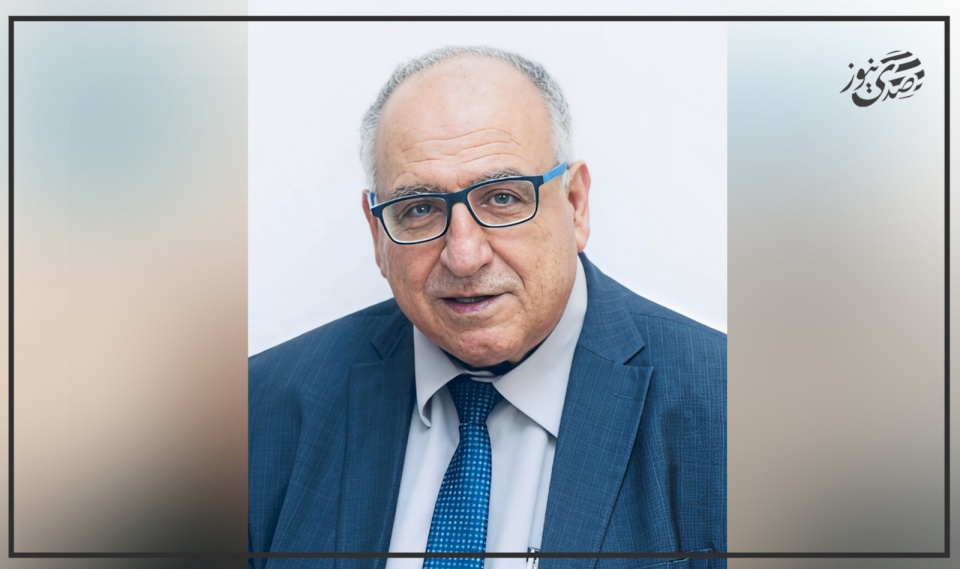
Dr. Nabil Koukali, founder and president of the Palestinian Center for Political Opinion (PCPO), is a researcher specializing in public opinion polls and survey methodologies. He has over three decades of experience in social, political, and economic research and has supervised numerous national and international studies in Palestine and the Middle East.
 Follow the latest Sada News via Google News
Between Trust Deficit and Possibility of Coexistence: How Do Palestinians View the Conditi...

To Whom It May Concern

The Fuel Company: When the Absence of Answers Becomes the Biggest Question

When Indicators Fail to Narrate the Palestinian Economy

The Tale of a People Who Refused to Believe the Well

What Does the Supreme National Interest Mean for Palestinians? And How Can It Be Achieved?
The Wronged Ramallah
