

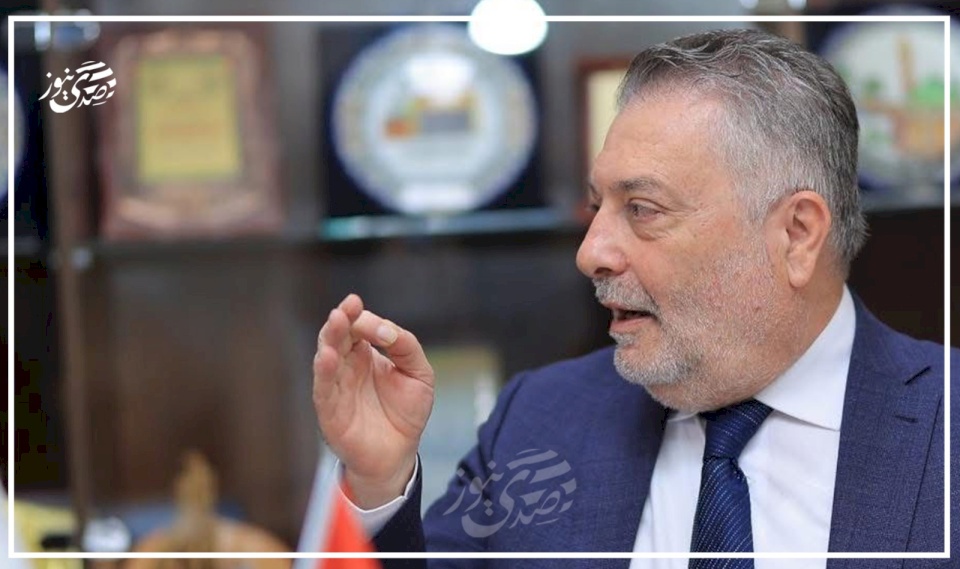
Living Cells of the Palestinian Economy: Municipal Strategies for Creating "Mini Economies" in Times of Siege
- International Economic Advisor - Member of the International Digital Transformation Council
The Palestinian economy lives in a constant state of structured uncertainty due to its absolute dependence on the financial center (clearance and public budget). Experiences have proven that any political or security shock is capable of paralyzing this center and the entire economic cycle. The transition to "urban resilience economy" represents an innovative and necessary response, where the weight of development shifts from the fragile center to the solid base represented by municipalities and local communities.
The Dilemma of Centralization and Structural Fragility
The Palestinian economy has long been a prisoner of a developmental model reliant on foreign aid and central government spending. This excessive dependence means that the central financial crisis, manifested in the disruption of clearance funds or delays in salary payments, quickly transforms into a comprehensive living crisis. For instance, clearance revenues saw a sharp decline of 23.5% during recent crisis periods, leading to near-complete paralysis of government spending. This close interconnection between the center and the periphery is a strategic weakness that must be dismantled by enhancing economic decentralization.
Municipalities, as the closest governing institutions to citizens, have the potential to be the first and last line of defense against these shocks. However, their traditional role has remained limited to providing basic services. Amidst extremely high unemployment rates, which exceeded 31% in the West Bank and reached record levels in the Gaza Strip, the role of municipalities in providing local job opportunities becomes vital. Municipalities must transform from mere service providers to mini economic units capable of generating added value, providing job opportunities, and ensuring the continuity of economic life within their geographical scope, thus reducing citizens' reliance on government salaries as the sole source of income.
Municipalities: From Service Providers to Development Drivers
Activating the role of municipalities as drivers of local development requires a redefinition of the concept of "economic sovereignty." While major financial sovereignty is besieged, minor (local) economic sovereignty remains achievable through two main axes:
1. Enhancing financial independence and generating revenues: Instead of total reliance on central budget transfers, municipalities must develop smart and effective local collection tools. This does not mean increasing burdens on the citizen but rather improving collection efficiency, and expanding the local tax base to include income-generating projects managed by the municipality itself (such as managing wholesale markets or investing in digital infrastructure). Every dinar collected locally is a dinar fortified against external political blackmail and strengthens trust between the citizen and the local institution.
2. Decentralized partnership and community financing: The municipality must become a catalyst for partnership between the local public sector, private sector, and civil society. Municipalities can create local development funds, in cooperation with banks and expatriates, to finance small and medium enterprises that focus on the needs of the local community. This community financing creates an internal economic cycle that is not affected by external fluctuations, ensuring that capital serves local development priorities. Moreover, activating the role of expatriates in direct investment in projects in their original municipalities represents a strong lever for the resilience economy.
Pillars of the "Urban Resilience Economy"
The urban resilience economy is based on three fundamental pillars aimed at reducing dependency and increasing flexibility:
A. Local energy security as a lever for independence: Energy represents a critical vulnerability. Municipalities can lead large-scale solar energy projects on the rooftops of public and private buildings, not only to generate electricity for municipal facilities but also to sell surplus back to the local grid, thereby reducing central energy bills and creating a sustainable source of income. This investment in renewable energy is an investment in economic independence, reducing dependence on external energy sources.
B. Food security and urban agriculture as a resilience mechanism: Given the constraints on land and resources, municipalities can support and facilitate urban and vertical farming projects, utilizing underutilized land within the municipal boundaries to produce essential vegetables and fruits. This enhances the food security of the community, reduces import costs, and provides seasonal job opportunities. Supporting local small farmers also contributes to land preservation and stabilizing populations.
C. Supporting small and medium enterprises (SMEs) as a base for employment: Municipalities are best positioned to identify local market needs. They can provide local business incubators, offer tax incentives for projects that employ youth, and focus on service sectors that do not require heavy infrastructure, such as outsourcing and digital services. Supporting these projects ensures a diversification of income sources and reduces reliance on government jobs. This role becomes crucial when we consider that small and medium enterprises account for nearly 98% of operating establishments in the Palestinian economy, making them the foundational base for any resilience strategy.
Conclusion: Decentralization as a Resistance Strategy
The shift towards an urban resilience economy is not merely a developmental option, but rather a comprehensive economic resistance strategy. When municipalities can secure their essential needs for energy, food, and financing, they diminish the effectiveness of central pressure tools and limit the impact of external shocks. This model does not aim to separate from the central state, but to strengthen it by building a solid and flexible economic base, where municipalities operate as living cells ensuring the continuity of economic life even in the most difficult conditions. The future of the Palestinian economy is not built solely on major political negotiations, but on thousands of small economic decisions made by local communities daily to ensure their survival and continuity. The urban resilience economy is the path to genuine economic sovereignty that begins where the citizen lives and establishes a new phase of sustainable development.
 Follow the latest Sada News via Google News
When Indicators Fail to Narrate the Palestinian Economy

The Tale of a People Who Refused to Believe the Well

What Does the Supreme National Interest Mean for Palestinians? And How Can It Be Achieved?

The Wronged Ramallah

Between Pragmatism and Survival Management: Where Does Hamas Go After the Election of Khal...

Khalil Al-Hayya as President of Hamas.. Continuation of the Founders' Approach

The Annihilation of Sportsmanship
