

A Paper by MAS Outlines a Roadmap for the Recovery of the Education Sector in Gaza
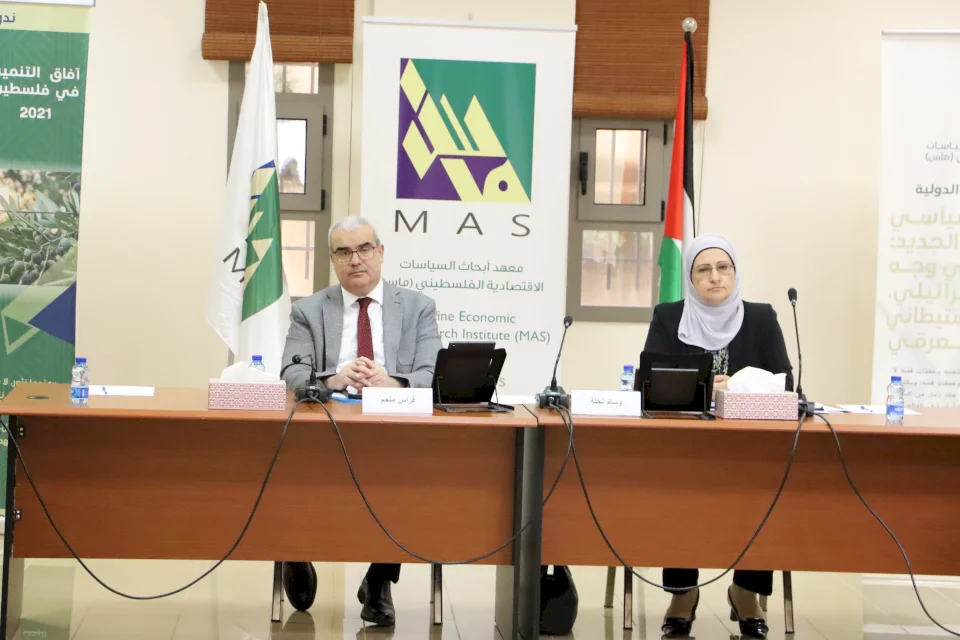
SadaNews - The Palestinian Economic Policy Research Institute (MAS), in partnership with and supported by the Heinrich Böll Foundation (Office for Palestine and Jordan), held the fourth roundtable meeting of 2026 to discuss "Education in Gaza During War: From Survival to Recovery and Renewal?" at the institute's headquarters and via Zoom. The background paper was prepared by Dr. Adnan Ayash, a lecturer at Al-Azhar University - Gaza, while Engineer Wissam Nakhla, General Director of Buildings at the Ministry of Education and Higher Education, provided the first intervention, followed by Dr. Ammar Al-Qudra, researcher and economic expert, with his second intervention.
The director general of the institute opened the meeting, welcoming participants and emphasizing that the topic of the meeting holds special importance in light of the unprecedented challenges facing the education sector in Gaza. He pointed out that the financial crisis resulting from the occupation's policy of continuing to withhold clearance funds directly affects the Palestinian government's ability to meet its obligations, especially in the education and health sectors.
For his part, the director of the Palestine and Jordan office at Heinrich Böll, Elysia Alberscht, expressed his gratitude to MAS. He praised the long-standing partnership between the two institutions, which has resulted in numerous dialogue sessions addressing developmental issues. He affirmed that the institute always highlights priority issues that concern Palestinian society and expressed pride in his organization’s support for this roundtable given its important topic, especially as it addresses the reality of education in the Gaza Strip, a humanitarian issue that garners significant attention.
In his presentation of the paper, researcher Ayash stated that the education sector in Gaza witnessed unprecedented destruction between 2023 and 2026, with more than 95% of schools suffering varying degrees of damage, many of which became centers for sheltering displaced individuals. Additionally, higher education institutions were directly affected, with universities and training centers suffering severe damage that disrupted study and scientific research. More than 625,000 children and 88,000 university students were impacted by the interruption of education, and over 19,000 students and more than a thousand teachers and administrators were martyred. He noted that this disaster led to a widening educational loss.
The researcher pointed out that despite the extensive destruction in the Gaza education sector, the educational process did not stop entirely; rather, multiple adaptation strategies emerged to help maintain educational continuity. These responses included reliance on e-learning and remote education, establishing temporary educational spaces within shelters, launching community initiatives for informal education, as well as support provided by international partnerships and academic solidarity through scholarships and digital educational resources.
The paper also presents an assessment of the phase of resilience and survival in Gaza's education sector, where despite facing unprecedented destruction, it managed to maintain a minimum level of continuity in the educational process thanks to the adaptation strategies employed. However, this resilience remains fragile due to the extensive damage to educational infrastructure, the widening educational loss, weak digital infrastructure, inequitable access, ongoing displacement, limited funding, as well as continued bombing operations and instability. This necessitates adopting a trajectory for rebuilding a more resilient and sustainable education sector, based on digital transformation and blended learning, developing vocational and technical education, and leveraging the competencies of the Palestinian diaspora.
The researcher presented three potential scenarios for the future of education in Gaza that start from the current reality and diverge as time extends—depending on the security situation and the extent of funding. These scenarios range from the continued management of the crisis to gradual recovery, culminating in comprehensive rebuilding and transformation.
The researcher concluded his presentation with a roadmap for recovery and renewal, comprising three interlinked phases that include urgent priorities to ensure the continuity of education and address educational loss, enhance psychological and social support, medium-term priorities for rehabilitating educational infrastructure, developing digital and vocational education, and building academic partnerships, and long-term priorities represented by building a more resilient educational system that consolidates blended learning and enhances the role of universities in development, fostering sustainable developmental partnerships.
In her intervention, Nakhla confirmed that the education sector in Gaza has sustained significant damage and has been directly targeted by the Israeli occupation, noting the targeting and martyrdom of several university presidents, which indicates a clear targeting of educational institutions and its implications for opportunities for human development in the sector. She added that the efforts of the Ministry of Education continue unabated, stating that the educational curricula are unified between the West Bank and Gaza Strip. She said that prior to the war, Gaza had 562 schools, and ministry estimates indicate that the reconstruction of the education sector requires around 4 billion dollars. She highlighted that under the current circumstances, there are specific needs to develop and enhance distance education.
For his part, Al-Qudra affirmed in his intervention that education is a fundamental priority in the recovery process and holds a central place in the reconstruction phase. He stressed the importance of maintaining integrated education that contributes to protecting an entire generation deprived of education over the past three years. He noted that education constitutes an important tool for social protection, necessitating a focus on providing a safe environment for children, especially given their exposure to multiple traumas. The return to schools is not limited to meeting educational requirements only but also includes providing a safe environment. He emphasized the importance of involving families in recovery efforts and enhancing the role of universities, researchers, and specialists at this stage, also emphasizing the need to build a more resilient educational system.
In their interventions, participants noted the significant difficulties facing the educational process in the sector since October 7, 2023, which requires working according to a gradual recovery approach as the most feasible on the ground. They affirmed that the continuation of aggression, along with displacement and immigration operations, increases the challenges facing the education sector. They called for the development of an educational system that aligns with the aspirations and needs of the families in the Gaza Strip, as it is a fundamental pillar for the development and recovery process in the sector.
 Follow the latest Sada News via Google News
A Paper by MAS Outlines a Roadmap for the Recovery of the Education Sector in Gaza

Election Commission: Opening of online registration for new voters in preparation for legi...

August 1: Opening of a Solo Exhibition for Khaled Hourani at Zawyeh Gallery – Ramallah

Two Young Men Die in a Car Accident in Yatta City

Palestine Police Sciences College Receives (IADLEST) Accreditation and Certificate of Exce...

Baidar Human Rights Organization: Occupation Forces Demolish Homes and Sheep Pens in the A...

Release of prisoner Ahmad Khadr from Qalandia camp after 25 years in occupation prisons
