
Washington Supports Reviving an Iraqi Oil Pipeline Through Syria That Bypasses Hormuz
SadaNews - The United States is moving forward with talks regarding a pipeline to transport oil from Iraq to Syria, following a route that avoids the Strait of Hormuz and reduces Iran's future influence over global energy supplies.
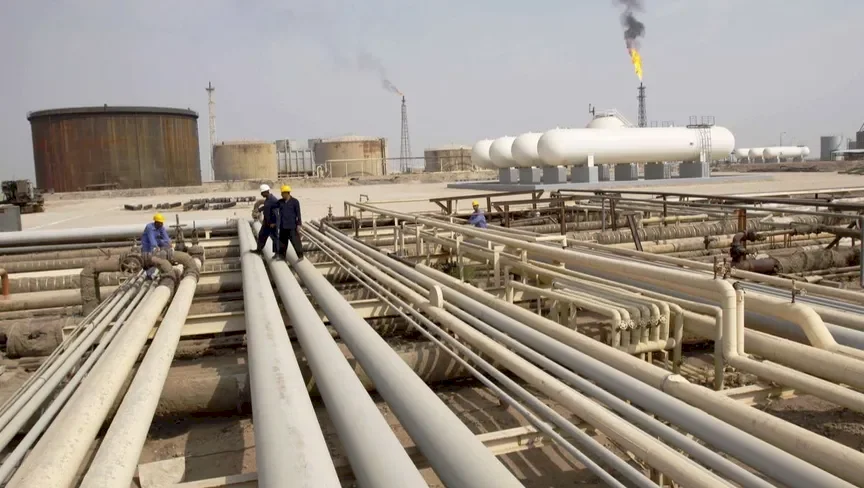
Thomas Barak, the U.S. special envoy to Syria and Iraq, has held discussions with officials from both countries, as well as with companies including "Chevron", about reviving a long-stalled pipeline that extends from Iraq to the west coast of Syria, according to people familiar with the matter. The individuals stated that while several routes to establish new connections are being explored, the talks are focused on rebuilding the "Kirkuk-Baniyas" pipeline, which has been idle for more than two decades.
A State Department official confirmed that the U.S. government supports efforts by Iraq and Syria to enhance trade routes by rehabilitating the pipeline between the two countries and expects that U.S. companies will play a role in its construction. Earlier on Tuesday, President Donald Trump met with Iraqi Prime Minister Ali Al-Zaydi at the White House and stated that new "huge" oil partnerships would be announced this week or next week.
The escalation of tensions in the Middle East over the past week highlights the need for long-term alternatives to the Strait of Hormuz, which remained closed during much of the war, causing the greatest disruption to energy supplies in history and hurting the region's economies. Countries including Iraq and Kuwait are considering whether they can replicate the success of the UAE and Saudi Arabia in bypassing Hormuz to secure the export of some of their oil supplies using pipelines built years ago.
The Syrian port of Baniyas on the Mediterranean coast, which already houses the country's largest refinery, stands out as one of the frontrunners for receiving Iraqi crude oil and transforming into an expanded export gateway to global markets. Companies such as "Chevron", "TotalEnergies", and "TI Capital", which is based in Los Angeles, along with Qatari "UCC Holding", have participated in discussions over the past few weeks to expand Syria's role as a center for export, according to people who requested anonymity because the talks are not public.
However, building pipelines in Syria will be fraught with challenges. The routes are likely to pass through Anbar province in western Iraq and eastern Syria, where ISIS cells remain active. Any company investing will bet on the new government's capacity to stabilize the country after a long and bloody war.
"Chevron", which has signed agreements concerning potential oil projects in Iraq and Syria over the past few months, declined to comment. The company has been in discussions with Iraq since last year regarding investments in the "Al-Nasiriya" and "West Qurna-2" fields in the country. "TotalEnergies", "TI Capital", and "UCC Holding" did not respond to requests for comment.
Iraq, which was the second-largest producer in OPEC before the war, has relied heavily on the Strait of Hormuz and had to reduce its oil production by 60% during the conflict, which put pressure on the public finances of a country with a long history of civil unrest.
Trump supported Al-Zaydi in taking the position of Prime Minister in April, believing that his main rival, former Prime Minister Nouri al-Maliki, was too close to Iran. Al-Zaydi is relatively new to politics, but the White House hopes he can rein in Iran-backed armed groups in Iraq while opening the country's oil sector more to U.S. companies.
One of the options that Barak is promoting is the rebuilding of the "Kirkuk-Baniyas" pipeline, which is a 500-mile (800-kilometer) network that has been idle since it was damaged during the U.S. invasion of Iraq in the early 2000s. Another alternative is to extend a line from Basra in the south to Haditha in the north, which could then branch off into Syria, Turkey, or Jordan.
Earlier this month, the Iraqi government allowed the state-owned "Basra Oil Company" to award a contract to Houston-based engineering firm "KBR" to advise on the project.
Iraq is eager to attract foreign investments that would reduce its reliance on its southern ports on the waters of the Arabian Gulf. It currently has only one main export pipeline that transports oil from the north to the Turkish port of Ceyhan on the Mediterranean.
The prospects for new pipelines in Iraq appear to find a willing partner in Syrian President Ahmed al-Sharaa, who is trying to reintegrate the country into the international community after a 14-year civil war.
Al-Sharaa received a warm welcome on the sidelines of the NATO summit earlier this month from U.S. President Donald Trump, who pledged to lift terrorism sanctions imposed on the country.
The U.S. lifted several other restrictions on Syria over the past year, allowing companies including "Chevron", "TotalEnergies", and "ConocoPhillips" to begin negotiations regarding oil exploration in the country.
Basel Swaidan, Syria's Minister of Agriculture, said in an interview: "Syria could become a comprehensive destination to reduce risks and diversify export options." He added, "This gives Syria an important role in the upcoming phase."
However, Syrian pipelines have a history of shutdowns. The "Kirkuk-Baniyas" system was first built in the 1950s, and it was halted in the 1970s, and again in the early 1980s, due to degrading relations between Iraq and Syria.
Its revival could become one of Iraq's main export routes to the Mediterranean, making it a potential target during periods of regional tension. Iran-backed armed groups in Iraq, who have already expressed their opposition to deepening energy cooperation with Syria, may view the project as undermining Tehran's interests and disrupt its operations.
Tarek Nemeh, a Syrian American businessman who has previously organized delegations from the U.S. Congress and the business sector to the country, said: "From an investment perspective, Syria's long-term value lies in its ability to link regional markets." He added, "This strategic location attracts investors' interest, although much work remains to be done before widespread investments materialize."
There are also practical challenges. A large portion of the "Kirkuk-Baniyas" pipeline has been out of service for decades, and it will need to be rebuilt, alongside pumping stations and other infrastructure, at a possible cost reaching billions of dollars.
Earlier this month, French President Emmanuel Macron visited Damascus, becoming the first European leader to do so since the fall of Assad. The aim of the trip, which was disrupted by blasts in Damascus that injured about 12 people, was to promote regional stability and diversify supply routes between Europe and the Middle East, according to the French presidential palace.
Patrick Pouyanné, CEO of the French oil giant "TotalEnergies", who was part of the delegation, told reporters during his time in Damascus: "Syria is at a strategic crossroads in the Middle East." He added, "For example, when you want to transport Iraqi oil without relying on the Strait of Hormuz, Syria becomes an important transit route. This is why the country gains significance."
"Bloomberg"
 Follow the latest Sada News via Google News
Washington Supports Reviving an Iraqi Oil Pipeline Through Syria That Bypasses Hormuz

Bloomberg: Limited Movement of Ships in the Strait of Hormuz After Resumption of Naval Blo...

Gold Stabilizes as US Inflation Slows

Oil Rises for the Third Day as Washington Resumes Blockade on Iranian Shipments

In the Global Artificial Intelligence Race: Where Does Israel Stand So Far?

Iraq's Water Stock Rises by 580% Supported by Rainfall

The Strait Squeeze.. What Happens to the Global Economy if the Bab-el-Mandeb Closes?
