

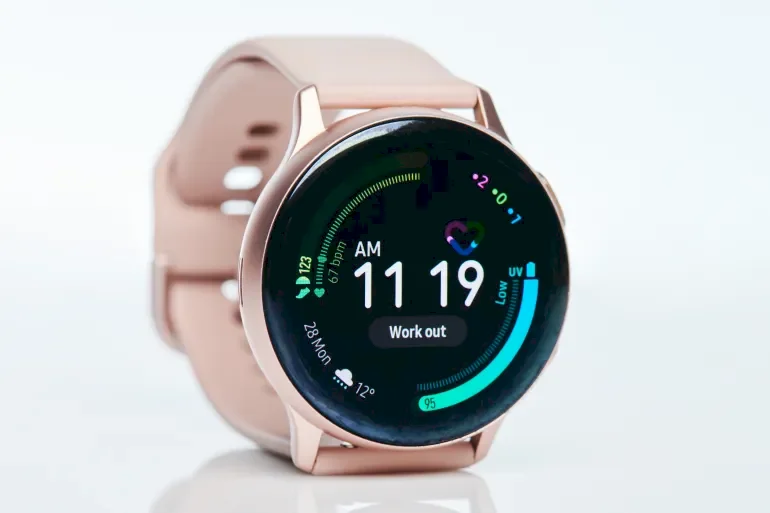
Samsung Asks Its Users to Share Their Data.. What's the Story?
SadaNews - South Korean company Samsung has sparked a debate among its smartwatch users following a request for consent regarding the use of health data collected by the "Samsung Health" platform for developing and training artificial intelligence models.
The notice requests some users to allow their health data to be used for training and modeling artificial intelligence, a step that comes at a time when major tech companies are increasingly relying on user data to enhance the capabilities of AI systems, particularly in the fields of health and fitness.
What data does Galaxy Watch collect?
Smartwatches are among the most capable personal devices for collecting daily information about users, as they rely on a variety of sensors to monitor multiple vital signs.
The data that Galaxy Watches can collect includes information such as heart rate, sleep patterns and quality, physical activity levels, calories burned, blood oxygen levels, exercise data, and some health indicators provided by Samsung's advanced features.
Samsung currently uses this data to offer health features that rely on artificial intelligence, such as sleep analysis, providing personalized recommendations to improve daily habits, and monitoring fitness indicators.
However, using this data to train AI models opens a new avenue for discussion, as health information is one of the most sensitive types of personal data.
Why does Samsung need this data?
The development of modern AI models relies on huge amounts of data that help algorithms learn and discover patterns.
In the field of digital health, data collected from millions of users can aid in the development of algorithms capable of understanding the relationship between sleep patterns, physical activity, and various health indicators, as well as improving the accuracy of digital health services.
Companies like Samsung, Apple, and Google are competing to develop AI systems integrated into wearable devices, aiming to transform smartwatches from notification display and activity measurement tools into platforms that offer advanced health analytics.
Concerns about Privacy
Despite the potential benefits of using health data in AI development, privacy experts believe that collecting this information requires the highest levels of transparency and protection.
Health data is different from other types of information, as it may reveal precise details about people's lives, such as sleep habits, activity levels, and overall physical condition.
Some users have raised concerns that consenting to share data may become a prerequisite for accessing certain Samsung Health services, especially if refusing to share leads to restrictions on syncing or data storage.
Privacy advocates demand that consent options be clear and that users receive a precise explanation of what type of data will be used, the purpose of its use, the duration of its retention, and whether it will be shared with other entities.
The AI Race Enters the Health Sector
Samsung's move is part of a broader trend in the tech industry, where health data has become a central focus in the AI race.
Companies are working to develop what is known as personal health AI, which aims to provide personalized advice and analysis based on users' daily data, but this evolution presents companies with a dual challenge: achieving significant technological advancement while maintaining user trust.
As devices become more capable of monitoring the details of people's lives, establishing clear rules to protect sensitive data from unexpected or unwanted use becomes increasingly important.
Between Enhancing Services and Protecting Data
Samsung believes that using AI can help provide more beneficial health experiences for its device users, but the recent debate reflects a larger question facing the entire tech sector: who owns the health data produced by smart devices?
As AI continues to expand into phones, watches, cars, and household devices, the issue of controlling personal data will become one of the major tech battles in the coming years.
Users want smarter services, but at the same time, they demand to know what happens to their information after it is collected, especially when that information is related to their health and daily lives.
Source: Al Jazeera + Agencies
 Follow the latest Sada News via Google News
Samsung Asks Its Users to Share Their Data.. What's the Story?

The Earth Gives Birth to an Island from Nothing.. Satellites Document "Volcanic Labor"

How Does Colon Cancer Transform into a Version Capable of Invading the Liver?

The "VAR-gentina" Theory: How Did Referee Decisions Ignite Allegations of Favoritism Towar...

What Happens to Your Brain When You Watch the Sunrise or Sunset? A Study Answers

As the Final Match Approaches.. How Can We Psychologically Benefit from Following the Worl...

Syria Qualifies for the U-18 Asian Basketball Cup... Is the World Cup Dream Coming Closer?
