

US: Negotiations with Iran Continue Despite Escalation
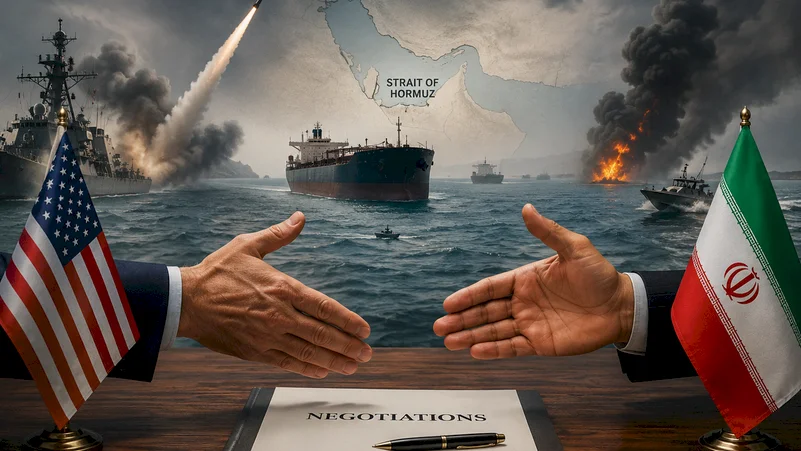
SadaNews - While the military confrontation between the United States and Iran continues, Washington has confirmed that it remains committed to the diplomatic path, stressing that negotiations with Tehran will continue despite the recent escalation in the Strait of Hormuz and the mutual military strikes.
The Wall Street Journal reported an American official stating that the United States will continue negotiations with Iran, indicating that the American administration does not see military escalation as an alternative to the political path, but rather a means of pressure to reach a final agreement.
These statements come hours after the U.S. Central Command announced the conclusion of a new round of military operations against Iran, claiming to have targeted more than 80 sites including air defense systems, command and control networks, coastal radars, and anti-ship missile platforms, in addition to over 60 fast boats belonging to the Revolutionary Guard in the vicinity of the Strait of Hormuz.
The Central Command clarified that the strikes aimed to undermine Iran's ability to threaten international navigation, affirming at the same time that U.S. forces "will remain on standby" to act if Tehran does not adhere to the existing agreements.
In response, Iranian military leadership vowed a "crushing" retaliation, considering the American attacks to be "blatant aggression", and emphasizing its rejection of any American role in managing navigation in the Strait of Hormuz.
The new U.S. stance came after the Treasury Department revoked the temporary license that allowed Iran to export oil until next August, in a move the American administration linked to the attacks that targeted three commercial vessels in the Strait of Hormuz, including a Qatari liquefied natural gas tanker.
An American official described those attacks as "absolutely unacceptable", affirming that the memorandum of understanding signed between Washington and Tehran "depends entirely on performance", and that any continued easing of sanctions is contingent upon Iran's commitment to its obligations, especially regarding freedom of navigation.
Despite the intensifying economic and military pressures, the American official emphasized that U.S. negotiators "continue to work in good faith to reach a final agreement", reflecting Washington's insistence on keeping communication channels open, even amid the worst wave of escalation since the outbreak of war last February.
This equation indicates that the American administration is attempting to combine military and economic pressure with the opportunity for political settlement, as it believes that the use of force does not contradict the continuation of negotiations, but may push Tehran to make concessions on outstanding issues.
The issue of the Strait of Hormuz remains one of the main obstacles to any lasting agreement, having become the focal point of contention between the two sides. While Iran insists on imposing new arrangements for managing ship traffic and the fees associated with transit, the United States contends that freedom of navigation in the strait is non-negotiable, considering any targeting of commercial vessels a direct violation of previous understandings.
 Follow the latest Sada News via Google News
Occupation Injures Young Man and Arrests Him from Inside an Ambulance North of Bethlehem

Irish Parliament Bans Import of Goods from Settlement Products in the West Bank and Jerusa...

First Official Visit.. U.S. Defense Secretary Visits Israel Today

Washington Reinstates Iranian Oil Sanctions After Hormuz Attacks

After the Framework Agreement with Israel.. Washington invites Aoun to visit America

US: Negotiations with Iran Continue Despite Escalation

Weather: Slight Decrease in Temperature with Continued Hot Conditions
