

China Buys Largest Amount of Gold Since 2023 Despite Price Fluctuations
SadaNews - The People's Bank of China increased its gold purchases in June, recording the largest monthly addition since October 2023, in a move that reflects Beijing's commitment to diversifying its official reserves despite the sharp decline in the precious metal last month.
Official data from China’s State Administration of Foreign Exchange showed that China's gold holdings rose to 75.44 million ounces in June, up from 74.96 million ounces in May, representing an addition of 480,000 ounces, or about 14.9 tons, to the official reserves. The announced dollar value of the gold holdings in China's reserves stood at $303.72 billion by the end of June.
The increase, according to Bloomberg, extends the longest continuous buying spree by the People's Bank of China since at least 2015, as the central bank continued to add gold to its reserves for the twentieth consecutive month, indicating a continued policy to reduce reliance on dollar assets and increase the metallic component of its reserves.
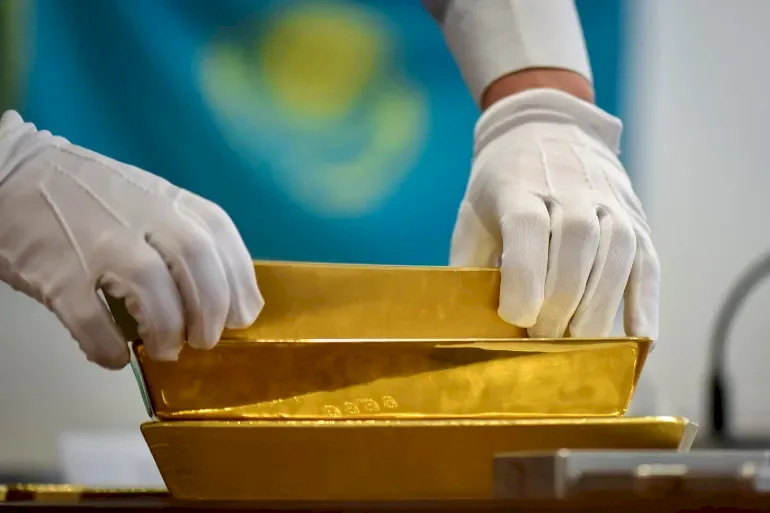
Gold bars of various values stored in a secure deposit room in Munich, Germany (Reuters)
Gold dropped 12% in June, breaking through the $4,000 per ounce level, marking the largest monthly loss since 2008, under pressure from expectations of U.S. interest rate hikes following heightened inflation risks associated with the war on Iran and a stricter tone from the Federal Reserve.
Despite the increase in quantity held by the People's Bank of China, official reserve data reveals a decline in the dollar value of gold from $340.75 billion in May to $303.72 billion in June, reflecting the impact of price declines on the valuation of metal holdings within reserves.
China’s foreign exchange reserves also recorded $3.416 trillion in June, down from $3.442 trillion in May.
Away from the Dollar
The World Gold Council, in its annual survey released in June 2026, states that central banks have accumulated an average of about 1,000 tons of gold annually over the past four years, compared to an average of 500 tons annually in the previous decade, indicating a clear acceleration in the pace of official purchases of the precious metal.
The survey, which included 76 central banks, found that 89% of participants expect global central bank gold reserves to increase over the next 12 months, while 45% said they expect their institutions’ gold holdings to increase during the same period, which is a record percentage in the history of the survey.
Furthermore, the World Gold Council noted that 74% of participants expect the dollar’s share in global reserves to decline over the next five years, while they anticipate an increase in the share of gold, positioning China's moves within a broader wave of global official reserve redistribution.
Central Banks' Commitment to Gold
According to the World Gold Council, factors such as gold's performance during crises, portfolio diversification, inflation hedging, and hedging against geopolitical risks are among the primary motivations for central banks to hold the precious metal or increase their allocations. Moreover, 90% of survey participants reported that gold's performance in times of crisis is a significant factor in the decision to hold it, which is the highest percentage recorded for this factor in the survey.
This factor gains particular importance for emerging and developing economies, as the survey showed that 95% of banks in this group consider geopolitical instability to be a significant factor in reserve management, compared to 67% among central banks in advanced economies.
In July, the World Gold Council announced that central banks returned to purchasing in May, with a net increase of 41 tons, noting that China was among the major buyers alongside Poland, Uzbekistan, and Kazakhstan.
It added that China had added 25 tons to its reserves from the beginning of the year until May before increasing its purchases again in June.
 Follow the latest Sada News via Google News
China Buys Largest Amount of Gold Since 2023 Despite Price Fluctuations

Bloomberg: Unusual Delays in Bank Transfers Between Saudi Arabia and the UAE

Aramco Considers Increasing East-West Pipeline Capacity by Two Million Barrels

Egyptian Private Sector Shrinks at Fastest Rate in Over 3 Years

Saudi Arabia Grants "Aqua" Exclusive Rights to Export Green Hydrogen and Its Derivatives

Oil Prices Rise as Tensions Return to Hormuz

Gold Declines Amid Renewed Hormuz Tensions as Market Awaits Federal Minutes
