

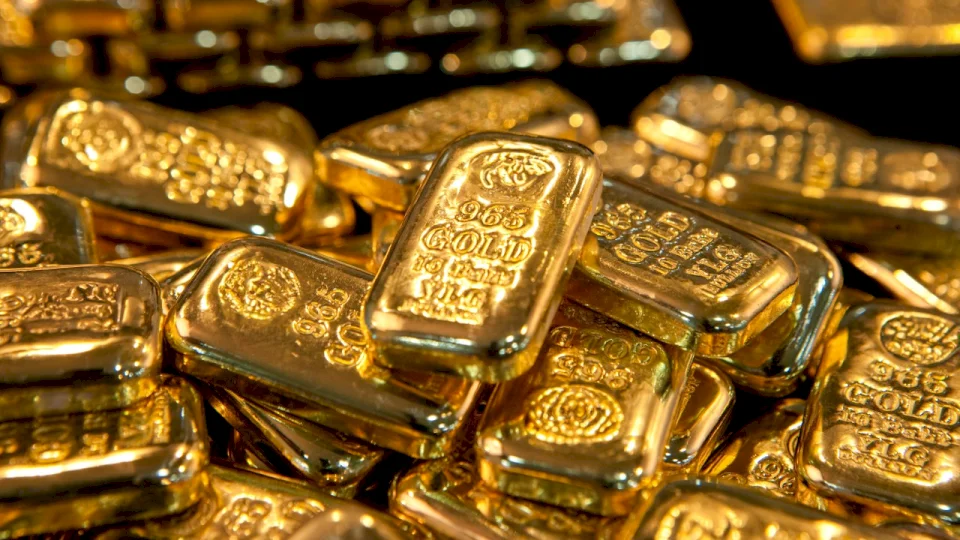
Gold prices register close to $4,128 per ounce
SadaNews - Gold prices fluctuated within a narrow range as investors awaited signals regarding the Federal Reserve's interest rate outlook, amid renewed U.S. airstrikes on Iran, raising concerns over a resurgence in energy prices and inflation.
The precious metal was around $4,128 per ounce, showing little change after a 1.4% drop in the previous session.
The U.S. Central Command stated that it launched "strong strikes" in response to Iranian attacks on shipping vessels in the Strait of Hormuz, just hours after Washington canceled a waiver that had allowed Tehran to sell oil globally. Oil prices rose.
Interest rates and the dollar pressure gold
Any recovery in energy prices would bolster expectations that the Federal Reserve may need to keep interest rates elevated for a longer period to combat persistent inflation.
High borrowing costs typically exert pressure on gold, which does not yield interest, while a stronger dollar has also made the precious metal, priced in U.S. currency, more expensive.
Traders will monitor signals regarding interest rate expectations when the highly anticipated minutes from the Federal Reserve's June meeting are released later on Wednesday.
The precious metal fell after that meeting as the new Fed Chair Kevin Warsh appeared more inclined towards a tighter monetary policy than the markets had expected.
However, weaker-than-expected jobs data last week reduced the likelihood of interest rate cuts in the near term, pushing gold above the $4,000-per-ounce threshold again.
Carsten Minke, head of next-generation research at Julius Baer Group Ltd, wrote in a note: "All that the gold and silver markets care about right now is whether the U.S. Federal Reserve will raise interest rates or not."
He added: "We do not expect the Federal Reserve to raise interest rates, as it is likely that part of the inflationary pressure is temporary."
Central bank buying supports the market
Gold has dropped more than a fifth since the start of the Iran war in late February, with a wave of profit-taking ending a three-year rally and pushing the metal into a bear market last month.
However, there is currently little evidence that investors are building large short positions in anticipation of further declines.
The People's Bank of China bought more gold in June, extending its longest buying streak since at least 2015 and affirming its commitment to diversify its reserves despite recent price volatility.
The latest survey by the World Gold Council in June showed that the number of central banks expecting to increase their reserves next year is at an all-time high.
Minke stated that central bank purchases remain "the strongest structural force in the market." He added: "However, a lot of damage has occurred, and it is likely to take some time for the market to regain its balance."
Spot gold fell 0.1% to $4,101.28 per ounce at 9:05 AM in Singapore, and silver was down 0.2% to $59.86.
Platinum and palladium also declined, and the Bloomberg Dollar Spot Index, a gauge of the U.S. currency, rose for a second day.
Silver price
Silver prices were also reported near $60 per ounce.
 Follow the latest Sada News via Google News
Floating Iranian Oil Faces Uncertain Fate After U.S. Exemption Cancellation

Brent Surpasses $76 After U.S. Strikes on Iran

Gold prices register close to $4,128 per ounce

China Buys Largest Amount of Gold Since 2023 Despite Price Fluctuations

Bloomberg: Unusual Delays in Bank Transfers Between Saudi Arabia and the UAE

Aramco Considers Increasing East-West Pipeline Capacity by Two Million Barrels

Egyptian Private Sector Shrinks at Fastest Rate in Over 3 Years
