

Aramco Considers Increasing East-West Pipeline Capacity by Two Million Barrels
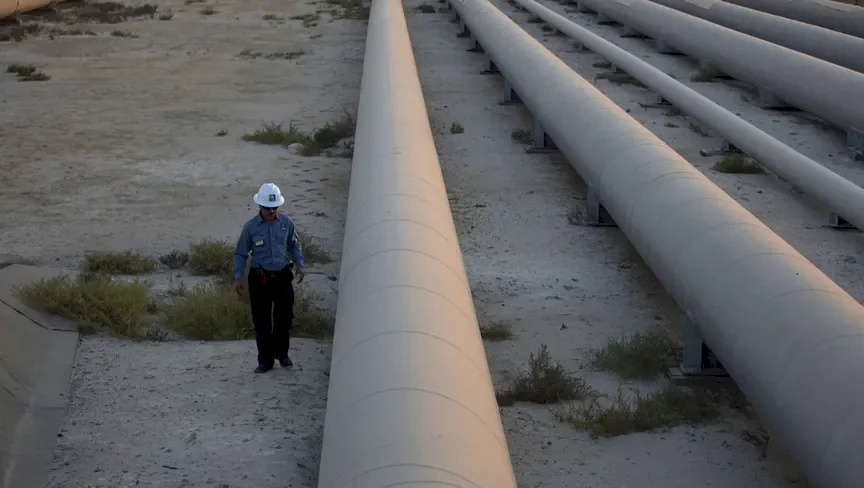
SadaNews - Saudi Arabia's "Aramco" is considering increasing the capacity of the "East-West" oil pipeline by up to two million barrels per day, a move that would enhance the kingdom's ability to export crude through the Red Sea, away from the Strait of Hormuz, which has experienced disruptions in recent months due to the war in Iran, according to Reuters, citing five informed sources.
The sources noted that Saudi Arabia is in preliminary talks with several neighboring countries regarding the potential expansion project, which could also allow for the transport of additional amounts of oil from other countries through Saudi territory to the Red Sea coast, providing an alternative outlet for oil exports away from the Arabian Gulf.
The "East-West" Pipeline is Strategic for the Oil Market
It is still unclear whether the plan will depend on expanding the existing infrastructure of the pipeline or constructing new ones. According to one source, the project may include the creation of an additional smaller pipeline dedicated to transporting petroleum products.
The "East-West" pipeline has gained increasing strategic importance since the outbreak of the Iranian war last February and the subsequent widespread disruptions in shipping through the Strait of Hormuz, through which approximately 20 million barrels of oil and condensates pass daily, equivalent to about one-fifth of global consumption.
The pipeline extends across the Arabian Peninsula from oil fields in the east of the kingdom to the port of Yanbu on the Red Sea coast, covering more than a thousand kilometers through deserts and the Hijaz mountains. The pipeline is one of the most important alternatives available to bypass the Strait of Hormuz, as it allows for the direct export of oil from the Red Sea to global markets.
Raising Oil Flows through the Pipeline to 7 Million Barrels
The CEO of "Aramco," Amin Nasser, stated in May that flows through the pipeline were raised to its maximum capacity of 7 million barrels per day within just 8 days of the onset of the crisis. Adding two million barrels per day to the pipeline's capacity would raise its theoretical capacity to about 9 million barrels per day, enhancing Saudi flexibility in managing oil flows during periods of geopolitical tension or disruptions in maritime shipping routes.
However, the export capacity from the port of Yanbu remains lower than the pipeline's capacity itself, as the northern and southern terminals currently have an export capacity of about 5 million barrels per day, according to Nasser, who indicated that the company is working to increase it beyond this level. Additionally, part of the oil transported westward goes to local refineries, limiting the amounts available for crude exports.
In the latest threat to navigation through the Strait of Hormuz, a liquefied natural gas-laden tanker was attacked with a projectile near the Omani coast while exiting the waterway, raising further concerns among shipowners and testing a US-Iranian agreement aimed at stopping attacks in this waterway, according to Bloomberg.
 Follow the latest Sada News via Google News
Aramco Considers Increasing East-West Pipeline Capacity by Two Million Barrels

Egyptian Private Sector Shrinks at Fastest Rate in Over 3 Years

Saudi Arabia Grants "Aqua" Exclusive Rights to Export Green Hydrogen and Its Derivatives

Oil Prices Rise as Tensions Return to Hormuz

Gold Declines Amid Renewed Hormuz Tensions as Market Awaits Federal Minutes

Wall Street Concludes on Oil Surplus in 2027.. Price Predictions Ranging from $60 to $75 p...

"EasyJet" Accepts $7.3 Billion U.S. Acquisition Offer
