

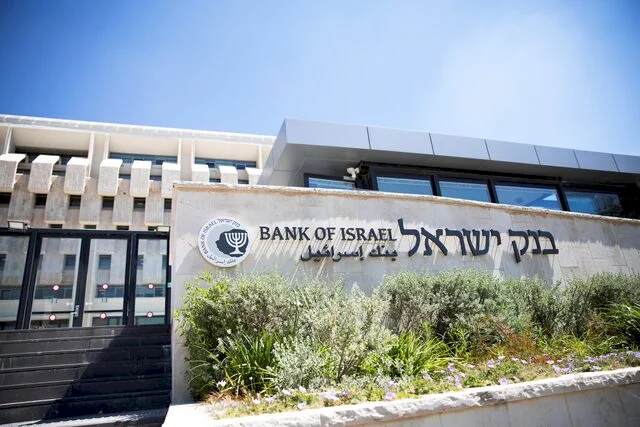
Israel's Bank Buys One Billion Dollars in a New Intervention to Weaken the Shekel
Economy News Translation - The Bank of Israel continued its intervention in the foreign exchange market during the past month of June, purchasing nearly one billion US dollars, according to its monthly report on foreign currency reserves.
According to SadaNews Economy Translation, this marks the second consecutive month in which the central bank has purchased dollars, following its purchase of approximately 801 million dollars in May - its first intervention in the foreign exchange market since 2022. Meanwhile, in ongoing trading, the dollar surged to a price of 3.03 shekels - the highest level in two and a half months.
Despite the purchases, the bank's foreign currency reserves remained virtually unchanged at 238.7 billion US dollars at the end of June, with a slight increase of only 18 million dollars compared to May. The reserve-to-GDP ratio stood at 37.2%. Along with the purchases, the reserves were also affected by government activity in the markets, which amounted to 625 million US dollars, and the revaluation of foreign currency reserves, leading to a decrease of about 1.46 billion US dollars.
The Bank of Israel reaffirms that the purchase "was conducted on an emergency basis, aiming to maintain regular market activity." The bank continues to clarify that it does not intervene to maintain a specific exchange rate. Currently, the Bank of Israel refuses to disclose the exact date of the central bank's intervention, but insists that the intervention was necessary in light of unusual and irregular activity observed in the market, and not intended to affect the exchange rate.
Yesterday, the monetary committee of the Bank of Israel decided to lower the interest rate by 0.25% to reach 3.5%. This is the second consecutive time that the Bank of Israel has lowered the interest rate. Since the beginning of the year, the central bank has cut the interest rate three times (out of five decisions made this year) from 4.25% to 3.5%. The decision to lower the interest rate is not surprising, as it aligns with the expectations of all analysts.
At the same time, the bank raised its growth forecast for the economy for 2026 to 4% (compared to 3.8% in previous forecasts issued in March) - in line with the Ministry of Finance's expectations; it lowered the deficit forecast for the current year to 4.9% (down from 5.3% in previous forecasts); it reduced the inflation forecast for 2026 by 0.4% to 1.8%; and it updated the interest rate forecast for next year - July 2027 - to 3%, indicating that there may be two more interest rate cuts next year.
Source: The Israeli economic newspaper Calcalist
 Follow the latest Sada News via Google News
Soaring Oil Prices Burn the Pockets of the Palestinian Citizen "The Poor"

Millions of Dollars in Losses.. "SadaNews" Reveals Shocking Figures for Traders from Pales...

The Problem of Shekel Overcrowding Worsens.. Fuel Station Owners Threatened with Closure o...

The Palestinian Economy at a Crossroads: 4 Files Awaiting Resolution

Israel's Bank Buys One Billion Dollars in a New Intervention to Weaken the Shekel

Exchange Rates of Currencies Against the Shekel on Tuesday (July 7)

Palestine Exchange and MAS Institute Conclude a Specialized Training Course in Financial A...