

Evacuation and Emergency Plans.. Damascus Opens Euphrates Dam Gates Anticipating Floods
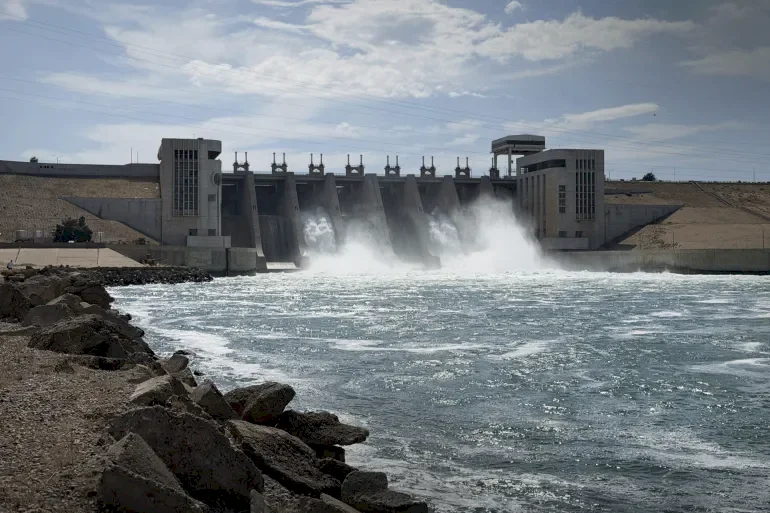
SadaNews - The Syrian Ministry of Energy announced on Monday the opening of 3 gates at the Euphrates Dam in Raqqa Governorate, marking the first time this has been done in over three decades. This measure aims to ensure the dam's safety after the river's water level rose above its normal rate, amidst emergency plans and warnings to residents of a potential flood.
The Syrian Minister of Emergency and Disaster Management, Raed Saleh, urged residents living along the banks of the Euphrates River in Aleppo, Raqqa, and Deir Ezzor provinces to exercise the utmost caution and vigilance.
The water level in the Euphrates River has seen a significant rise due to increased amounts of water being released from dams along the river, following the lakes of the Euphrates reaching over 97% capacity, and an increase in water inflow from Turkey as a result of heavy rain in Turkey and northern and eastern Syria during the current season.
The Euphrates Dam, also known as the Tishrin Dam, is located on the Euphrates River in the town of Tishrin, approximately 50 kilometers west of Raqqa city.
The dam spans 4.5 kilometers in length, with a top width of 20 meters and a base width of 60 meters. It is built from concrete and steel and is designed to withstand earthquakes of up to 7 on the Richter scale. The dam holds a reservoir with a capacity of over 10 billion cubic meters of water.
Coordination with Turkey
The Syrian Ministry of Energy stated in a press release that technical teams at the General Corporation for the Euphrates Dam began to open 3 spillway gates at the Euphrates Dam due to the significant increase in the water inflow, a move considered the first of its kind in over 30 years.
The director-general of the corporation, Haitham Bakour, revealed several risks associated with the rising water level of the Euphrates River for nearby areas, including damage to crops and harm to homes located in areas encroaching on the watercourse, in addition to the risk of drowning for individuals swimming in the river.
Bakour noted in a statement to the Syrian "Al-Ikhbariya" channel that the risks of sudden increases in water inflows from Turkey are related to the Euphrates reservoir's inability to accommodate all incoming water, leading to its release through the spillway gates, thus causing the river level to rise in areas downstream of the Kdairan Dam.
Bakour pointed out that coordination is ongoing with the Turkish side to manage the situation during the current season, but it remains relatively "weak", as the corporation is supposed to be notified well in advance of any releases from dams in Turkey.
Bakour explained that the corporation manages the excess levels through 3 operation rooms located at the three dams along the river (Tishrin, Euphrates, and Kdairan), under the supervision of a central operations room.
Heavy Rains
Experts confirm that the heavy rainfall this year has led to a significant rise in the amount of water entering the river. Water resources expert Abdul Razak Al-Aliwi stated to "Al Jazeera" that the Euphrates dam lakes received approximately 5 billion cubic meters of rain this year, which means reaching a storage threshold of 97% of the maximum storage capacity of the Euphrates.
He pointed out that the Euphrates Dam Corporation was forced, given this situation, to release water exceeding the planned amount estimated at about 290 cubic meters per second to approximately 800 cubic meters per second, with the possibility of increasing that amount to 1,000 cubic meters.
He indicated that these amounts could lead to flooding near the Euphrates basin, urging citizens to stay away from the river during this period due to the risks to them, their livestock, and their vehicles, explaining that this wave could last between 15 and 30 days.
Emergency Procedures
The substantial flow of water in the river has prompted the Syrian authorities to take precautionary measures and raise readiness on the banks of the river in Aleppo, Raqqa, and Deir Ezzor, where the river flows through those provinces, reaching Iraqi territories.
The Syrian Minister of Emergency and Disaster Management, in a post on the X platform, urged residents to take the highest levels of caution and vigilance, based on data indicating the possibility of the river level rising by more than two meters during this period.
Saleh emphasized that the Syrian Civil Defense teams have raised their readiness to respond to any emergencies, stressing that safety is a shared responsibility, and pointing out that the commitment of residents to preventive measures forms the first line of defense against potential risks.
He urged residents to immediately stay away from the river's course and its banks, to evacuate homes and shops near the river, especially in low-lying areas, and to move livestock and agricultural equipment to safe and elevated areas, avoiding the use of waterways or earthen bridges under any circumstances.
The Syrian Civil Defense had called on residents along the banks of the Euphrates River or within its banks to prepare for a wave of flooding and rising water levels above normal, following an increase in water discharge from the Euphrates Dam to 1,500 cubic meters per second.
The director of the Search and Rescue Program in the Syrian Civil Defense, Wissam Zidan, explained in a statement to the Syrian News Agency (SANA) that the measures include raising the state of readiness in emergency centers and field teams close to river courses and threatened areas, in addition to conducting rapid assessments of low-lying areas and population gatherings most at risk of flooding or inundation.
Evacuation Plans
Zidan indicated that the specialized teams have prepared precautionary evacuation plans for areas near river courses and sub-dams, with the deployment of reconnaissance and monitoring teams to observe any field changes, alongside coordination with municipalities and local councils and service agencies to identify shelter centers and safe evacuation routes when needed.
He highlighted the readiness of rescue teams and equipping them with boats, vehicles, water rescue equipment, and water pumps to ensure a rapid response to emergency situations, while also issuing early alerts and warnings to residents through media and various communication channels, in coordination with the early warning office.
 Follow the latest Sada News via Google News
What Do Syrians Expect from the New People's Assembly?

Water and Food Shortages Threaten Displaced People in Southern Lebanon

Between De-escalation and Bab el-Mandeb.. How Does Tehran View the Escalation in Yemen?

Russia Bombs Kyiv Following Announcement of European Alliance to Enhance Support for Ukrai...

Britain Classifies the IRGC as a Threat to National Security

Airstrikes Target Sanaa Airport, Houthis Blame Saudi Arabia

Sudan.. Death Sentence Issued Against Hemetti and the Defense Council Welcomes Mediation E...
