

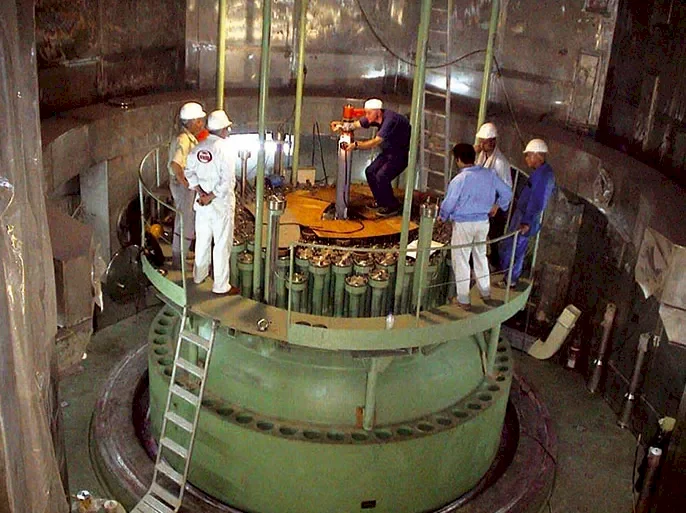
Isfahan's Secret Facilities.. Is Iran Preparing an Unannounced Nuclear Surprise?
SadaNews: The June 2025 war (known as the "12-day war") and the recent military confrontation on February 28 did not dispel American concerns regarding Iran's ability to restart its nuclear program, according to intelligence assessments reported by Reuters citing informed sources.
Based on these assessments, the amount of time Iran would need to build a nuclear weapon has not changed since last summer, despite the repeated American-Israeli bombardments of Iranian nuclear facilities: Natanz, Fordow, and Isfahan.
The same sources indicate that Iran would need about one year to construct a nuclear weapon if its leaders decide to move forward with this option secretly.
Prior to the 12-day war, American intelligence assessments had predicted that Iran could manufacture a nuclear weapon within a period of 3 to 6 months, due to its stockpile of enriched uranium, but that war delayed the timeline "to about one year."
A Timeline Without Significant Change
Sources state that the assessments regarding the Iranian nuclear program remain largely unchanged, even after the February 28 war led by American President Donald Trump in cooperation with Israel during Omani-mediated nuclear negotiations in Switzerland.
Reuters reported that sources indicated that a major setback to the Iranian nuclear program might require the destruction or removal of what remains of Iran's stock of highly enriched uranium.
Despite substantial damage to some known uranium enrichment facilities such as Natanz, Fordow, and Isfahan, the International Atomic Energy Agency has been unable to verify the whereabouts of approximately 440 kilograms of uranium enriched to 60%.
According to the agency, half of that quantity is believed to have been stored in an underground tunnel complex at the Isfahan Nuclear Research Center, but the UN agency has been unable to confirm this since inspections were halted due to the outbreak of the war against Iran.
Although a temporary truce was announced between the United States and Iran on April 8, facilitated by Pakistan to halt the war that plunged the region into a vortex of conflicts and a global energy crisis, tensions remain high due to the ongoing deep division between the two sides.
U.S. Maximum Pressure Policy
Washington seeks to ensure that Iran does not acquire a nuclear weapon through ongoing negotiations with Tehran, while Trump is exerting pressure on Tehran by tightening the maritime and economic blockade, aiming to force it to accept a nuclear deal tailored to American specifications.
Some officials, including U.S. Secretary of State Marco Rubio, believe that American strikes on Iranian air defenses could reduce the nuclear threat by weakening Iran's ability to protect its facilities should it decide to pursue nuclear armament in the future.
Iran's nuclear ambitions may have receded at a pace greater than reflected in intelligence estimates, according to a Reuters report that noted that Israel's assassination of several prominent Iranian nuclear scientists during the war has deepened uncertainty regarding Tehran’s capability to develop a nuclear weapon.
In a related context, according to a report by the Carnegie Endowment for International Peace published yesterday, diplomatic initiatives and wars have failed to permanently alleviate U.S. concerns regarding the Iranian nuclear program.
A satellite image shows the Isfahan Nuclear Technology Center in Iran (Associated Press)
Smaller and More Secret Facilities
The report states that despite Iran's increasing commitment to maintaining its nuclear program and perhaps developing it in the future, this does not seem to be an immediate priority at the current stage, indicating that Iran is currently focusing its efforts more on rebuilding its conventional military capabilities, particularly missile and drone programs, alongside enhancing its influence and securing its position in the Strait of Hormuz.
The 12-day war led to the most significant infrastructure for uranium enrichment in Iran being rendered inoperative, according to the report. This has made these facilities practically unfit for operation, thus imposing tangible restrictions on the nuclear program, at least in the short term.
The Carnegie report indicates that Iran may retain the capability -and perhaps an even greater desire than before- to rebuild these nuclear capabilities, including through the development of smaller and more secret facilities, especially since it has limited the International Atomic Energy Agency's access to its program.
Before the war, Iran continued to develop its nuclear capabilities following the Trump administration's withdrawal from the Joint Comprehensive Plan of Action in 2018, which imposed verifiable restraints on its program in exchange for sanctions relief, despite the maximum pressure exerted by Washington on it.
 Follow the latest Sada News via Google News
Report: Washington feared Israel's assassination of Qalibaf and Araqchi during negotiation...

4 Martyrs in the Gaza Strip

Hebrew Channel: Egypt Offered Hamas to Hand Over Its Weapons to Cairo as a Custody

Katz: We Rose After 1000 Days of War and Became a Major Power

Journalist Union: We Reject Doubts About the Status of Martyr Journalists and Warn Against...

Jordanian King Issues Order to Transfer Kingdom's Ambassador to Israel to Amman

Zamir: The War We Are Fighting is the Longest in Israel's History
