

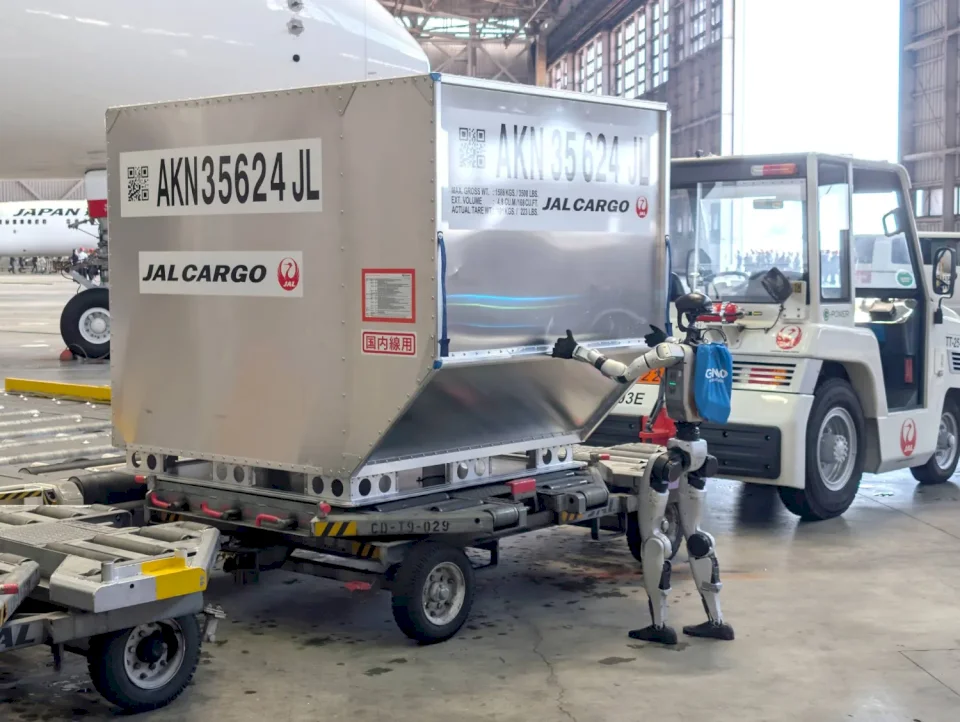
A Scene from the Future... A Japanese Airport Begins Using Human-like Robots for Baggage Handling
SadaNews - In a move that reflects the rapid adoption of advanced technology in the aviation sector, Japan is set to integrate human-like robots into daily operations at its airports, aiming to tackle the increasing challenges associated with labor shortages and the rising number of travelers. This initiative is seen as a practical test of artificial intelligence's ability to perform complex field tasks within sensitive operational environments, such as airports.
Japan Airlines (JAL) intends to begin using human-like robots for ground handling duties at one of the major airports in Tokyo starting in May, as part of a trial designed to relieve pressure on staff and address workforce shortages, according to the Independent.
The national airline of Japan stated in a press release on Monday that the project will be implemented at Haneda Airport, managed by a subsidiary of JAL in partnership with GMO AI & Robotics, a company specializing in developing and expanding artificial intelligence and robotics applications in social fields.
The first phase of the two-year trial will focus on cargo handling tasks, including loading and unloading containers. The two companies indicated that future uses may expand to include cleaning aircraft cabins and operating ground support equipment used around aircraft.
This announcement comes at a time when the Japanese aviation sector faces increasing pressure on human resources due to a notable rise in the number of tourists coming to the country, alongside a decline in the working-age population.
Japan Airlines noted that it currently employs around 4,000 workers in ground handling.
During a media presentation held on Monday, Chinese-made robots were showcased performing operational tasks near an aircraft. According to the Guardian, one of these robots (about 130 centimeters tall) was seen pushing goods on a conveyor belt, waving its hand in a demonstration of its motor skills.
Japan Airlines and its partner mentioned that the choice of human-like robots was based on their ability to operate within existing airport facilities and current aircraft designs "without needing significant modifications."
The two companies explained that fixed automation systems and robots designed for specific purposes have struggled to adapt flexibly to the current infrastructure and complexities of operational processes within airports.
The trial phase is set to commence in May 2026, initially focusing on assessing the feasibility of safely operating these robots within the airport environment. This will be followed by repeated operational tests mimicking actual working conditions in airports, aimed at measuring efficiency and reliability.
The two companies also unveiled future plans to enhance the capabilities of these robots, enabling them to operate independently, in addition to expanding the range of tasks they could undertake in ground operations.
 Follow the latest Sada News via Google News
The Fast Death Virus: How Ebola Forced the World to Change Its Thinking?

Hakimi's Goal Gives PSG a Unique Record in the World Cup

What Changed Our Immune System? A Journey into the Causes of Allergy Spread

Why Did Simba Believe He Killed His Father? The Psychological Secret Behind Your Children'...

What Should You Know Before Stopping Cholesterol Medications?

When Risk Becomes a Necessity.. Yemeni Youth Engage in Dangerous Jobs Leading to the Abyss

From Muscle Building to Cancer Fighting.. A New Discovery About Creatine
