

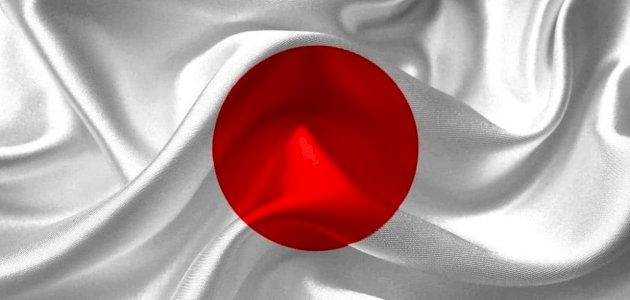
Historic Shift: Japan Eases Restrictions on Military Exports Amid Rising Regional Instability
SadaNews - Japan announced today, Tuesday, the easing of its decades-long restrictions on weapons exports, a historic change that opens the door for the country, which has maintained a pacifist constitution since the end of World War II, to sell lethal weapons abroad.
The Japanese government's spokesperson, Minor Kihara, stated at a press conference that "thanks to this partial amendment of the 'Three Principles on Transfers of Defense Equipment and Technology' and related rules, it is now possible, in principle, to allow the transfer of defense equipment, including all final products."
This change has received support from the government and the National Security Council, according to Kyodo News Agency.
Prime Minister Sanae Taketachi, known for her nationalist views and in office since October 2025, stated that this step would strengthen national defense while simultaneously boosting the domestic arms industry as a driver of economic growth.
This was mentioned in a post she made on the 'X' platform today, Tuesday, where she said, "Until now, the transfer of locally manufactured final products abroad was limited to search and rescue, transportation, surveillance, and mine countermeasures, (the so-called 'five categories'), but with this amendment, the transfer of all defense equipment will be possible in principle."
The Need for Partner Countries
These new rules fall within the framework of a gradual easing of the general ban on arms exports imposed in 1976.
In the past, Japan exported ammunition and military equipment to bolster its economy, especially during the Korean War in the 1950s, but it adopted a conditional ban on arms exports in 1967, followed by a complete ban after a decade.
Nevertheless, Tokyo has made exceptions in recent decades, particularly when Japan joined international weapons development projects.
Additionally, in 2014, Japan opened the door for the export of five categories of non-lethal military products: rescue, transportation, warning, surveillance, and mine clearance.
Now, Tokyo has completely abolished the five categories rule, paving the way for exporting lethal defense equipment.
Supporters of this arms export policy shift argue that this change is expected to increase Tokyo's integration into the international defense supply chain and deepen defense, diplomatic, and economic relations with partner countries, amid rising regional instability in the face of China's military buildup and threats from North Korea.
Taketachi stated, "With the increasing severity of the security situation, no country today can maintain its peace and security solely by its own forces: in defense equipment matters, there is a need for partner countries capable of providing mutual support."
Commitment to the Peaceful Path
Defense affairs expert at Takushoku University, Higo Sato, stated that Japan must capitalize on this period of peace to ensure its "combat readiness"; by adopting a "system that guarantees the seamless exchange of weapons and ammunition" among allies.
When Ukraine appealed to friendly countries for arms to repel the Russian invasion, Japan expressed sympathy but refrained from sending weapons, instead providing bulletproof vests and vehicles.
Sato opined that by making arms trade reciprocal, Japan could increase its chances of receiving assistance from its allies in the event of an unexpected prolonged conflict.
However, this decision has raised concerns among segments of the Japanese public, as critics accuse Taketachi of undermining the nation's pacifist history established since the end of World War II.
Taketachi attempted to reassure them by stating that "our commitment to the path and basic principles that we have followed as a peaceful nation for over 80 years has not changed."
She added, "We will adhere to international export control frameworks and conduct stricter reviews of each case... and the beneficiaries will be limited to countries that commit to using this equipment in a manner consistent with the United Nations Charter."
 Follow the latest Sada News via Google News
Macron: France Requested EU Assistance to Deal with Fires

Ukrainian Drones Target St. Petersburg Area in Russia

Man Stabs Two People in New York While Shouting 'Allahu Akbar'

Tehran Responds: Trump Threatens to Use Iranian Funds to Compensate Damaged Ships

American Escalation Using B-1 Bomber Against Targets of the Iranian Revolutionary Guard

Iranian Revolutionary Guard Targets Al-Adairi Camp and Ali Al-Salem Air Base in Kuwait

Massive Fire in Spain Forces Residents of 34 Villages to Evacuate
