

Quneitra Journalists: Israeli Targeting Reduces Documenting and Coverage Areas
SadaNews - On February 11, last month, journalist Shadi Abu Zaid was one of a group of journalists who narrowly escaped death after Israeli occupation forces opened fire on them while they were attempting to document its military movements in the Al-Kasarat area near the village of Ofania in the northern countryside of Quneitra in southern Syria.
Abu Zaid told Al Jazeera Net that the journalistic teams faced direct targeting with live ammunition while working in the field, without any injuries.
In another incident, Abu Zaid recalls that along with a number of other journalists, he was subjected to artillery shelling with 10 mortar shells while attempting to photograph the site of an explosive device's fall in the town of Al-Samdaniah in the Quneitra countryside on April 1 of this month, confirming that "the site was devoid of any unusual movements, indicating a deliberate targeting of the press crew".
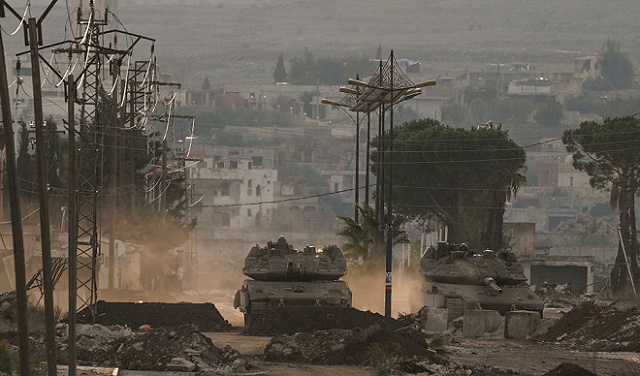
The journalistic teams operating in Quneitra province, southern Syria, are facing an escalation in direct targeting by the Israeli occupation forces, alongside ground incursions into villages adjacent to the separation line.
This comes as Israeli incursions escalate in southern Syria, particularly in the provinces of Quneitra and Daraa, which began in December 2024, following the fall of Bashar al-Assad's regime.
Since then, Israel has announced the collapse of the 1974 disengagement agreement with Syria and has begun repeated military operations inside Syrian territory, including ground incursions, shelling, and arrests in areas near the separation line.
The deployment of Israeli forces has extended over a strip exceeding 50 kilometers, from Mount Sheikh to the western Daraa countryside, with the establishment of nine military points in border towns and others outside the buffer zone, allowing them to monitor the villages and control the movement of the population.
Direct Targeting
Journalist Abu Zaid states that incidents of targeting journalists in the Quneitra area have been repeated, whether through gunfire or concentrated artillery shelling on media crews during their field coverage.
According to the journalist’s testimony, these targeting incidents have significantly reduced the area available for field coverage, making towns like "Al-Hamidiah" and "Al-Hurriya" difficult to access for media due to their proximity to Israeli observation points and ongoing military incursions.
This "field isolation" has led to a lack of media documentation of the violations and poor services experienced by citizens in these towns, as personal safety considerations have taken precedence over journalistic coverage, according to Shadi Abu Zaid.
Incursion and Intimidation
The risks do not only include field shelling and threats to journalists' lives but extend to their homes, tightening the grip on their information sources from local residents.
Journalist Muhammad Fahd, a correspondent for "Syria TV", recounts details of an Israeli force's incursion into his home in the village of "Jabatta Al-Kheshab" at night.
Fahd tells Al Jazeera Net: "A force consisting of 40 soldiers entered my home at one o'clock at night after knocking vigorously on the door and pointing a weapon at my head, forcing me to raise my hands as I opened it".
He added: "They ordered me to go to the kitchen with the gun still pointed at my head, then at my children, whom I saw fear in their eyes, and they began to thoroughly search the house, then searched my personal phone and saw videos documenting their incursions into Quneitra, focusing the investigation on my journalistic work and filming the Israeli patrols".
Fahd confirmed that the incursion lasted nearly an entire hour and ended with the force withdrawing after sending clear threatening messages regarding his media activities.
Pressure on Sources
In this context, journalists face another challenge: the difficulty of communicating with residents to obtain information for documentation.
Journalist Amjad Al-Hajji explains that the occupation relies on a policy of intimidating civilians to prevent them from conducting media interviews. He adds to Al Jazeera Net: "Residents are threatened that cooperation with journalists will make their homes susceptible to shelling, and in some cases, recordings of their homes were shown to indicate that they are under constant surveillance".
According to Al-Hajji, this pressure has led to a significant decrease in documented testimonies and difficulty in conveying the facts from within local communities in areas witnessing Israeli military incursions.
This reality has imposed strict restrictions on civilians, as farmers have been prevented from accessing their lands amid repeated incidents of gunfire and arrests, directly affecting the work of journalists who now operate in an "extremely dangerous" environment, as they describe it, which is manifested in their targeting during field coverage and difficulty in obtaining information from local sources.
Alternative Pathways
For his part, Muhammad Al-Saeed, head of the media directorate of the Syrian Ministry of Information in Quneitra, talked about documenting all violations, including the confiscation of equipment and the destruction of cameras.
Al-Saeed stated in an interview with Al Jazeera Net that official bodies are working to provide alternative pathways for journalists and document damages to raise them to international bodies, stressing the need for press crews to adhere to safety protocols and wear clear identification badges (PRESS) to document the violations they face.
Field data indicates movements that may pave the way for the establishment of a new Israeli military point at "Tel Al-Ahmar Al-Sharqi", after bringing in 3 prefabricated rooms to the site, suggesting a trend to expand military positioning in the region, which may exacerbate the restrictions on journalistic coverage in the upcoming phase.
Under these conditions, journalists in Quneitra find themselves facing a complicated reality, where security risks intersect with restrictions on access to information.
At a time when journalists are trying to continue their work despite the risks, the truth in Quneitra remains threatened, not only by shelling but also by the fear that restrains those who convey it and those who tell it.
Source: Al Jazeera
 Follow the latest Sada News via Google News
Macron: France Requested EU Assistance to Deal with Fires

Ukrainian Drones Target St. Petersburg Area in Russia

Man Stabs Two People in New York While Shouting 'Allahu Akbar'

Tehran Responds: Trump Threatens to Use Iranian Funds to Compensate Damaged Ships

American Escalation Using B-1 Bomber Against Targets of the Iranian Revolutionary Guard

Iranian Revolutionary Guard Targets Al-Adairi Camp and Ali Al-Salem Air Base in Kuwait

Massive Fire in Spain Forces Residents of 34 Villages to Evacuate
