

Top News
Vance Negotiates with Iran on Post-War Matters... and Trump’s Aftermath
SadaNews - Questions arise about why Vance is leading the current negotiations. One interpretation is that the Iranians may see him as a more favorable partner given his publicly declared opposition to the war.
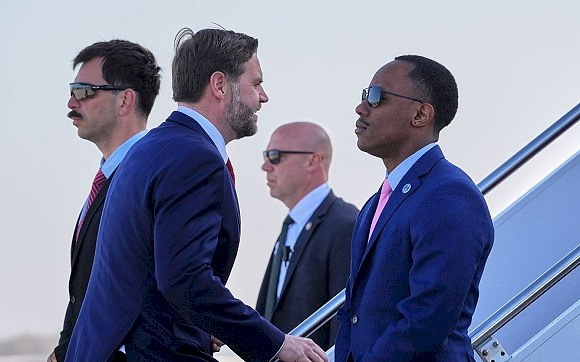
J.D. Vance has not been a supporter of the war against the Islamic Republic, but the American Vice President, who traveled to Islamabad on Friday to negotiate with Tehran, will lead his country's delegation to reach an agreement that definitively ends this confrontation.
President Donald Trump tasked Vance with converting the temporary ceasefire brokered by Pakistan into a permanent peace agreement. After largely staying away from the limelight during the war initiated by Washington and Israel on February 28, Vance, 41 years old, finds himself facing one of the biggest challenges of his political career.
In addition to the challenges he will face in negotiations, Vance’s bet is to leverage this into his underlying ambition for the 2028 U.S. presidential election.
Aaron Wolf Manis, a professor at the School of Public Policy at the University of Maryland, said, "I can't recall a situation where a Vice President has led official negotiations like this."
He added, "It’s a high-risk move, but it has a high payoff."
Vance, who served in the Marine Corps during the Iraq War, has built his political capital on opposing foreign intervention and seeking to keep the United States out of any new wars.
However, he has found himself in a precarious position after Trump launched the war against Iran, as he publicly supported it but distanced himself from the commotion. When a two-week ceasefire was announced, Vance was away from Washington, visiting Hungary to support Prime Minister Viktor Orbán in his campaign.
The "New York Times" revealed this week that during the discussions leading up to the war, Vance expressed stances against military action, warning that it could cause regional chaos and create divisions within Trump's domestic support base.
But Vance has become Trump’s last diplomatic option to strike a deal with Iran, after the President had previously entrusted earlier rounds to his special envoy Steve Witkoff and son-in-law Jared Kushner.
Vance told reporters as he left Hungary earlier this week, "My main role has been spending a lot of time on the phone. I answered many calls and made many of them. And again, I'm happy with what we've arrived at."
When Pakistan announced the ceasefire ahead of negotiations, White House spokeswoman Caroline Levitt stated that Vance played an "extremely important and pivotal role in this matter from the beginning."
**Between Competence and Rubio's Shadow**
Witkoff and Kushner accompany Vance, who will become the first U.S. Vice President to visit Pakistan since Joe Biden in 2011. The White House confirmed that the Vice President is working closely with them on these issues, alongside Secretary of State Marco Rubio.
Anna Kelly, Deputy White House Spokeswoman, stated that Trump is "optimistic about the possibility of reaching an agreement that could lead to lasting peace in the Middle East."
Questions arise about why Vance is leading the current negotiations. One interpretation is that the Iranians may see him as a more favorable partner given his publicly declared opposition to the war.
As Iran has insisted in recent days that the ceasefire agreement includes Israel halting attacks on Lebanon, Vance seemed to adopt a softer tone, speaking about a "misguided assumption" from Tehran that the ceasefire would include Lebanon, even though Pakistani Prime Minister Shahbaz Sharif had confirmed this matter himself.
However, Vance has not always been known for his diplomatic approach, according to SadaNews. He is skeptical of the effectiveness of U.S. military support for Ukraine and ignited a sharp public spat between Trump and its President, Volodymyr Zelensky, in the White House in February 2025.
Vance places politics at the core of his mission. Since Trump’s return to power in 2025, his presence has emerged in a complex position, giving him a close association with the President but not providing any significant powers or explicit role.
His role in shaping the next phase of the war with Iran adds to speculation regarding a potential battle with Rubio to succeed Trump in the Republican Party.
Manis stated, "It may be enough for him to secure a resolution that wraps up real issues without actually addressing them."
But he added, "However, if this (negotiation) does not result in a good outcome, it will raise questions about his competence, which will not help him electorally. And of course, Rubio is present as a potential opponent in 2028."
 Follow the latest Sada News via Google News
Read Also

Morocco Hosts Formative Exercise for International Stabilization Force in Gaza

Sheikh Holds Meeting with Security Leaders to Follow Up on Current Developments

Hebrew Channels: The Likelihood of Israel's Participation in the Attack on Iran is Increas...

Netherlands Sets September Deadline for Ban on Settlement Products

12 Martyrs in Gaza Strip since Dawn Today

A Series of Important Decisions Taken.. The Cabinet Discusses Developments in the Deterior...

Organizations of the Temple Prepare for the Largest Raid on Al-Aqsa on What is Called the...
