

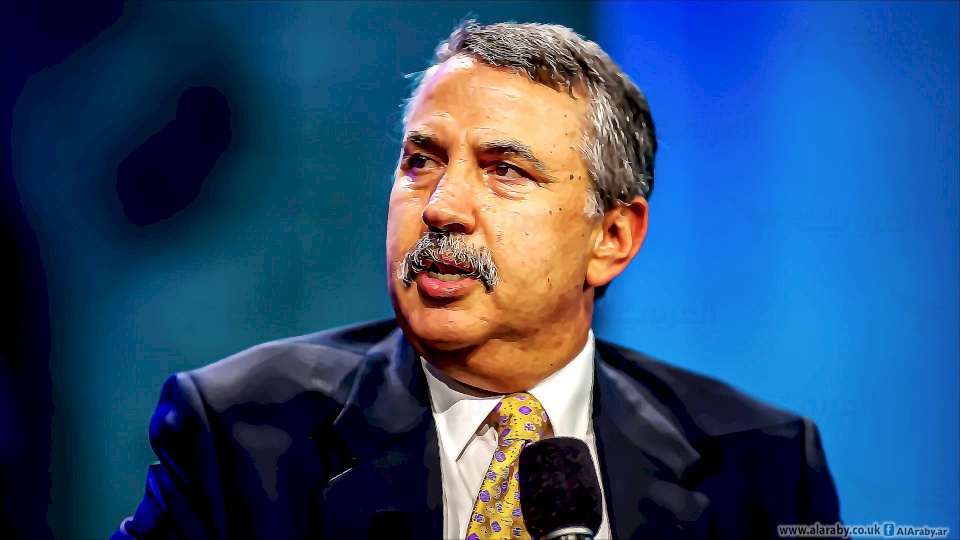
Thomas Friedman: A New Generation of Artificial Intelligence is More Dangerous than Wars
SadaNews - In an analytical reading reflecting the features of a new security era, Thomas Friedman, the prominent political analyst and opinion columnist for the New York Times, stated that the announcement made by the artificial intelligence company "Anthropic" on Tuesday regarding its new language model called "Claude Mythos Preview" raised geopolitical and security concerns that surpass the dimensions of current military tensions.
He added in his weekly article in the newspaper that this technological development demonstrated unprecedented capabilities for artificial intelligence to uncover security vulnerabilities in the world's most complex software, prompting the company to take the extraordinary step of limiting its use to a tight alliance of tech giants to protect international infrastructure from the threat of imminent collapse.
Friedman explained that this narrow alliance includes about 40 tech and infrastructure giants, such as Google, Microsoft, Apple, and JPMorgan Chase.
Vulnerability Detection
This step comes after the company discovered that the model - dubbed the "Glasswing Project" - not only excels in writing software but also possesses a "mechanical" ability to detect critical vulnerabilities across all major web browsers and operating systems.
These are the systems that manage vital facilities ranging from electric and water grids to military systems and hospitals, making the occurrence of such a tool in the hands of "bad actors" an open license to infiltrate any infrastructure in the world.
However, Friedman sees that this dual capability carries a grim face; warning that the technology falling into the hands of malicious entities could allow for the "breach of any major software system in the world," including critical infrastructures such as electricity and water networks, aviation systems, and hospitals.
He went on to say that the threat posed by the new model is not theoretical but has become a real topic of discussion among tech companies and the U.S. administration, given its implications for U.S. national security.
Qualitative Leap or Security Threat?
The author quoted a statement from "Anthropic" that this "Mythos Preview" AI model - which represents a "qualitative leap" in performance - has already detected thousands of high-risk vulnerabilities.
He pointed out that the model not only writes complex programming codes but also possesses a mechanical ability to detect thousands of high-risk vulnerabilities in operating systems and web browsers that manage electricity, water, airports, and military systems.
The terrifying paradox, in his opinion, is that this tool, designed to enhance security, could turn into a means for criminal or terrorist groups to breach any sovereign system at a low cost and with little effort.
The author believes that this development indicates the approach of an era of "super artificial intelligence" at a faster pace than expected, emphasizing that the model's developers themselves did not anticipate its rapid ability to discover and exploit software flaws.
This acknowledgment from the developing company reinforces Friedman's view that we are facing a moment similar to the discovery of the nuclear bomb, where the need for "non-proliferation" becomes an existential necessity for states before corporations, which led him to assert that this issue should top the agenda of the anticipated summit between U.S. President Donald Trump and Chinese President Xi Jinping in Beijing.
Friedman based his analysis on the insights of his tech expert friend Craig Mundie, the former director of research and strategies at Microsoft, who said, "What we are approaching is an unprecedented availability of cyber attack capabilities to everyone."
3 Steps
Mundie explains that the ability to develop complex hacking operations, which was previously limited to major powers with huge budgets, is now available to small parties or even individuals thanks to this super intelligence.
The tech expert proposes, through Friedman's article, an urgent defensive strategy of 3 essential steps: first, strict control over the dissemination of these models; second, granting what he calls "benevolent parties" enough time to fortify their systems against breaches; and third, creating secure digital environments to which vital services are transferred to protect them from future attacks.
Friedman concludes by saying that it will be interesting to see which of the two events that occurred on Tuesday, April 7, 2026, history will remember the most; whether it is the postponement of the U.S. bombings on Iran or the constrained launch of the "Claude Mythos" model by "Anthropic" and its tech allies.
Source: New York Times
 Follow the latest Sada News via Google News
Smotrich: Israel Has No Interest in Joining the War Against Iran

Occupation Issues Military Order to Seize 5 Dunams of Land in Jaba'

Axios: Proposal for a 10-day Ceasefire Between Washington and Tehran and Two Options for M...

In a Rapid Pace.. The Occupation Builds a Huge Earth Barrier Inside Gaza

Meeting Between Aoun and Trump Expected Alongside 'Experimental Areas'

Gaza Health Warns of Collapse of Oncology Services Due to Depletion of Treatments and Susp...

The Occupation Demolishes a House in the Town of Sa'ir near Hebron
