

"The Pentagon" Signs 3 Agreements to Increase Missile and Ammunition Production
SadaNews - The United States Department of Defense - "the Pentagon", announced on Wednesday the signing of 3 agreements with companies "BAE Systems", "Lockheed Martin", and "Honeywell" to increase the production of missiles and ammunition.
These announcements come after more than three weeks since the United States and Israel began their war on Iran.
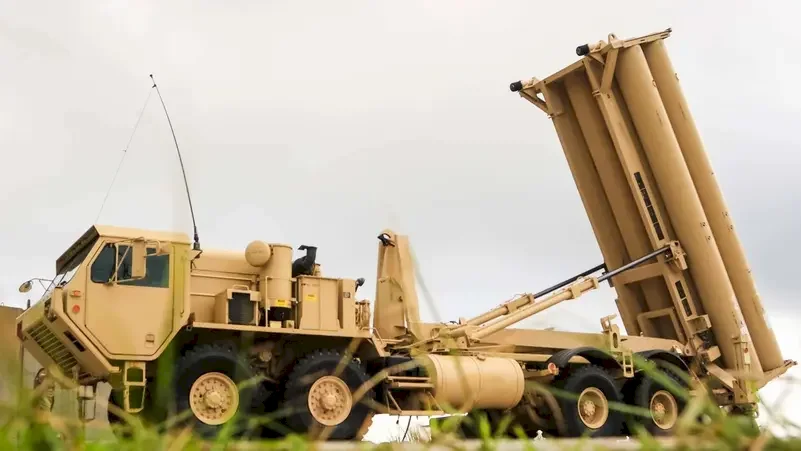
According to a statement on the ministry's website, it signed a framework agreement with companies "BAE Systems" and "Lockheed Martin" to quadruple the production of seekers for the "THAAD" missile defense system (Terminal High Altitude Area Defense).
It also signed a framework agreement with Honeywell Aerospace to increase the production of critical components for the U.S. ammunition stockpile, including navigation systems, Honeywell Ashore™ triggers, and electronic warfare solutions.
To provide a long-term stable demand for critical munitions, the agreement constitutes a multi-year investment worth $500 million.
The Department of Defense announced a new framework agreement with Lockheed Martin to accelerate the production of Precision Strike Missiles (PrSM).
Under this agreement, Lockheed Martin will invest in advanced tooling, facility upgrades, and critical testing equipment to minimize production lead times.
This framework agreement also allows for the negotiation of a multi-year contract of up to seven years, should Congress approve a multi-year contract in the future.
Jamie Dimon, the CEO of JPMorgan Chase, stated that the ongoing conflict between America and Israel on one side, and Iran on the other revealed the United States' lack of industrial capacity to quickly ramp up weapons production during wartime.
He mentioned that he visited the Pentagon earlier on Tuesday and felt a great deal of frustration over procurement rules, political constraints, budget rigidity, and regulatory compliance burdens.
Dimon remarked: "Of course, you also know that more money will be spent on the military, which is really what we need... we just want to be part of helping their supply chain."
 Follow the latest Sada News via Google News
Morocco Hosts Formative Exercise for International Stabilization Force in Gaza

Sheikh Holds Meeting with Security Leaders to Follow Up on Current Developments

Hebrew Channels: The Likelihood of Israel's Participation in the Attack on Iran is Increas...

Netherlands Sets September Deadline for Ban on Settlement Products

12 Martyrs in Gaza Strip since Dawn Today

A Series of Important Decisions Taken.. The Cabinet Discusses Developments in the Deterior...

Organizations of the Temple Prepare for the Largest Raid on Al-Aqsa on What is Called the...
