

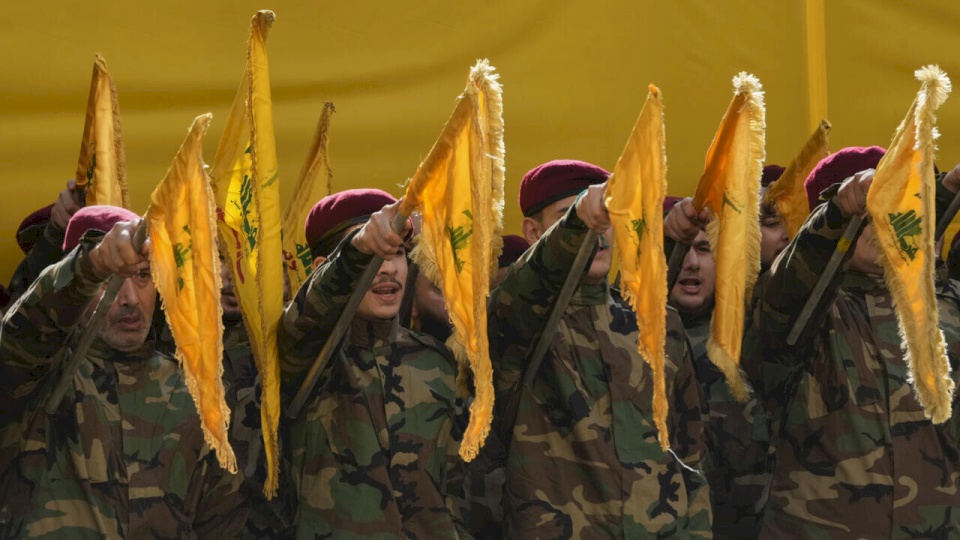
How Did Hezbollah Prepare for War? The Role of the Iranian Revolutionary Guard
SadaNews - The Iranian Revolutionary Guard has rebuilt the military leadership of Hezbollah after it suffered a severe blow from Israel in 2024, filling gaps with Iranian officers before restructuring the party and planning for the current war in support of Tehran. This was reported by Reuters on Saturday, quoting two sources who are familiar with the activities of the Iranian Revolutionary Guard. This reform was the first of its kind for Hezbollah, indicating a pragmatic approach following the blows Hezbollah faced in the 2024 war, which led to the death of its Secretary-General Hassan Nasrallah and other senior leaders. Iran's efforts have borne fruit, as it managed to restore Hezbollah to its former state in time to enter the ongoing war in the Middle East alongside Tehran, after being attacked by the United States and Israel. Earlier in March, Reuters reported that Hezbollah viewed the outbreak of another war as inevitable and had spent months preparing for it. The agency relied on six sources, along with an expert on Hezbollah affairs, regarding the role of the Iranian Revolutionary Guard in these preparations. The two sources familiar with the activities of the Iranian Revolutionary Guard stated that the guard, which has been deeply involved in Hezbollah since its establishment, sent officers to retrain its fighters and oversee its rearmament. They added that the Iranian Revolutionary Guard officers also restructured Hezbollah's leadership, which had been infiltrated by Israeli intelligence, a factor that helped Israel kill many of the party's leaders. An Israeli military spokesman said on March 12 that Hezbollah remains an influential and dangerous force despite the damage inflicted on it by Israel over the past three years. Hezbollah has fired hundreds of rockets at Israel since entering the regional war on March 2, prompting Israel to launch attacks that resulted in the death of more than 1,000 people in Lebanon. Hezbollah fighters are confronting Israeli soldiers who have taken control of lands in the south. It remains unclear how Hezbollah, whose strength is still below the peaks it experienced a few years ago, will perform in the event of a comprehensive Israeli invasion. Israeli Prime Minister Benjamin Netanyahu said in January that Hezbollah is making efforts to rearm and rebuild its infrastructure with Iranian support. Cancellation of the Hierarchy The two sources stated that Iranian Revolutionary Guard officers tasked with assisting Hezbollah's recovery arrived shortly after the ceasefire in November 2024 and began their work even as Israel continued its airstrikes. One of them stated that the deployment included about 100 officers. The changes implemented at their request included replacing the hierarchical leadership structure with a decentralized structure made up of small units with limited knowledge of each other's operations, which helps maintain operational secrecy. They added that the Revolutionary Guard officers also planned for simultaneous rocket attacks on Israel from both Iran and Lebanon, a scenario that was implemented for the first time on March 11. A senior Lebanese security source stated that Iranian leaders helped Hezbollah rehabilitate and reorganize its military cadres. The source added that it is believed the Iranians are assisting Hezbollah in the current conflict rather than being involved in the details of target selection. Another informed source stated that the Iranian Revolutionary Guard sent officers to Lebanon in 2024 to assess Hezbollah after the war, taking direct oversight of its military wing. Two other sources stated that the Revolutionary Guard sent special advisors to Hezbollah last year to assist it in managing military affairs. Andreas Krieg, a lecturer in the Security Studies Department at King's College London, stated that the Iranian Revolutionary Guard "fundamentally reorganized Hezbollah to become a much flatter system," comparing it to the political hierarchy that emerged around Nasrallah before his death. Krieg, who has researched Hezbollah for 15 years, said, "This decentralized model they have implemented now somewhat resembles Hezbollah's shape in the 1980s – very small cells." He described it as "mosaic defense," which the Revolutionary Guard also uses in Iran. Lebanon Asks the Iranian Revolutionary Guard to Leave The efforts of the Iranian Revolutionary Guard continued at a time when the Lebanese government and army were seeking to advance the disarmament of Hezbollah, highlighting a significant complexity facing this goal. A Lebanese official told Reuters that his country estimates that there are between 100 to 150 Iranians in the country with ties to Tehran's authorities that extend beyond normal diplomatic duties, including connections to the Iranian Revolutionary Guard. The official added that the government requested these individuals to leave Lebanon in early March. The two sources familiar with the activities of the Iranian Revolutionary Guard stated that members of the Guard were among more than 150 Iranians who left Beirut on a flight to Russia on March 7. Members of the Revolutionary Guard were among about 500 people killed in Israeli attacks on Lebanon during the 15 months between the 2024 ceasefire and the outbreak of the new war. The two sources stated that about 10 others were killed in Israeli attacks since the outbreak of the war, including in a raid on a hotel in Beirut on March 8. Qassem Soleimani, a senior Revolutionary Guard commander who was killed in a U.S. drone strike in 2020, worked alongside Nasrallah during Hezbollah's war with Israel in 2006. When Israeli airstrikes killed Nasrallah in a hideout in the southern suburbs of Beirut, an Iranian general was among those who perished alongside him.
 Follow the latest Sada News via Google News
High-level sources reveal to SadaNews: Washington seeks to hold a Gaza Reconstruction Conf...

Iraqji Reveals Details of the Attack on the Iranian Supreme Leader's Headquarters

صراع على إرث خامنئي وسط غياب مجتبى.. والمتشددون يتهمون قادة إيران بـ«الانقلاب»

The European Union Reiterates Its Call for Israel to Refrain from Expanding Settlements in...

"Mamdani Berlin".. The German Left Bets on a Politician of Turkish Descent to Lead the Cap...

Hebrew Channel: Kushner Pushing to Enhance Communication Between the United States and the...

SadaNews Report: Israeli Elections with a Settlement Flavor!
