

From Rabat to Jerusalem.. Field Initiatives Strengthening the Resilience of Jerusalemites
SadaNews - From food baskets that reached the doors of underprivileged families, to iftar tables in the religious facilities, and mobile clinics that made their way to remote Bedouin communities, along with support programs for artisans and youth, Morocco’s messages of solidarity with Jerusalem are renewed through social, developmental, and health initiatives aimed at alleviating the burden of harsh economic conditions and enhancing the resilience of Jerusalemites in their city.
The Bayt Mal Al-Quds Al-Sharif Agency, affiliated with the Jerusalem Committee headed by King Mohammed VI, continues to implement field programs that combine urgent relief with sustainable developmental work, based on a vision that considers human support as the fundamental entry point to bolster resilience.
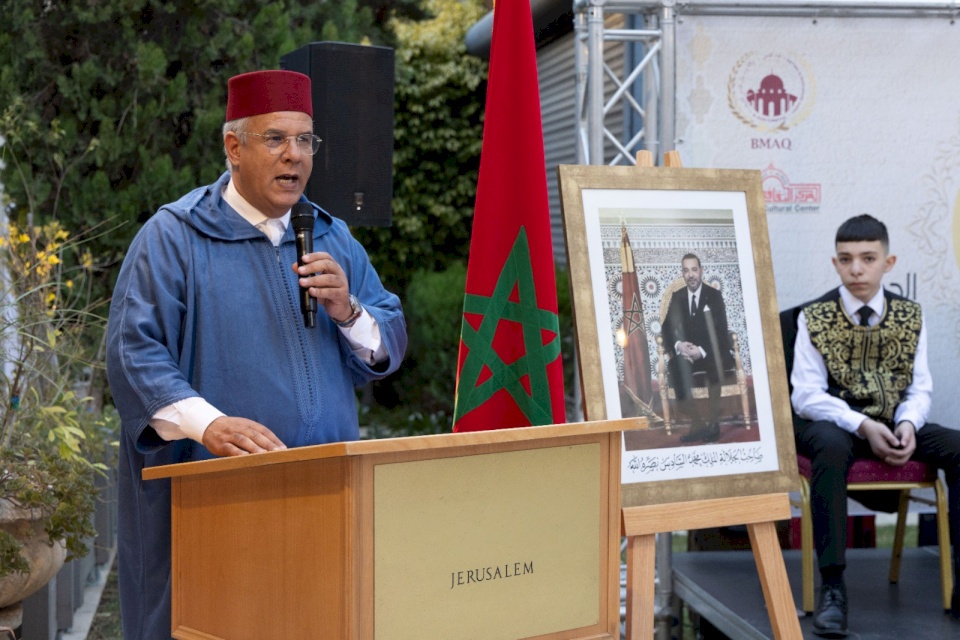
In this context, the director in charge of managing the agency, Mohamed Salem Al-Sharqawi, launched a bundle of social, health, and economic initiatives during a week-long field visit, coinciding with the advent of the holy month of Ramadan for the year 1447 AH.
Comprehensive Social Campaign
The annual social assistance campaign launched from the villages of Nabi Samwil and Al-Jadira in the northwest of Jerusalem included the distribution of five thousand food baskets containing 22 types of essential commodities for needy families in Jerusalem and nearby villages. The program also provides supplies to religious facilities and social centers to prepare about 20,000 iftar meals daily—both hot and cold—throughout the blessed month, in addition to distributing Eid al-Fitr clothing for 500 orphans sponsored by the agency, and organizing religious and cultural evenings and training programs for local associations in areas of marketing and human development.
Al-Sharqawi stated that the choice of villages located northwest of Jerusalem carries a symbolic significance, reflecting the commitment to reach the most vulnerable communities, especially in isolated areas affected by field measures.
Medical Campaigns in Marginalized Areas
As part of the same campaign, free medical days were launched targeting Bedouin communities in Khan al-Ahmar, the Jahalin, and Al-Muntar, alongside several towns and villages surrounding Jerusalem. This included laboratory tests via a mobile laboratory, and general medicine, pediatrics, and ophthalmology services.
These initiatives fall under a strategic approach focusing on supporting the health sector in Jerusalem and its suburbs, where the agency had previously equipped primary healthcare points in several villages and Bedouin communities, in addition to supporting schools with educational supplies and digital tools.
Economic Empowerment for Traders and Artisans
On the economic front, the agency concluded a training course to enhance the skills of Jerusalemite traders in professional efficiency in the field of import and export, in cooperation with the Arab Chamber of Commerce and Industry in Jerusalem, as part of a strategy based on electronic marketing, technical support, and innovation.
It also launched a "Traditional Moroccan Crafts Training Week" at the "Al-Aliya" Foundation in Jerusalem, with the participation of Moroccan artisans specialized in textiles, wood engraving, and silver and copper crafting, benefiting 38 trainees from artisans and youth in Jerusalem, as part of a vision that considers traditional crafts as an economic and cultural driver contributing to the creation of sustainable income sources and strengthening ties to the shared heritage identity between Morocco and Palestine.
Academic and Cultural Movement
The visit witnessed academic and cultural events in Jerusalem, Ramallah, and Hebron, addressing Moroccan cultural diplomacy and the role of the Jerusalem Committee in supporting the city. At Al-Quds University, an event titled "From the Academic Space to the Research Project: Moroccan Cultural Diplomacy in the Service of Jerusalem" was organized, which included the inauguration of a Moroccan book gallery and an overview of the agency's interventions in the fields of cultural restoration, education, and scientific research support.
A meeting was also held in Ramallah with the Alumni Forum of Moroccan institutes and universities, attended by the Moroccan Ambassador to the State of Palestine, reviewing the agency's achievements over more than 27 years with direct Moroccan funding, and exploring prospects for enhancing academic cooperation. At Al-Khalil University, a scientific seminar was organized on the role of the Kingdom of Morocco in promoting the Palestinian right in Jerusalem.
Meetings with Jerusalemite Referents
During the visit, Al-Sharqawi held a series of meetings with Jerusalemite figures and Islamic and Christian religious referents, including the Grand Mufti of Jerusalem and Palestine, Sheikh Muhammad Hussein; the Chairman of the Islamic Supreme Committee, Sheikh Ikrima Sabri; the Archbishop of Sebastia for the Greek Orthodox, Archbishop Attallah Hanna; the Chairman of the Jerusalem Islamic Waqf, Sheikh Azam al-Khatib; the Latin Patriarch of Jerusalem, Cardinal Pierbattista Pizzaballa; and the former Bishop of the Evangelical Lutheran Church, Bishop Munib Younan.
Al-Sharqawi emphasized that the agency relies on a participatory approach based on continuous consultation with religious and national referents and local community institutions to identify the real priorities of the needs of Jerusalemites and direct support towards the most affected sectors, especially education, health, social care, and economic development.
Broad Jerusalemite Praise
Many religious and national leaders praised the initiatives launched by the agency with the advent of Ramadan, among them Adnan al-Husseini, a member of the executive committee of the Palestine Liberation Organization and head of the Jerusalem Affairs Department, who considered that these programs embody the depth of Moroccan solidarity with the city and its people. Grand Mufti Muhammad Hussein and Sheikh Ikrima Sabri also appreciated these efforts, considering that they contribute to alleviating living burdens and enhancing values of social solidarity, while Archbishop Attallah Hanna affirmed that the initiatives express true solidarity with Jerusalem and its Islamic and Christian holy sites.
An Integrated Vision for Supporting Resilience
Al-Sharqawi clarified that the agency operates according to the directives of King Mohammed VI, Chairman of the Jerusalem Committee, based on a comprehensive vision that relies on three pillars: social support for vulnerable groups, economic empowerment, and preserving the civilizational and cultural identity of the city.
Over the past quarter-century, the Kingdom of Morocco has funded dozens of projects in the fields of education, health, housing, cultural restoration, and social work, which has established a stable Moroccan presence in Jerusalem that transcends symbolic significance to direct developmental impact, reflecting a continuous commitment to support the resilience of its people and safeguard its civilizational identity.
 Follow the latest Sada News via Google News
Lt. General Al-Natsha Undergoes Lengthy Interrogation at Moskobiya Regarding His Represent...

The Occupation Demolishes a House in the Town of Sa'ir near Hebron

Sheikh Offers Condolences for the Martyrdom of Citizens in Deir Jareer

Ministry of Labor Calls for Registration in Licensed Private Vocational Training Centers a...

Occupation Forces Storm the Home of Major General Bilal Al-Natsheh in Jerusalem

The Working Group on Palestine of the Permanent Independent Human Rights Commission Issues...

Arrests in Occupation Attacks in the West Bank and Jerusalem
