

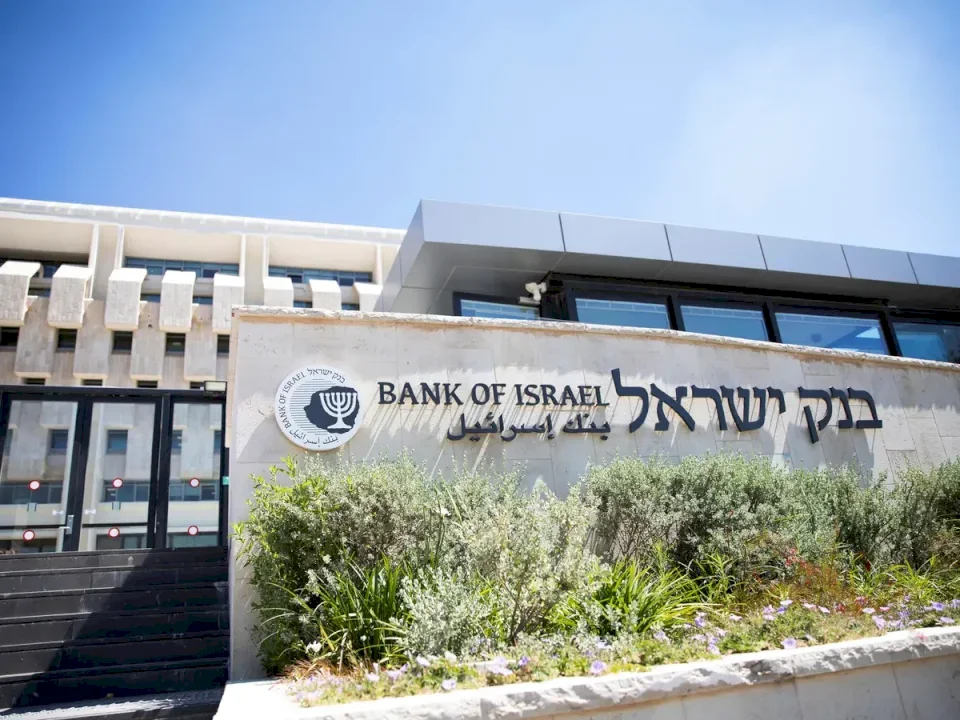
Israel Bank Keeps Interest Rate at 4%
SadaNews Economy Translation - The Monetary Committee of the Bank of Israel has kept the interest rate unchanged at 4%.
This decision comes after the committee had previously decided to lower the interest rate twice consecutively last January.
The decision by the Israeli central bank comes amid fears of a direct military confrontation between Israel, the United States, and Iran, as reported by the Hebrew newspaper Calcalist, and translated by SadaNews Economy.
Calcalist predicted that this decision would disappoint many families and companies, especially exporters, as well as the governing coalition that seeks to improve the living standards of Israelis before the upcoming elections.
The report indicated that the decision is not entirely surprising, especially after several analysts predicted that geopolitical instability would cause the bank to fear a scenario in which an Iranian attack would lead to a decline in the value of the shekel and a sharp rise in prices.
The newspaper stated: Even if concerns about Iran are the direct reason for not lowering the interest rate, this decision symbolizes something else: that the Bank of Israel refuses to declare a 'complete and final victory' over the current wave of inflation, despite the latest index released last week, which brought annual inflation to 1.8%. The decline in inflation is not limited to one or two goods but encompasses a wide range of products and services, and the bank still fears renewed waves of inflation.
This decision reflects the Bank of Israel's interpretation of the growth figures published last week as indicators of a significant economic recovery.
It is noted that growth in the last quarter reached 4%, and the growth of the GDP for companies alone was higher than that, in addition to rising wages and a tight labor market.
Calcalist stated, according to SadaNews Economy's translation, that the Bank of Israel's concerns can be understood to some extent; however, it should be remembered that there are many factors hindering economic growth, such as the strength of the shekel, which complicates matters for the export sector.
It seems that the Bank of Israel's decision, in addition to the 'inflation perception', is also influenced by what is happening in the United States, where inflation is proving to be more widespread than expected, and a delay in the rate-cutting process there is anticipated.
This decision may also indicate that the bank is not concerned about the slowdown in the real estate market, and some believe that the bank also did not want to rush to support the local capital market, which is already experiencing record levels.
 Follow the latest Sada News via Google News
Soaring Oil Prices Burn the Pockets of the Palestinian Citizen "The Poor"

Millions of Dollars in Losses.. "SadaNews" Reveals Shocking Figures for Traders from Pales...

The Problem of Shekel Overcrowding Worsens.. Fuel Station Owners Threatened with Closure o...

The Palestinian Economy at a Crossroads: 4 Files Awaiting Resolution

Palestinian Statistics: Decline in the Industrial Production Index in Palestine During May...

The Governor of the Monetary Authority Outlines the Challenges Facing the Palestinian Bank...

Exchange Rates of Currencies Against the Shekel (July 4)