

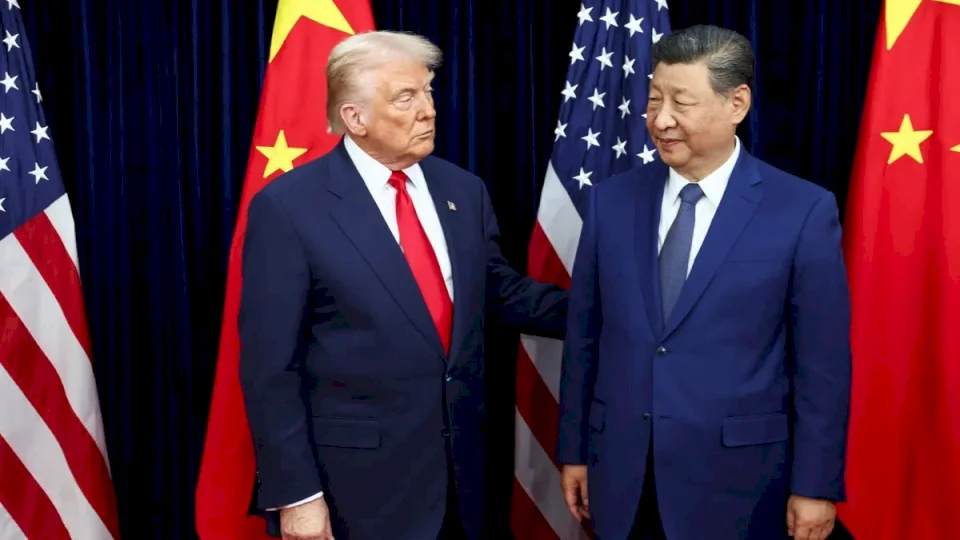
Xi Gains Negotiating Power Before Trump Summit as US Reverses Tariffs
SadaNews - Chinese President Xi Jinping heads to the negotiating table with Donald Trump enjoying greater negotiating power, after the US president lost his ability to rapidly raise tariffs for almost any reason.
Weeks before Trump's arrival in Beijing on March 31, his first visit to China since 2017, the US Supreme Court ruled to overturn the extensive emergency tariffs he imposed, a key pressure tool on China. The ruling canceled the tariffs that Trump implemented during his second term on China, so Beijing will face the same global tariffs of 15% applied to US allies, with a deadline of 150 days.
Weakening of the Tariff Pressure Tool
The removal of tariff threats, which escalated last year to 145%, will make it difficult for Trump to pressure Xi to increase purchases of soybeans, Boeing airplanes, and energy. It also deprives him of a key tool to respond if Chinese negotiators raise new demands in exchange for allowing a stable flow of critical rare earth metals for US industry.
"Ultimately, the US Supreme Court ruling puts China in a much stronger negotiating position," said Wu Shinte, director of the US Studies Center at Fudan University, citing the example of China's commitment to buying around 25 million tons of soybeans, which was a condition in previous tariff negotiations. He added, "If those tariffs are considered illegal now, the soybean leverage returns to China's hands."
Sensitive Files on the US-China Summit Table
Xi's team is expected to push harder for access to advanced semiconductors, lifting trade restrictions on Chinese companies, and reducing US support for self-governing Taiwan, especially regarding arms sales and adopting a more forceful stance against the island's independence, according to Wu, who previously worked as an advisor to the Chinese Ministry of Foreign Affairs. The Chinese Communist Party considers Taiwan part of its territory despite having never ruled it before.
Although Trump's setback represents a gain for Xi, Chinese officials, like others around the world, have exercised caution in their reaction. The Foreign Ministry did not respond to requests for comment during a long official holiday, while state media's coverage of the ruling was measured.
Shen Dingli, an international relations researcher in Shanghai, said China is likely to continue respecting the existing bilateral trade consensus instead of pushing Washington for immediate corrections. He added, "Chinese officials are likely to maintain silence to ensure Donald Trump's visit to China in April goes smoothly. While public opinion in China may celebrate, authorities are likely to exercise some control over the discourse."
Alternative Tools in Washington's Hands
Nevertheless, Trump can still rely on Sections 301, 232, and 122 of the Trade Act to push his tariff agenda, according to Wendy Cutler, vice president at the Asia Society Policy Institute and former acting deputy US trade representative. The global 15% tariffs imposed by Trump fall under Section 122, while the other two sections require investigations lasting for months before the president can impose unilateral tariffs.
China is still facing an investigation under Section 301 regarding its compliance with the phase one trade deal from Trump's first term, after failing to meet some purchase commitments, and Cutler said this investigation may be "a key element in the alternative strategy regarding Beijing."
Trump could also expand the use of export controls if China restricts rare earth magnet exports. Beijing's agreement to resume the flow of vital materials came after Washington halted sales of chip design software, aircraft engines, and their parts.
Although the Chinese side may have more room to negotiate, Trump threatened to impose new tariffs to gain leverage before critical meetings, as he did before his last summit with Xi in October. While his initial threat to impose an additional 100% tariff on China was not implemented, it did cause turmoil in stock and commodity markets.
Zhou Mi, a senior researcher at a center affiliated with the Chinese Ministry of Commerce, stated that the Supreme Court ruling will not lead to a radical shift in economic and trade relations between the two countries. He added that the US administration is still capable of using other executive powers to achieve its trade and other policy objectives. He also mentioned that the ruling "serves as a reminder to all countries that executive power cannot be exercised beyond its legal bounds fundamentally."
Fentanyl and Auto Investments Among Negotiation Files
Chinese trade officials are set to meet with US Treasury Secretary Scott Pisonet before Trump's visit to outline the summit's outcomes, although no date or location has been announced yet.
As the White House seeks to reimpose tariffs in another form, the court's annulment of the 10% tariff related to fentanyl, along with so-called "reciprocal tariffs," has removed a major point of contention between the two countries. Last year, the two nations began to ease national security-related restrictions through rounds of talks, reaching an agreement on "TikTok" operations in the US, coinciding with Washington's approval to sell NVIDIA's "H200" chips, the most advanced version of the chips previously permitted.
Before the Trump-Xi talks, the top executive of "Ford Motor" spoke with senior officials in the Trump administration about a potential framework that would allow Chinese car manufacturers to make cars in the US while providing some protection for domestic companies, Bloomberg previously reported earlier this month. Although such a move is likely to face opposition in Congress as the midterm elections approach, any agreement allowing for more Chinese investments in the US would be a significant breakthrough in a highly sensitive file.
Zhang Chiwei, chief economist at "Pinpoint Asset Management," stated that Chinese exporters may choose to accelerate their shipments to the US amid declining tariffs and before new changes occur.
Pre-shipping of Chinese Exports to Benefit from Lower Tariffs
Zhang added, "The US administration is likely to look for alternative ways to maintain high tariffs on imports from China. However, finding and implementing these alternative tariffs may take time. If that is the case, we may witness companies shipping their exports to the US early in the upcoming months to take advantage of the reduced tariffs, as this decrease may only be temporary."
Cheng Tao, a Chinese trader who exports automotive parts and derives over 70% of his revenues from US companies, stated that the ruling is "good news" and will stimulate more orders, but he is uncertain whether it will give him greater negotiating power regarding prices after he lowered them last year to retain his US clients.
Other observers noted that the Supreme Court decision is the latest development in a year marked by ambiguity and disruption in policies.
Lin Qian, who manages toy manufacturing plants primarily serving US clients in the thriving city of Shenzhen in southern China and in Vietnam, expressed little interest in the Supreme Court decision. He stated that the ongoing changes in policies confuse businessmen. While his company's factories in China still meet the bulk of orders, he has ramped up production at his new factory in Vietnam since September amid continuing tensions between China and the US.
He said, "We need to be prepared with plans A, B, and C under such changing circumstances."
 Follow the latest Sada News via Google News
London Stock Exchange Enters the Era of 24/7 Trading

Shamaran Petroleum: Suspension of Oil Production in Duhok Fields in the Kurdistan Region o...

Dollar Steadies Near One-Week High Amid War Developments

Trump Imposes Tariffs on Canadian Imports... Ottawa Vows to Respond

Oil Prices Drop After Reports of Mediation Efforts Between the U.S. and Iran

Gold Price Rises Supported by Increased Buying Amid Lower Prices

Due to "Hazardous and Counterfeit Products".. Europe Fines "AliExpress" $627 Million
