

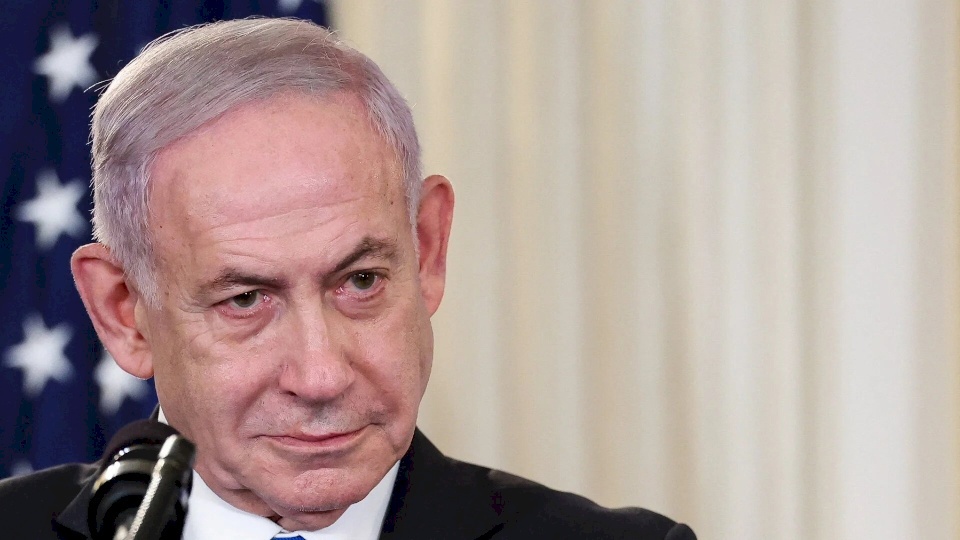
Netanyahu: We are working on a system of six-party alliances in the region and its surroundings
SadaNews - Israeli Prime Minister Benjamin Netanyahu stated that his country is working on building a "complete system of alliances" within the Middle East and its surroundings, as part of what he described as a coalition of countries that "see the reality, challenges, and goals with one eye in confronting radical axes."
His remarks came at the beginning of the weekly Israeli government session on Sunday, where he pointed out that Indian Prime Minister Narendra Modi will arrive in Israel on Wednesday and will deliver a speech in the Knesset.
Netanyahu said that Israel has a "unique and historic alliance with the United States", adding: "We have a state-to-state alliance, as well as a personal relationship between me and President Trump." He emphasized that this alliance "does not mean that we are not looking for other alliances".
He added, "On the contrary, we are working to develop them continuously." He referred to the relations with India, saying that his relationship with Modi is "personal", and that they "speak on the phone frequently and exchange visits", considering that this has contributed to strengthening relations.
He stated that Modi's visit will involve "a series of decisions to enhance cooperation between the two governments and states", including "economic cooperation, political cooperation, and security cooperation".
On the political side, Netanyahu declared that he envisions a "six-party alliance structure" that includes India, Arab countries, African countries, in addition to Greece and Cyprus, and Asian countries that he "will not specify at this time".
He said, "We will establish a comprehensive system, akin to a hexagonal alliance around or within the Middle East. This system includes India, Arab countries, African countries, and Mediterranean countries - like Greece and Cyprus - in addition to Asian countries that I will not mention now."
He added that the goal is to form a "axis of countries" in confronting the "radical Shia axis" as well as the "emerging radical Sunni axis"; considering that these countries "share a different vision" and that cooperation between them "can yield great fruits and ensure our resilience and future".
He mentioned that Modi will also participate in an innovation event in Jerusalem and will accompany him to the "Yad Vashem" museum, announcing intentions to enhance cooperation in advanced technology fields, including "high-tech and artificial intelligence".
He said: "I mention artificial intelligence not because it is the future, but because it is the present", adding that Israel "wants to be among the leading countries in this field".
Netanyahu addressed a government decision made last week regarding the advancement of an alternative airport project, noting that planning could be expedited "by reducing bureaucracy" and completing procedures within six months.
He said: "We are on the way to making history. We will establish an additional airport", explaining that the government is also developing the "Ramat David" airport, and that it "will reduce procedures there as well".
He added that Israel "will need a third airport", noting that he prefers it to be "at sea", but explained that the current focus is on developing the two airports.
In a different context, Netanyahu announced that the government will present today a decision for planning a town in the south of the country, near Kiryat Gat, designated for the Haredim. He stated that "the Haredi population is increasing and needs housing", considering the project to be part of the "momentum of developing the Negev".
 Follow the latest Sada News via Google News
قانون "دراسة التوراة" يمر رسمياً ويشعل أزمة التجنيد في إسرائيل

100 Settlers Storm Kifl Haris and Assault Citizens' Properties

Brazilian President: Washington Will Become a Pirate If It Imposes a Tax on Hormuz Ships

Hormuz Strait Under Fire: US-Iran Tensions Threaten Global Energy Artery

USA: We have completed new strikes against Iranian military targets

UAE: Sailor killed after two tankers targeted by Iranian strike in Hormuz Strait

Exchange rates of currencies against the shekel on Tuesday (July 14)
