

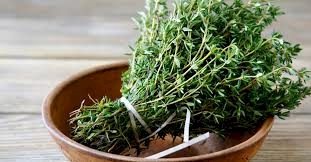
Thyme Enters the Era of "Modern Medicine"
SadaNews - Thyme has long been known as one of the most used herbs in traditional medicine, thanks to its anti-inflammatory and antimicrobial properties, and its role in supporting immunity. However, its medical use has remained limited due to the difficulty of controlling its dosages and the rapid evaporation of its active compounds, as well as the possibility of causing skin or digestive irritation when used in high concentrations, according to a report on the "ScienceDaily" scientific website.
Today, it seems that this obstacle is on its way to being removed, after researchers succeeded in developing a new technique that could move thyme from the realm of folk remedies to the field of precision medicine, according to a study published in the journal Physics of Fluids of the American Institute of Physics (AIP).
Researchers from Tomsk University of Technology and Surgut State University in Russia explained that they have found an innovative way to trap minuscule amounts of thyme extract within microcapsules, which prevents evaporation and allows for delivery in precise and stable nano-doses.
Thyme contains biologically active compounds, including thymol, carvacrol, and rosmarinic acid, which are known for their antioxidant, anti-inflammatory, and antimicrobial properties, in addition to supporting immune system functions. However, these compounds are highly volatile, making their storage and precise medical use extremely difficult.
How does the new technology work?
The method is based on microfluidics technology, where thyme extract is mixed with gelatin and passed through a microchip simultaneously with a sodium alginate solution, widely used in food industries. At a later stage, a flow of oil intervenes to divide the mixture into very small droplets, each completely encapsulating the extract, forming stable nano-capsules.
Researcher Maxim Biskunov, one of the study's authors, states that the system is characterized by being "semi-self-organizing," allowing for the production of doses that are extremely close in size and concentration, which is a crucial factor in drug delivery.
The significance of this technology is not limited to thyme alone. According to the research team, the same method can be applied to other natural plant extracts, opening the door to wide applications in pharmaceutical and food industries. Researchers also noted the potential to integrate this technique in the future with computer vision systems and artificial intelligence to monitor and control nano-doses in real-time.
Although clinical applications still require further research, particularly for encapsulating these nano-doses in capsules suitable for medical use, the study represents an important step towards transforming natural remedies into safer and more precise medical products.
These findings reflect a growing trend in medical research towards rediscovering natural remedies, but with modern scientific tools that ensure effectiveness and safety. If this technique successfully passes through subsequent stages of development, thyme may become a living example of how to integrate traditional therapeutic heritage with contemporary concepts of precision medicine.
 Follow the latest Sada News via Google News
FIFA Referees Committee, Led by Colina, Clarifies Cases from Egypt vs. Argentina Match

The Egyptian Federation Files Official Complaint Against Referee Letexier

Do You Know How to Comfort Someone Who is Crying? Here's What to Say and Do in Tough Momen...

"Backrooms": From Digital Legend to Cinematic Phenomenon

Prediabetes.. The Silent Bomb Carried by Millions Without Their Knowledge

From Sweden 1958 to the Epic of Egypt 2026.. Argentina's History with World Cup Comebacks

After the South Africa Precedent.. Nigeria Investigates the Encroachment of Technology Com...
