

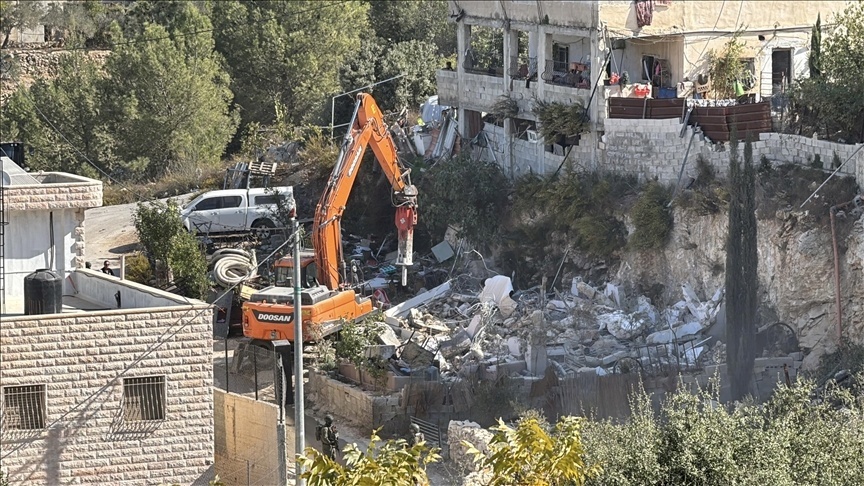
The Occupation Continues to Demolish Homes in Nur Shams Camp in Tulkarem
SadaNews - The Israeli occupation bulldozers continued extensive demolition of Palestinian homes in Nur Shams camp east of Tulkarem in the northern West Bank on Thursday, for the second consecutive day.
The demolition operations focused on the slaughterhouse neighborhood in the camp, as part of a plan to demolish 25 buildings consisting of more than 100 homes, which had been forcibly evacuated during the last Israeli aggression on the camp that began on December 14, 2025.
Tulkarem Governor Abdullah Kmeil commented on the demolitions, describing the decision as a continuation of the crimes of aggression against the residents of the camp, asserting that these policies target the Palestinian presence and constitute collective punishment for civilians, violating international law and human rights.
Kmeil called on the international community and human rights organizations to intervene urgently to stop these crimes that increase the suffering of the population, due to forced displacement and homelessness.
The "Adalah" legal center announced that the Israeli Supreme Court approved the demolition of houses after rejecting a petition submitted by 22 Palestinians against demolition orders, despite the Israeli prosecution acknowledging that the targeted buildings are civilian homes not used for military purposes. The court justified the demolitions with arguments related to facilitating future military movements within the camp.
This comes as part of a policy of tightening on the camp's residents, who have been subject to forced evacuation orders and severe siege since the beginning of the aggression 327 days ago, which included the demolition of dozens of buildings last summer and dividing the camp into small residential blocks.
Statistics from the camp services committee indicated that more than 11,500 citizens have been displaced, over 750 housing units were completely destroyed, and 1,600 units sustained varying degrees of damage, in addition to the burning of more than 80 residential and commercial units.
Significant damage was also inflicted on infrastructure, including vehicles and public facilities, water and sewage networks, and electricity, as well as the destruction of roads and streets, both main and secondary, over large areas.
 Follow the latest Sada News via Google News
Report: Washington Informed Israel It Is Preparing to Intensify Attacks on Iran and Use St...

Organization of Islamic Cooperation Condemns Nauru's Decision to Open an Embassy in Occupi...

Video:: Nablus: Settlers Evict Tubasi Family from Their Home in Jaloud and Take Over It

Netanyahu: I Intend to Form a Broad National Unity Government

Syrian Foreign Minister Meets with Yasser Abbas in Damascus

Al-Hayya: Our Priority is to Completely End the War and Restore National Unity

A Citizen Martyred by Occupation Forces in Khan Younis
