

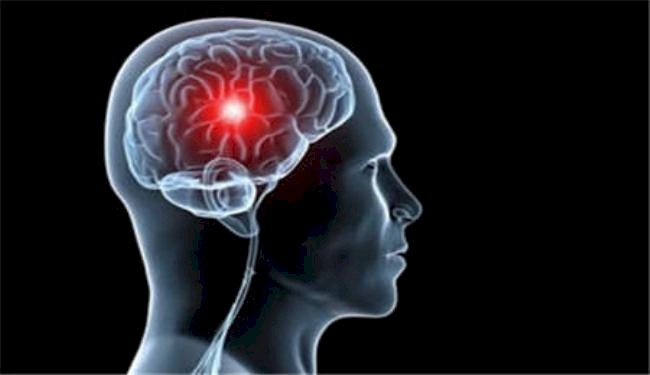
Innovative and Promising Treatment for Restoring Visual Field in Stroke Survivors
SadaNews - Thousands of stroke survivors lose the ability to see half of their visual field each year, in a condition known as "hemianopia," where an entire side of vision disappears along the vertical line that separates the two halves of the visual field. This disorder significantly disrupts daily life activities. Reading becomes arduous, driving may no longer be possible, and even walking in a crowded place turns into a difficult task.
The Limits of Current Available Treatments
Despite the significant impact of "hemianopia," there are no treatments that can effectively restore the lost part of vision; most current interventions focus on helping patients adapt to the deficiency rather than restoring visual ability. Rehabilitation programs aimed at achieving some improvement require intensive training that lasts for months, and often yield limited results.
The fundamental challenge lies in the way the brain communicates within the visual system; under normal conditions, the primary visual cortex and the middle temporal area responsible for motion perception work in harmony, exchanging information through precise electrical rhythms known as brain waves. However, a stroke may impair these areas' ability to function in coordination, leading to a disorder in visual information processing.
Previous studies have indicated that non-invasive brain stimulation may help reset these rhythms, improve communication between visual areas, and support the recovery process. Based on this premise, a team led by Friedhelm Hummel from the "Neuro - X" Institute at the Swiss "EPFL" University tested a new treatment that combines specialized visual training and multi-site brain stimulation to re-coordinate neural activity and enhance recovery in hemianopia patients.
Reorganizing Visual Processing
In a double-blind, placebo-controlled clinical trial, researchers Estella Ravan and Michele Pivlaco, along with their colleagues, demonstrated that this dual approach can lead to a significant improvement in visual functions, even among patients who have suffered for many years.
Hummel describes this project as the application of the first innovative strategy based on dual-focal brain stimulation that mimics how the brain naturally operates, aimed at enhancing visual functions in stroke patients. The team also identified factors associated with treatment response, which could pave the way for identifying biomarkers that help select the most suitable patients for the treatment.
How Was the Experiment Conducted?
Sixteen patients suffering from "hemianopia" participated in the study. Participants trained on a motion detection task designed to stimulate the dividing edge between the sighted and the affected parts of the visual field. During training, patients received brain stimulation through alternating multi-frequency currents (cf - tACS), a technique that uses low-intensity electric currents to modify the timing of brain waves and support cognitive functions.
The researchers aimed to synchronize neural rhythms between the primary visual cortex and the middle temporal area by applying different frequencies to each area to simulate the natural communication pattern, including low-frequency "alpha" waves on the visual cortex and high-frequency "gamma" waves on the motion-sensitive area. This "frontal" pattern reflects the usual flow of information from bottom to top during visual processing, helping to restore communication after a stroke.
Clear Improvement in Motion Perception
Patients who received this frontal pattern of "cf - tACS" showed a much greater improvement in their ability to perceive motion compared to those subjected to the reverse pattern. Their fields of vision also expanded significantly, particularly in the areas targeted during training. Some patients reported noticeable improvements in their daily lives.
Brain imaging and electroencephalography (EEG) data confirmed these results and showed a restoration of communication between the visual cortex and middle temporal area. Examinations revealed increased activity in the middle temporal area following stimulation. The greatest improvement was seen in patients who retained some partial neural connections between the two areas, suggesting that partial maintenance of these circuits may support the recovery process.
This study indicates that targeting specific brain circuits with synchronized stimulation inspired by brain mechanisms can significantly enhance the effectiveness of visual training. If its results are validated in larger trials, this approach could become a faster and easier treatment for stroke patients suffering from "hemianopia."
 Follow the latest Sada News via Google News
After Deschamps' Departure... Zinedine Zidane Tops the Candidates to Lead France

Mbappe Surpasses Messi and Becomes the All-Time Top Scorer in the World Cup

England Defeats France and Achieves Largest World Cup Achievement Since 1966

Messi Refused to Play for Spain and Missed 3 World Cups

Publishers Sue Google for Allegedly Using Books to Train Artificial Intelligence

Google Expands Capabilities of Google Search Console to Support Social Media Accounts

The Mediterranean Table... An Ancient Diet Revealing Its New Secrets for Health and Longev...
