

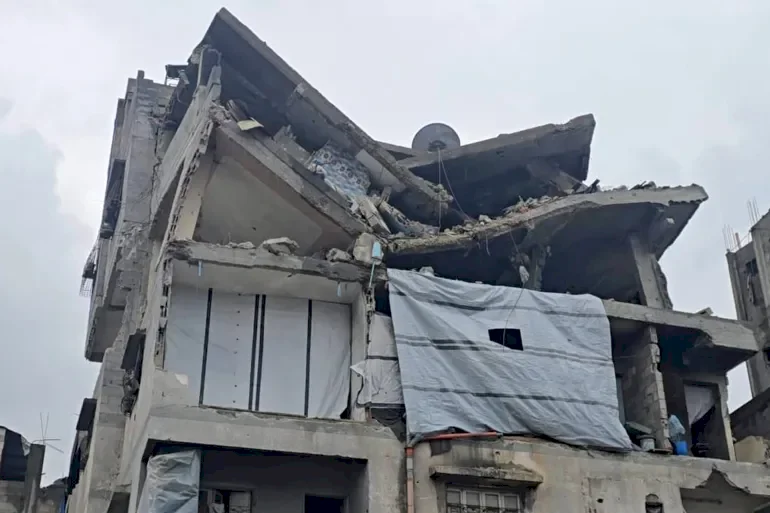
Collapse of 4 Buildings in Gaza Due to Weather Front and Flooding Submerges the Region
SadaNews - Four buildings collapsed today, Thursday, in various areas of Gaza City following heavy rains that fell on the region since Wednesday. Meanwhile, a girl died due to extreme cold in the displacement tents in Khan Younis.
The Civil Defense Authority stated that the buildings collapsed in the Al-Nasr neighborhood, Al-Shati refugee camp, and Tal Al-Hawa area in Gaza City, north of the sector, and they housed a number of Palestinians who had displaced there due to the lack of alternative housing, while no injuries were reported.
The Civil Defense warned of the dangers posed by the damaged and potentially collapsing buildings that displaced families have sought refuge in, especially with the weather front affecting the sector, which brings rains that lead to soil erosion and further cracks in the walls and columns damaged by shelling.
It was reported that over the past 24 hours, the Civil Defense received more than 2500 pleas for help from displaced individuals whose tents were flooded due to the stormy weather.
In a related context, medical sources confirmed today, Thursday, the death of a 9-month-old girl due to the severe cold in the displacement tents in Khan Younis, southern Gaza Strip. Activists shared on social media a photo of the frozen infant amidst ongoing calls to rescue the residents of the sector from the current wave of cold and rain.
As the impact of the low pressure intensified since dawn on Wednesday, thousands of displaced tents across various regions of the sector were submerged after heavy rains, amid expectations that the stormy weather would continue until Friday evening.
This weather front comes at a time when displaced individuals are living in catastrophic conditions due to the lack of basic living requirements and difficulties in accessing essential supplies, along with a decline in vital services due to the Israeli blockade.
Complex Situations
For its part, the United Nations Relief and Works Agency for Palestine Refugees (UNRWA) confirmed that the suffering of residents in the Gaza Strip could be alleviated if humanitarian aid was allowed to enter without obstacles, enabling them to safely and with dignity endure the winter season.
UNRWA stated in a post on "X": "Winter rains are falling in Gaza again, bringing more hardship and suffering." It added that the submerged streets and wet tents exacerbate already deteriorating living conditions and increase health risks.
The agency also warned that the severe cold, overcrowding, and lack of sanitation services raise the levels of disease and infection.
For its part, the Norwegian Refugee Council stated that after two months of the ceasefire, only very limited quantities of shelter materials have entered Gaza.
It stated that 1.29 million people in Gaza still need shelter to survive the winter, emphasizing that Gaza urgently needs heavy machinery, shelter materials, and equipment to prevent catastrophic flooding.
Hamas Calls on Guaranteeing Parties to Intervene
For its part, the Islamic Resistance Movement (Hamas) held Israel responsible for the worsening humanitarian situation in the sector and confirmed that the prevention of entry of essential shelter materials has doubled the suffering of hundreds of thousands of displaced persons.
The movement stated in a statement that "Israel's evasion of its commitments in the ceasefire agreement, especially regarding the humanitarian protocol and the entry of shelter materials, has led to the deterioration of the humanitarian situation with the onset of winter."
Hamas added that the occupation bears full responsibility for the tragic conditions that displaced individuals are experiencing.
The movement called on mediators and countries that guarantee the ceasefire agreement to "take urgent action and pressure Israel to allow the entry of shelter materials without restrictions and to open the Rafah crossing in both directions in accordance with the terms of the agreement."
Most displaced families have taken damaged tents as their refuge, while the Gaza government media office estimated at the end of September that the percentage of tents that are no longer fit for habitation in the sector reached about 93%, totaling around 125,000 out of 135,000 tents.
Despite the end of the genocide with the application of the ceasefire on October 10, the living situation for Palestinians in Gaza has not improved due to the strict restrictions imposed by Israel on the entry of aid trucks, thus violating the humanitarian protocol of the agreement.
Over nearly two years of genocide, tens of thousands of tents have been damaged due to the direct Israeli shelling or targeting of their surroundings, while some have deteriorated due to natural factors of high summer temperatures and winter winds.
 Follow the latest Sada News via Google News
Occupation Issues Military Order to Seize 5 Dunams of Land in Jaba'

Axios: Proposal for a 10-day Ceasefire Between Washington and Tehran and Two Options for M...

In a Rapid Pace.. The Occupation Builds a Huge Earth Barrier Inside Gaza

Meeting Between Aoun and Trump Expected Alongside 'Experimental Areas'

Gaza Health Warns of Collapse of Oncology Services Due to Depletion of Treatments and Susp...

The Occupation Demolishes a House in the Town of Sa'ir near Hebron

Israel Reveals Details of Secret Iranian Nuclear Facility in Mount Fas
