

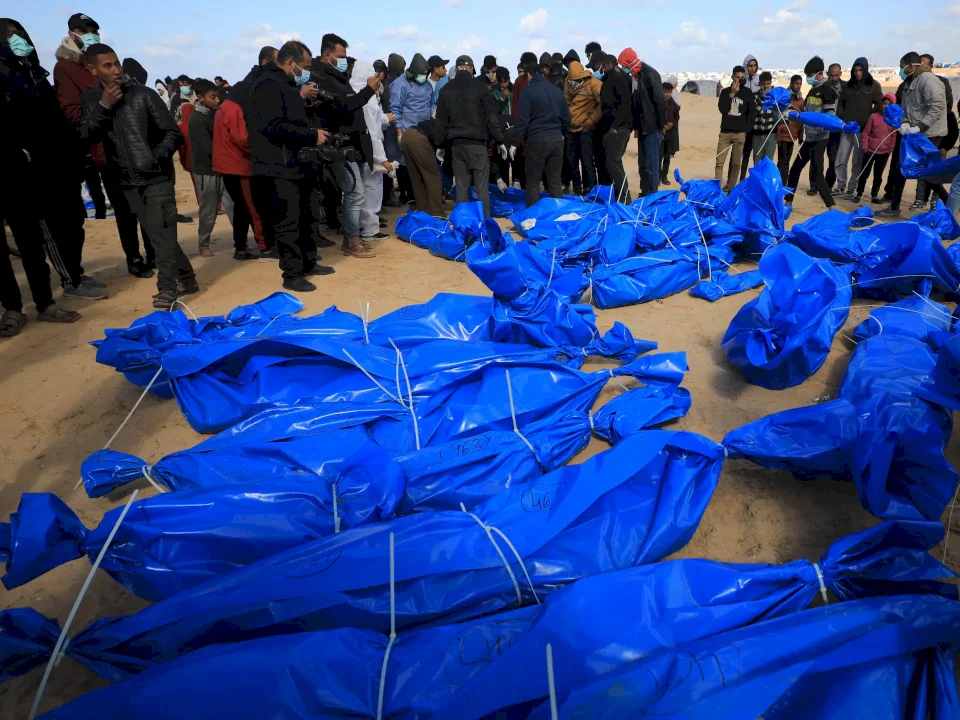
Decision to Bury the Remains of 15 Martyrs Handed Over by the Occupation in Gaza After Identification Proved Impossible
SadaNews: The Ministry of Health in the Gaza Strip decided today, Monday, to bury 15 unidentified martyrs whose bodies were held by the occupation authorities, after identification proved impossible.
As part of the prisoner exchange process outlined in the ceasefire agreement in the Gaza Strip, which came into effect on October 10 last month, the occupation handed over dozens of martyrs' bodies in exchange for Palestinian resistance's delivery of the remains of Israeli prisoners.
Last Wednesday, the Palestinian Ministry of Health in Gaza announced the reception of the remains of 15 martyrs that had been held by the Israeli army via the Red Cross, raising the total number of martyrs' remains received to 345, of which the ministry identified only 99.
The Health Ministry in Gaza had previously launched an online link that included selected photos "that respect the dignity of the deceased and do not invade their privacy," aiming to give families the opportunity to identify their loved ones from a distance before their transfer to hospitals.
The ministry revealed that there are bodies showing signs of gunfire in the chest and head, others bearing shrapnel and fractures in the skull and limbs, in addition to decomposed and frozen cases, complicating the examination, documentation, and identification process.
Due to a lack of sufficient refrigerators, the ministry resorted to burying the bodies that could not be identified in unidentified graves while retaining the photos in anticipation of any future documentation or matching process.
As part of the exchange deal, Palestinian resistance factions handed over 20 live Israeli prisoners and about 28 bodies of Israeli prisoners, while Israel claims that the remains of two prisoners are still being held in the Gaza Strip, and it conditions the start of negotiations to launch the second phase of the ceasefire agreement on the receipt of all prisoners' bodies.
 Follow the latest Sada News via Google News
Syrian Foreign Minister Meets with Yasser Abbas in Damascus

Al-Hayya: Our Priority is to Completely End the War and Restore National Unity

A Citizen Martyred by Occupation Forces in Khan Younis

Government Media in Gaza: The Occupation Controls 65% of the Gaza Strip Area

Unusual... The US Embassy Warns Its Citizens About Organized Crime in Israel

Palestinian and Islamic Welcome to the Decisions of the Netherlands and Belgium to Ban Set...

Tehran Warns Against Targeting 'Mount Afs' as US Strikes Intensify
