

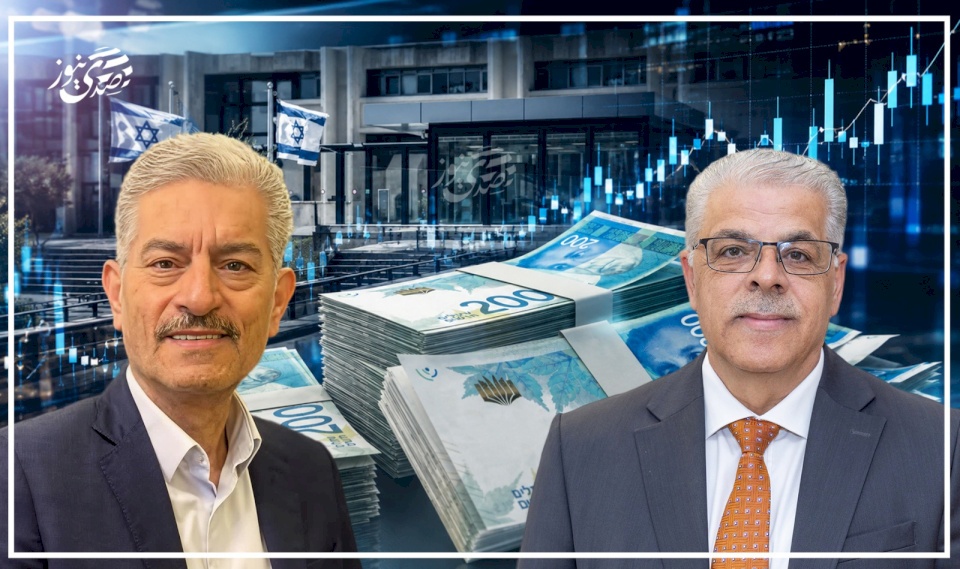
For These Reasons, the Shekel Will Remain Strong Despite Interest Rate Cuts in Israel
Exclusive to "SadaNews" - Financial and banking expert Mohamed Salama confirmed that the Israeli central bank's decision to lower interest rates by a quarter of a percentage point was expected, noting that Israeli banks had anticipated this decision for about a week, as they had previously lowered the interest rate by a quarter point. Therefore, this decision is not expected to have any impact on currency exchange rates, as the markets had already priced in the interest rate cut before it was announced.
Salama told "SadaNews" that if American stocks such as the "Dow Jones" and "Nasdaq" rise, this will bolster the shekel given that the Israeli central bank encourages investors to hedge and buy shekels when the value of their portfolios rises in dollars or foreign currencies, adding that a rise in American stocks will not lead to a weakening of the shekel's exchange rate, regardless of interest rate cuts or any interventions.
He further added, "Stock movements drive the shekel to rise or stabilize, and any negative data against the shekel amid rising stocks will be absorbed, since positive and negative factors balance each other. If the situation remains as it is currently, then rising indicators for American stocks will further strengthen or stabilize the shekel against the dollar."
Salama points out that American stock prices have reached historical levels and are currently stable, with expectations that they will continue to rise. In this case, the shekel will remain a strong currency relative to the Israeli economy's ability to absorb it. Salama states, "Even if the Israeli Manufacturers' Association protests that a quarter-point cut is insufficient, this will not change the current trend."
He mentions that the Israeli central bank had previously cut interest rates twice, the first time in November and then again in January, each by a quarter-point, with the interest rate starting at 4.5%. Since January, it had kept the interest rates unchanged until today's decision to cut another quarter-point, noting that continued interest rate cuts had been warranted since February, but the Israeli central bank opted to wait due to the repercussions of the war on Iran.
The Bank of Israel lowered the base interest rate today, Monday, by 0.25% to 3.75%, marking the second interest rate cut since the beginning of this year, amid declining inflation rates and the stabilization of the shekel's exchange rate, alongside increasing estimates of a potential end to the war on Iran.
Salama points out that the current interest rate on the shekel is equal to the interest rate on the dollar at 3.75%, indicating that neither currency provides any advantage over the other, even with the possibility of an interest rate hike on the dollar by the end of this year.
It is noted that inflation in Israel reached 1.9%, which does not reflect rising energy costs, as the cost of living index in Israel does not include that in its consumer spending basket. Salama adds, "The Israeli Manufacturers' Association protested because the Israeli central bank has abandoned the impact of inflation, in addition to rising energy prices."
For his part, Bashar Yassin, General Director of the Banks Association in Palestine, agrees with Salama's expectations, stating to "SadaNews" that lowering interest rates on the shekel will likely not significantly change the exchange rate, noting that the elements of strength in the shekel, particularly regarding American stock prices, push for stability in the exchange rate or a rise in the dollar against the shekel by about 3 shekels or slightly more or less, and emphasizes that if the shekel weakens against the dollar to this point, it will not happen overnight but will require some time, considering other influencing factors on the currency exchange rates.
Regarding the impact on loans granted in Palestine, Yassin pointed out that borrowers in dollars and dinars, with income in shekels, may be slightly affected in case the dollar strengthens against the shekel, as they are currently paying back their loans at a low dollar price of around 2.9 shekels or less. Meanwhile, those whose income is in dollars or dinars and loans in shekels may benefit slightly if the dollar rises against the shekel, while no change will occur for borrowers in a specific currency that represents their income from the same currency.
He confirms that the impact in case of an exchange rate change will be on individuals' purchasing power, either up or down, depending on the currency representing their income sources.
According to data released by the Banks Association in Palestine, the shekel made up 39% of total deposits in banks operating in Palestine by the end of last year, equivalent to 8.45 billion dollars, while the dinar accounted for about 16%, equivalent to 3.5 billion dollars, compared to 42% of deposits in dollars, equivalent to 9.23 billion dollars.
Meanwhile, facilities granted in shekels in Palestine accounted for about 49% of total lending, worth 5.59 billion dollars. The dinar represents about 9% of the total credit facilities granted by the end of last year, amounting to 1.07 billion dollars, while facilities in dollars accounted for about 40% of total lending, amounting to 4.63 billion dollars.
 Follow the latest Sada News via Google News
Soaring Oil Prices Burn the Pockets of the Palestinian Citizen "The Poor"

Millions of Dollars in Losses.. "SadaNews" Reveals Shocking Figures for Traders from Pales...

The Problem of Shekel Overcrowding Worsens.. Fuel Station Owners Threatened with Closure o...

The Palestinian Economy at a Crossroads: 4 Files Awaiting Resolution

Currency Exchange Rates Against the Shekel on Monday (July 13)

The Monetary Authority Holds an Introductory Workshop on the Digital Identity iDplus for R...

Sustainable Development is an Urgent Necessity to Face Challenges in Bethlehem Governorate
