

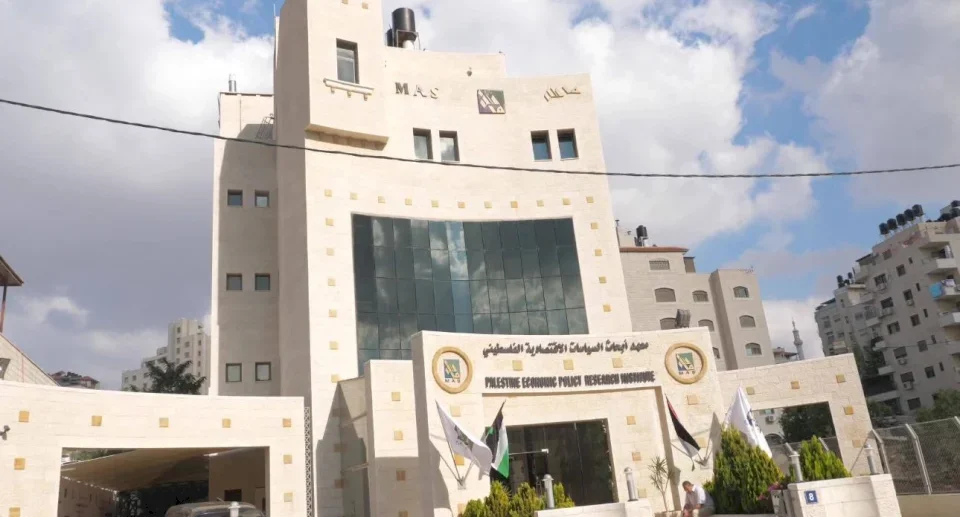
A Research Project Documents the Economic and Social Cost of Settlement in Palestine
SadaNews: The Palestinian Institute for Economic Policy Research (MAS), in collaboration with the Arab Center for Research and Policy Studies, has implemented a joint research project addressing the file of "Israeli Settlements: Their Economic and Social Cost and Impact in the Occupied Palestinian Territories." This project comes in the context of providing original and in-depth Palestinian analytical approaches to the issue of Israeli settlements, by highlighting their economic and social dimensions and their extended implications on various aspects of life in Palestinian territories.
This project initially includes a reference study with the same title, which provides an analytical framework and references that contribute to supporting research efforts, enhancing international advocacy and diplomatic paths aimed at revealing the economic dimensions of Israeli settlements, thus contributing to solidifying and supporting international consensus against settlements. Additionally, the project includes, alongside this reference study, five specialized studies and policy papers that address diverse issues related to Israeli settlements in the occupied Palestinian territories, deepening the understanding of the various repercussions of settlements.
In this context, one study titled "The Economic and Social Dynamics of Jerusalem Villages in the Aftermath of Settlement Expansion in the Jerusalem Governorate: Bedou, Beit Iksa, Al-Ram, and Kafr Aqab as Models" explores the impacts of Israeli settlement expansion in the Jerusalem Governorate at both the demographic and geographic levels. The study highlights the policies of isolating Palestinian villages and towns surrounding Jerusalem, isolating their residents from the Palestinian demographic environment. It also focuses on Israeli settlements in the areas of northern Jerusalem and its northwest, through analyzing the economic, social, and demographic transformations in the villages of Bedou, Beit Iksa, Al-Ram, and Kafr Aqab, revealing the depth of the structural impacts of Israeli settlements on these communities.
Moreover, a policy paper titled "Pastoral Settlement: Policies to Address the Latest Models of Settlement and Economic Expropriation" discusses one of the most dangerous patterns of newly developed Israeli settlements, by shedding light on their economic, social, and demographic impacts on Palestinian Bedouin and pastoral communities in the West Bank, particularly in the areas classified as "C." The paper provides an in-depth analysis of the impact of land expropriation policies and the displacement of populations, along with their reflections on livelihoods, with a special focus on the most affected groups, primarily livestock and cattle herders, and farmers.
In a similar vein, the study "Israeli Industrial Zones in the West Bank: A Study on Economic Effects" examines the phenomenon of Israeli industrial zones established in the areas classified as "C" in the West Bank, as one form of settlement expansion that transcends the economic dimension to perform colonial and Judaization functions. The study provides a detailed analysis of the impact of these zones on economic, environmental, and political levels, and the resulting effects on the structure of the Palestinian economy and society.
In a related context, the policy paper "From Poverty to Exploitation: The Motivations of Palestinian Women Working in Israeli Settlements and Its Consequences" addresses the economic and social characteristics of Palestinian women working in Israeli settlements, through analyzing income levels, poverty, and related issues. The paper relies on a research methodology based on field surveys and in-depth interviews, allowing for an approach to the demographic, economic, and social traits of this category of women, focusing on those living in the Jordan Valley communities.
Finally, the last study titled "Israeli Occupation Barriers in Northern and Central West Bank: The Policy of Closure and the Cost of Time and Fuel After October 7, 2023" addresses the impact of Israeli military barriers and mobility obstacles in the northern and central West Bank, focusing on losses in work hours and additional fuel costs. Geographical data collected using GPS devices show a 51.7% decline in transportation activity after the onset of the aggression on Gaza in October 2023. The study estimates the wasted work hours to be about 191,146 hours daily, negatively affecting the Palestinian economy, with losses estimated at approximately $764,600 daily, equivalent to $16.8 million monthly.
It is worth noting that this publication has also been published in issues 54-55 (Winter 2026) of the journal "Urban", a peer-reviewed quarterly journal specializing in social sciences, published by the Arab Center for Research and Policy Studies and the Doha Institute for Graduate Studies.
The publication can also be accessed and downloaded from the Institute's website www.mas.ps
 Follow the latest Sada News via Google News
Soaring Oil Prices Burn the Pockets of the Palestinian Citizen "The Poor"

Millions of Dollars in Losses.. "SadaNews" Reveals Shocking Figures for Traders from Pales...

The Problem of Shekel Overcrowding Worsens.. Fuel Station Owners Threatened with Closure o...

The Palestinian Economy at a Crossroads: 4 Files Awaiting Resolution

Palestine.. Trade Balance Deficit Increases by 15% During May Last Year

The Monetary Authority Keeps the Discount Rate at 25% of Public Sector Employees' Salaries...

Currency Exchange Rates Against the Shekel on Thursday (July 23)