

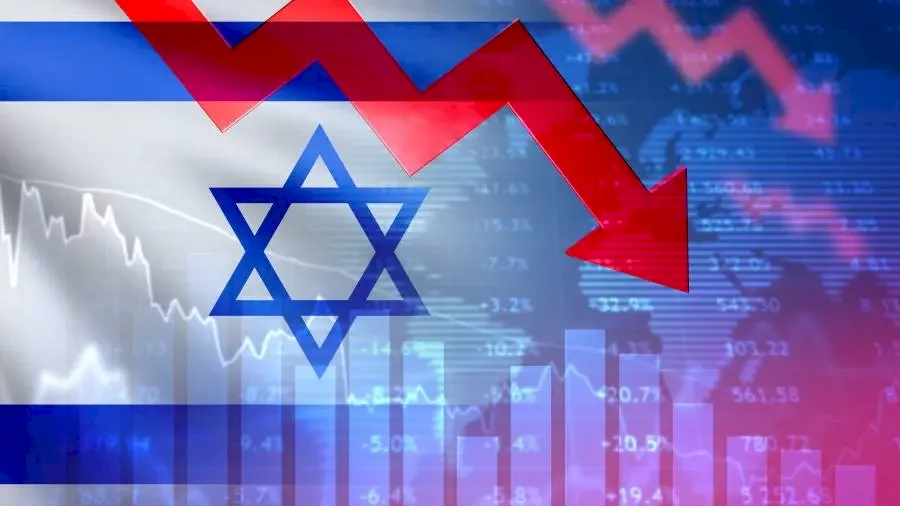
Maariv: The Israeli Economy on the Brink of Recession Due to War
SadaNews Economic Translation - The economics department of the Hebrew newspaper Maariv stated on Friday that the Israeli economy is on the verge of entering a significant recession in the upcoming period.
According to the newspaper, as translated by the SadaNews economic department, the Israeli Ministry of Finance will need to look for additional funding sources beyond the inflated budget approved by the Knesset to finance the recent war.
These sources include the high cost of weapons used in military operations in Iran and Lebanon, the cost of aircraft maintenance, the cost of mechanical equipment for heavy machinery used against Hezbollah, the cost of reserve days, the ongoing costs for police and other security forces, in addition to the costs of destruction removal, reconstruction, rescue services, and expected compensation in the coming years as part of property tax, along with other compensation for income losses caused by the war and more.
Additionally, there are compensations for hundreds of thousands of businesses due to the closure or near-closure of their operations (some of them are simply closing or declaring bankruptcy), and compensations for additional injuries in military service and treatment, including psychological injuries to soldiers.
The newspaper sees that if the budget continues to expand on this basis without providing funding sources, there will be a risk of undermining the foundations of the strong economy that has been built with tremendous efforts since the stabilization plan of 2003 during Ariel Sharon's time, when Benjamin Netanyahu was appointed as Minister of Finance.
The latest updates from the Israeli Ministry of Finance indicate that the Gross Domestic Product (GDP) is expected to decline by 2.5% in the first quarter of this year compared to the last quarter of 2025, which will lead to a GDP growth rate between 3% and 3.8% this year.
The economy is experiencing a near-total contraction after forty days that many Israelis spent confined to their homes without an effective education system.
Estimates from the Israeli Ministry of Finance, based on a study conducted by the Chief Economist's Office, suggest that the expected growth this year will be 3.5% compared to 5.2% in previous war forecasts, while growth in 2026 is expected to reach 6.1% compared to 3.5% in the original plan, all contingent on the Israeli economy's ability to recover quickly.
The total budget approved by the Knesset reached 699 billion shekels, with the deficit adjusted upward to 5.1% of GDP, where the largest increase was concentrated in the Defense Ministry budget, which rose by 78 billion shekels to reach 143 billion shekels on the eve of October 7, compared to 65 billion shekels previously.
The budget for government tax exemptions and credits reached 107 billion shekels this year, compared to about 80-90 billion shekels in 2023.
The security budget increased by 120%, while the budget for government grants and discounts grew by 26%.
The newspaper stated, as translated by the SadaNews economic department, that it is time to make changes to the system of grants and discounts to ensure that the budget deficit does not continue to worsen and to achieve more fairness, while maintaining the needs of the most vulnerable and fragile groups.
 Follow the latest Sada News via Google News
Soaring Oil Prices Burn the Pockets of the Palestinian Citizen "The Poor"

Millions of Dollars in Losses.. "SadaNews" Reveals Shocking Figures for Traders from Pales...

The Problem of Shekel Overcrowding Worsens.. Fuel Station Owners Threatened with Closure o...

The Palestinian Economy at a Crossroads: 4 Files Awaiting Resolution

Exchange Rates of Currencies Against the Shekel Today, Wednesday (July 22)..

بنك إسرائيل يخفض توقعات النمو ويحذر من ارتفاع العجز

Exchange Rates of Currencies Against the Shekel on Tuesday (July 21)
