

About Tel Aviv and the Necessity of Distinguishing Between the Street and the Road
"Let's go further and higher than ever before".
Henri Lefebvre - The Right to the City
Why Tel Aviv? Simply, so that our deaths do not remain our sole problem, and so that the state does not find it easy to pay blood money for our victims. We, the Arabs, have the right to all streets, including Tel Aviv, provided that we are not swallowed by its street! Tel Aviv is the capital that birthed a state that has historically created all these policies against us. Nevertheless, there is a question: which roads should we, as Arabs, avoid taking in Tel Aviv?
Public protests have been proliferating over the past two weeks in the Palestinian interior, from Galilee to the Triangle and the coast, and even to the Negev, reaching Tel Aviv last Saturday, where thousands of black flags gathered, beneath which were tens of thousands of protesters from the Arab community who preferred to demonstrate in mourning for their sons and daughters, victims in Arab villages and towns daily. The Saturday demonstration was joined by Jews - Israelis who sided with the cry of the Arab community in the country, which is important as the paths in Tel Aviv intersect as much as they diverge.
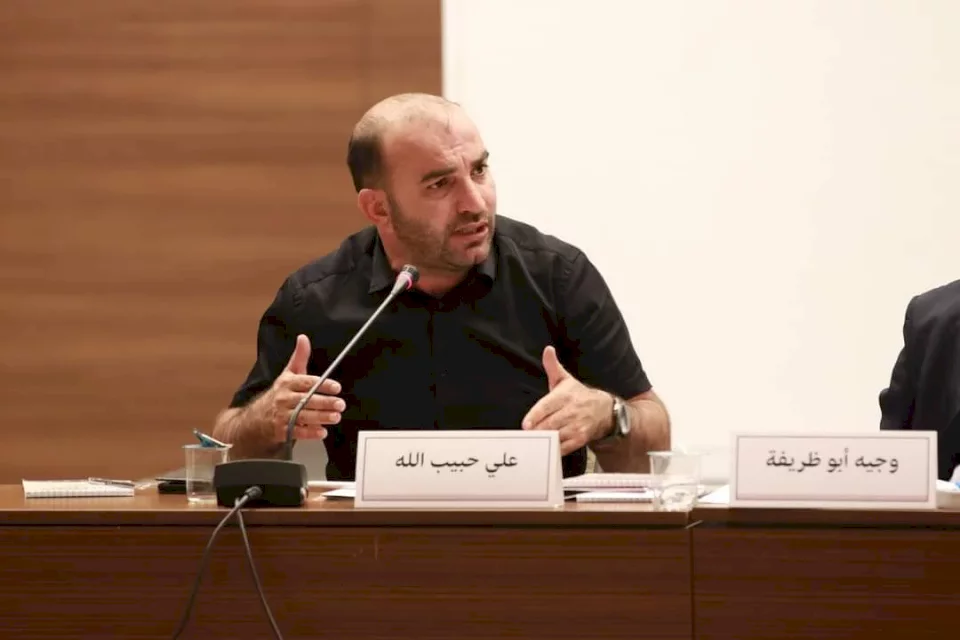
However, we must not forget that we take the asphalt of Tel Aviv as a street to protest against it as a laboratory for policies of separation and isolation and historical engineering of murder, not as a road for partnership under the roof of a Jewish state that would establish our Israelization and integration once we deemed "Habima" Square as a stage... There is no partnership except on our terms, which state: that our killing and the silence about it is one, not because we are second-class citizens, but because we are Palestinians whose murders are silently tolerated. The cry that was born forcefully from the throat of Ali Zbeidat in Sakhnin must not flow in Tel Aviv.
Tel Aviv has its memory connected to gathering and protest, but it is a memory that does not resemble ours; those who gathered in its streets and occupied its squares before us are not like us, even if the injustices some of them faced were true, as the policies of discrimination and marginalization have historically affected Eastern Jews. The "Black Panthers" movement and their confrontation with white Zionism in the early 1970s, which launched in Jerusalem and then in Tel Aviv with the sit-ins at "Kings of Israel Roundabout" - now Rabin Square - followed by the uprising of Ethiopian immigrants in 1974 and the demonstrations of religious Jewish school students against conscription in 1977, and the list of descending to the streets of Tel Aviv and occupying its squares extends over the past decades, culminating in the protests of Eritrean immigrants in September 2023.
Eastern Jews and African immigrants have historically demonstrated against discrimination policies practiced by a system they sought to be part of, as they wanted to improve their conditions within it. It’s not a coincidence that these marginalized groups since the 1970s became a solid social and political base for the rise of Israeli right-wing parties, meaning that they radicalized in their Judaism to assert their Zionism over time. Whereas the policies exercised against us, the Arabs, because we are Palestinians from the land and its original inhabitants, view us as potential enemies since we are not immigrant settlers. Zionism perceives us as potential victims in the organized crime laboratory and the collusion of police and security forces with it against us.
Criminal gangs execute the crime, while it is organized by silence about it according to the principle "let it work... let it pass." We all know this capitalist slogan connected to the principle of economic neutrality which dictates liberating the market from state oversight. Crime operates in our Arab community and passes through them daily amidst calculated disregard that liberates crime from the scrutiny of an institution that views our death as part of its colonial economy. This policy is not represented by police inaction as much as it is embodied in a Zionist, Orientalist, and racist cultural discourse that returns crime in the Arab community to its cultural context as "killing is an Arab culture," which explains the Israeli complicity with crime in the form of neutrality.
Hence, there is a necessity to continuously create a climate of rejection of crime through daily disruption and various pressure means on the state to become a problem for all, not just for Arabs, and this is what our arrival at Tel Aviv Street should mean. Meanwhile, the persistence to politicize the discourse of crime and complicity with it against us because we are Arabs is a necessity no less than the former, so that Tel Aviv does not become a route for politically and security extorting us at the cost of our security. This falls on the shoulders of our institutions, parties, and national powers, especially if we take into account the nature of the different effective stakeholders opposing crime and its discourses, which last Saturday's demonstration revealed clearer than the first one in Sakhnin, as the latter was in Tel Aviv.
 Follow the latest Sada News via Google News
The Tale of a People Who Refused to Believe the Well

What Does the Supreme National Interest Mean for Palestinians? And How Can It Be Achieved?

The Wronged Ramallah

Between Pragmatism and Survival Management: Where Does Hamas Go After the Election of Khal...

Khalil Al-Hayya as President of Hamas.. Continuation of the Founders' Approach

The Annihilation of Sportsmanship

Until When Will the Palestinian Citizen Pay the Price of an Endless Phase?
