

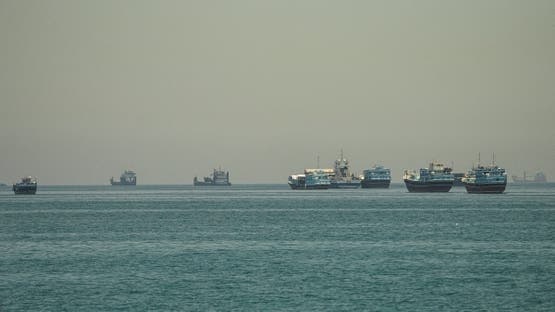
Strait of Hormuz Approaches Maritime Paralysis After American and Iranian Strikes
SadaNews - Maritime traffic in the Strait of Hormuz came to a near halt on Thursday, following U.S. airstrikes on Iran for the second consecutive day, amid signs of increasing fragility in the ceasefire between the two sides.
Tracking data showed that movements monitored in the world's key energy waterway were largely concentrated along a route approved by Iran near the northern strait, while the U.S.-backed Omani corridor remained quiet.
Among the large vessels, only a giant tanker under U.S. sanctions heading out of the Arabian Gulf was spotted in the strait, in addition to an Iranian-flagged container ship. However, the possibility of some ships crossing while turning off their transponders remains.
This slowdown in ship traffic follows a series of Iranian attacks on vessels, prompting U.S. airstrikes, coinciding with President Donald Trump's announcement of an end to the ceasefire with Iran. About 14 cargo vessels crossed the strait in both directions on Wednesday, the lowest level since the temporary peace agreement in mid-June.
Interference Confuses Ship Tracking Data
This marks a sharp shift from daily activity in the strait recently. In the three weeks following the temporary agreement between the U.S. and Iran to reopen the Strait of Hormuz, the average daily crossing of cargo ships was 34 vessels, peaking at 59 vessels on June 24, according to Kepler data. This compares to fewer than 20 vessels daily on most days during the war.
While natural gas tanker movements through the strait remained completely halted, two empty ships recently entered the Gulf of Oman, heading toward the eastern entrance of the Strait of Hormuz.
There also emerged signs of a return of intermittent electronic interference, as vessels southeast of Oman's Lima appeared to be sailing at unusual speeds of no less than 30 knots early Thursday. This may indicate the activation of defensive systems aimed at disrupting hostile drones and preventing them from attacking infrastructure, which could affect the signals of ships' transponders, as well as the accuracy of navigation tracking data.
 Follow the latest Sada News via Google News
Strait of Hormuz Approaches Maritime Paralysis After American and Iranian Strikes

Oil Prices Surge as US Airstrikes on Iran Renew

Gold Holds Steady Near $4080 Amid Middle East Escalation

The IMF Forecasts a Contraction in the Middle Eastern Economy This Year and a Faster Recov...

6000 Sailors Still Stranded in the Gulf

Floating Iranian Oil Faces Uncertain Fate After U.S. Exemption Cancellation

Brent Surpasses $76 After U.S. Strikes on Iran