

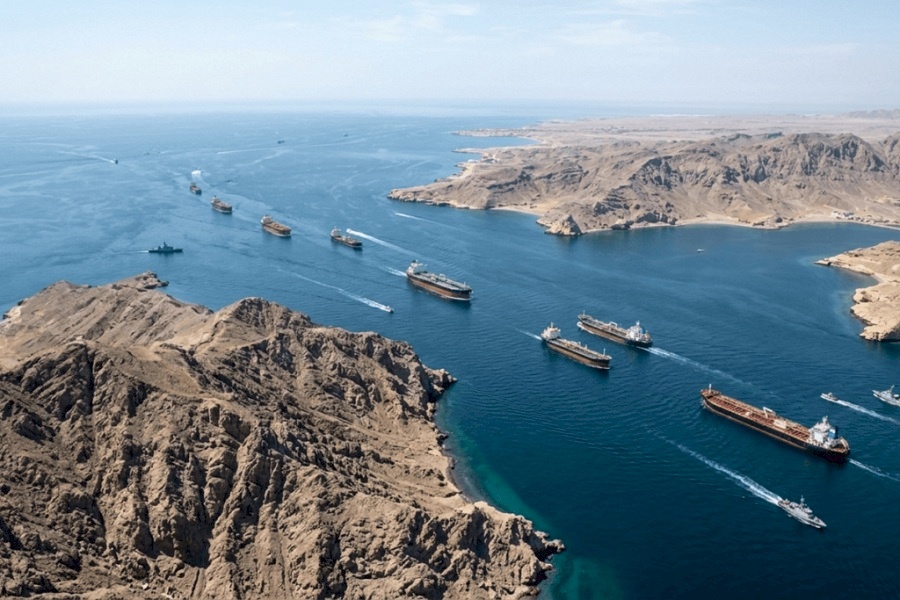
Oil Falls 2% Amid Resumption of Shipments from the Strait of Hormuz
SadaNews Economy - Oil prices fell by 2 percent on Friday, heading towards sharp weekly losses as supply concerns eased; more stranded oil tankers left the Strait of Hormuz, despite a shipping vessel encountering an incident near Oman on Thursday.
Brent crude futures fell by $1.50, or 1.99 percent, to reach $73.76 per barrel by 06:49 GMT, while US West Texas Intermediate crude dropped by $1.49, or 2.07 percent, settling at $70.43 per barrel.
Saudi Aramco, the oil refining giant, resumed oil loading on Friday at the Ras Tanura terminal in the Arabian Gulf after a halt of nearly four months, according to shipping data released by the London Stock Exchange Group.
The data showed that two large oil tankers were loading oil at the terminal, while another tanker was waiting nearby. Each tanker has a capacity of two million barrels of oil.
John Goh, senior oil market analyst at Sparta Commodities, said: "There is broad selling in the market in response to increased flows of oil leaving the Strait of Hormuz and China has yet to respond to its demand for crude oil."
The benchmark oil contracts jumped more than 2 percent on Thursday after a shipping vessel was hit by an unknown projectile near Oman, prompting the United Nations shipping agency to suspend its voluntary evacuation program. Two US officials told Reuters that Iran fired upon the shipping vessel as it was attempting to cross the strait.
Iranian authorities announced that the security of vessels crossing outside the designated corridors of the Strait of Hormuz is not guaranteed.
Both Brent crude and West Texas Intermediate were moving towards a drop of about 8 percent this week. Data released on Thursday indicated that crude oil shipments through the Strait of Hormuz rose this week to their highest level since the start of the US-Israeli conflict with Iran in February, following a ceasefire agreement that reopened the waterway, while concerns about how long the strait would remain open also contributed to increased trade flows.
However, overall navigation remains minimal compared to the daily average of 125 vessels transiting the strait before the conflict began on February 28. Analysts at ING Bank noted in a memo: "A large part of this increase reflects the departure of previously stranded ships from the Arabian Gulf. The flow of ships into the Gulf remains significantly lower, indicating that once the stranded ships leave, we may see a decrease in flows."
Meanwhile, earthquakes hitting Venezuela on Thursday raised concerns about supplies. Preliminary assessments by the massive oil, gas, and refining infrastructure workers in Venezuela so far show limited damage, as most of the country's major production areas, along with refineries, pipelines, and stations, are located far from the most affected areas.
However, power outages raised doubts about the ability to maintain oil production at its pre-earthquake level, which is around 1.2 million barrels per day, according to sources.
 Follow the latest Sada News via Google News
Oil Falls 2% Amid Resumption of Shipments from the Strait of Hormuz

Gold Rises Globally as Dollar Weakens

The Recovery of Middle Eastern Oil Accelerates as Qatar Resumes Crude Sales to Asia

"Bloomberg": Reopening of the Strait of Hormuz Drowns Oil Markets in a Sudden Surplus

Return of Confidence in the AI Deal Revives Asian Stocks

Oil prices continue to decline as barrels speed their return from Hormuz to the markets

The Luster of Gold Dims with the Rise of the Dollar and Possible U.S. Interest Rate Hike