

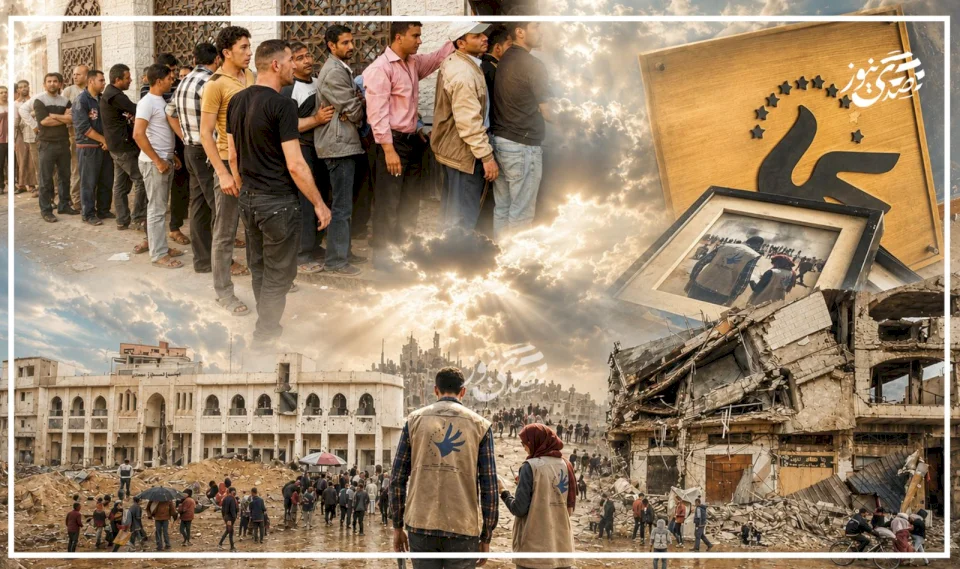
How Did the "Euro-Mediterranean" Crisis Reveal the Reality of Israeli Pressures on Gaza Banks?
SadaNews Report: The Gaza Strip has been facing a systematic Israeli strangulation campaign for many years, even before the war, affecting every sector and institution. The Israeli restrictions have infiltrated various aspects of life, with the Palestinian banking sector being among the primary targets, facing a series of pressures and banking constraints that include limiting financial transfers, threats to disrupt banking relations, and imposing strict restrictions on liquidity movement and financial services.
In the absence of any real protection for banks from surrounding risks, banking institutions focus their operations on strict compliance with global banking regulations, along with intensive investment in risk management to ensure the continuity of their operations and protect their employees, assets, and clients' interests.
Recently, the dimensions of this assault became apparent with the announcement by the Euro-Mediterranean Human Rights Monitor of the closure of its office in the Gaza Strip after 15 years of fieldwork, following an Israeli incitement campaign and death threats targeting its crew, according to a statement issued by the organization.
This synchrony reflects a stark paradox; until recently, the head of the Euro-Mediterranean Monitor, through his platform, did not hesitate to direct sharp criticism at the banking sector and Palestinian banks operating in Gaza, accusing them of succumbing to Israeli pressures and complying with restrictions and regulations, holding them accountable for retreating in the face of threats.
However, the monitor now finds itself facing the same reality, forced to swallow the same cup, after colliding with the very Israeli machinery that some had long underestimated its capability to impose strangulation and subjugation, falling into the same trap set by the extreme right-wing Israeli government led by Finance Minister Bezalel Smotrich, aimed at dismantling what remains of the foundations of life and its institutions in the Gaza Strip.
Tracing the background of the closure of the Euro-Mediterranean Monitor reveals similarities in the Israeli tools used against all institutions. The forced closure of the office came as part of a series of precautionary measures following a set of reports it published, which sparked an organized smear campaign against it led by Israeli ministers and officials. This pressure is similar to that exerted by the Israeli government on Palestinian banks, and it clearly demonstrates that the options for steadfastness against the arsenal of Israeli sanctions and confiscations seem almost impossible for any front working without security, sovereign, or legal support, whether it is an international human rights organization or a local financial institution.
From here, the ingrained truth solidifies that everyone is a victim of this occupation, and it is unjust and unfair to hold the Palestinian banking sector any responsibility for coercive decisions made under the blade of the same threatening sword that has overthrown human rights organizations in the West Bank and Gaza.
Despite this coercive and complex environment, Palestinian banks quickly rushed to reopen their branches and make intensive efforts to meet the basic needs of citizens as soon as the situation stabilized in the Gaza Strip, to remain a lifeline for Gazans in these difficult circumstances, continuing to face the pressures of occupation and other pressures related to political maneuvering, which the banks are trying by all means to distance themselves from.
Observers confirm that this shared and bitter experience comes to unite ranks and to emphasize that blaming the victim and questioning the resilience of national institutions serves only the narrative of the occupation and its efforts to dismantle the internal front to isolate Gaza financially and legally from the world.
 Follow the latest Sada News via Google News
Hamas: We Reached Broad Agreements in Cairo

How Did the "Euro-Mediterranean" Crisis Reveal the Reality of Israeli Pressures on Gaza Ba...

Senate Thwarts Ninth Attempt to Curb Trump's War Powers

Ongoing Wave of Violence.. Homes and Mosques Under Fire from Settlers in the West Bank

Mother and Child Die in House Fire in Dhahiriya South of Hebron

Ma'ariv: Israel Knows the Iranian-American Agreement Will Not Stand

Israeli Confusion and American Pressures: The Situation in Lebanon is Resolved Outside Tel...
