
How Qatari Investment Transformed Paris Saint-Germain into a Title and Revenue Machine?
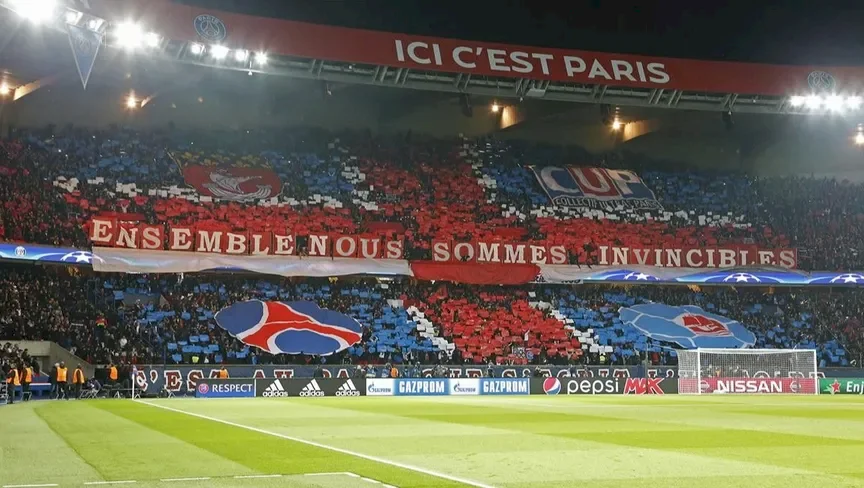
SadaNews - Paris Saint-Germain did not assume the throne of European football merely by gathering Messi, Neymar, and Kylian Mbappe in a single attack line, but when it abandoned the logic of superstars to win the UEFA Champions League back-to-back.
However, this paradox does not negate the fact that the Qatari ownership of the Parisian club under Nasser Al-Khelaifi's management since 2011 has created one of the most prominent foreign investments in European football over the past decade, both commercially and athletically.
By the end of the 2022/2023 season, the club's management realized that the strategy of relying on the biggest names in the football world, while it contributed to building a strong brand, failed to transform "Paris Saint-Germain" from a local champion into a team that competes against Europe's most decorated giants like Real Madrid, Barcelona, and Bayern Munich.
That season ended, in which Lionel Messi, Neymar, and Kylian Mbappe formed a theoretically fearsome attacking trio, with a disappointing exit from the round of 16 of the Champions League for the second consecutive time.
The End of the Glitter Era… and the Beginning of European Dominance!
The following year, Al-Khelaifi announced the end of the phase of chasing glittering names. Mbappe moved to "Real Madrid", Messi to the United States, and Neymar to "Al-Hilal" in Saudi Arabia, with the club relying on a group of relatively obscure talents like Vitinha and Désirée Doy under the leadership of Spaniard Luis Enrique, who previously led "Barcelona" to the Champions League title.
Enrique's squad achieved immediate success by winning the Champions League in the 2024/25 season for the first time in the club's history, sweeping "Inter Milan" 5-0 in the final, as well as qualifying for the final of the Club World Cup in its expanded version in the United States. This year, winning against "Arsenal" in the European final was more challenging, but it confirmed that the achievement was not coincidental.
It is important to note that reliance on glittering names contributed to building a global brand for the club, but it did not come without financial costs, reflected in a significant rise in the wage-to-revenue ratio which reached 109% in the 2021/2022 season, according to "Football Benchmark". Therefore, the shift in acquisition policy had not only technical benefits but also helped restore discipline to the club's budget at a time when it was no longer in dire need of big names for marketing purposes.
Before the recently concluded season, the wage-to-revenue ratio stood at 64%, according to the latest "Football Benchmark" reports released before the Champions League final. The report ranks European clubs based on their financial value in 2026 and highlights key financial developments for the top ten clubs over the past decade.
Long-term Success
"Paris Saint-Germain" ranked eighth among the highest-valued clubs at €4.525 billion, a 20% increase, or €765 million, from the previous year, trailing behind "Real Madrid", "Barcelona", and the English quartet of "Manchester City", "United", "Arsenal", and "Liverpool", as well as "Bayern Munich". The club's profits before accounting for the net player transfers reached €65 million, compared to an estimated loss of €73 million.
However, a quick glance at the club's financial valuation over the past ten years compared to the elite European clubs shows long-term success for the Qatari investment project. The report indicated that the value of "Paris Saint-Germain" increased by more than 400%, or 18% annually, a rate described as "unprecedented for any publicly traded European company." The growth was supported by increased revenues and outstanding performance in European competitions, as well as qualification for the final of the Club World Cup in the United States.
These observations align with other rankings and reports. For instance, the "Money League" report from Deloitte Consulting noted that "Paris Saint-Germain" achieved revenues of €837 million in 2025, ranking fourth globally and maintaining a position among the top five clubs in terms of revenue for the fourth consecutive year. The report points to the club's ability to continue leveraging its brand in partnerships that enhance growth through collaborations with global brands such as "Air Jordan".
Also, "Forbes" magazine ranked Paris Saint-Germain fifth globally in terms of value in 2026 at $5.8 billion, a 26% increase from the previous year. This valuation placed the Parisian club behind Real Madrid, Barcelona, Manchester United, and Liverpool, but ahead of other clubs like Bayern Munich, Manchester City, and Chelsea.
Comparison with Manchester City
However, how can one assess the Qatari investment experience in Paris Saint-Germain since 2011 compared to the Abu Dhabi purchase of Manchester City in 2008, and other significant deals such as American Malcolm Glazer's acquisition of Manchester United in 2005 and "Fenway Sports Group"'s takeover of Liverpool in 2010?
Locally, Paris Saint-Germain has won 12 titles in Ligue 1 since Qatar's acquisition in 2011, compared to 8 titles for Manchester City in the Premier League since it came under Abu Dhabi's ownership in 2008. But mere numerical comparison is unfair, as winning the Premier League is significantly more challenging than monopolizing the title in France. In terms of European performance, the Parisian club has reached the Champions League final three times, winning the title twice, compared to one title for City from two finals.
From a commercial perspective, all four clubs have achieved great successes over the past decade, maintaining their positions as established brands in the sports world. Still, the growth achieved by Paris Saint-Germain was notable because it continued even after years of extravagance on stars, shifting from buying glitz to building a quieter and more successful team.
 Follow the latest Sada News via Google News
Dollar Steadies Near One-Week High Amid War Developments

Trump Imposes Tariffs on Canadian Imports... Ottawa Vows to Respond

Oil Prices Drop After Reports of Mediation Efforts Between the U.S. and Iran

Gold Price Rises Supported by Increased Buying Amid Lower Prices

Due to "Hazardous and Counterfeit Products".. Europe Fines "AliExpress" $627 Million

Gasoline Prices Exceed $4 Again in America Amid Resumed War

What was the financial reward for Spain after winning the World Cup?
