

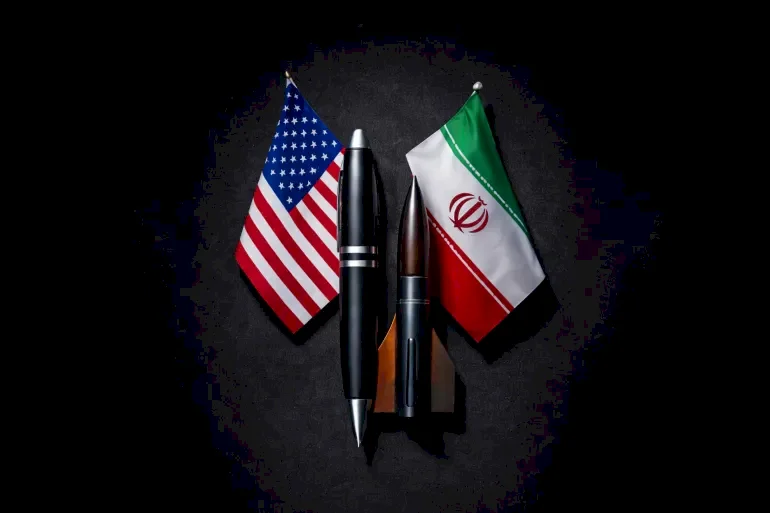
Tehran Sets Its Conditions for Negotiation and Confirms Its Readiness for Any Potential Confrontation
SadaNews - Iranian officials stated that Tehran has set clear conditions for any potential agreement with the United States, confirming the readiness of Iranian forces to respond to any new attack, despite ruling out the scenario of a direct return to war between the two sides.
Ali Akbar Velayati, the advisor to the Iranian Supreme Leader for international affairs, said, "Our red line is clear this time", adding that "papers and signatures alone are not a guarantee for any potential agreement".
Velayati considered in a statement on social media platform X that "the real guarantor of any agreement with the United States is the Strait of Hormuz".
In the same context, Iranian state television reported that a member of the National Security and Foreign Policy Committee in the Iranian parliament, Major General Amir Hayat-Maqdam, stated that Tehran has 5 conditions for negotiation, which include:
- Compensation for damages caused by the war
- Release of frozen Iranian assets
- Lifting sanctions on Iran
- Stopping the war on all fronts
- Acknowledgment of Iranian sovereignty over the Strait of Hormuz
These statements came after the U.S. Central Command (CENTCOM) announced yesterday, Tuesday, the launching of nighttime airstrikes targeting missile launch sites and boats in southern Iran.
In response, Tehran accused Washington of violating the ceasefire, considering that U.S. strikes represent a dangerous escalation and a violation of existing agreements, promising to respond to these attacks.
The Iranian Foreign Ministry stated that "the terrorist American army, continuing its illegal and unjustified actions since the ceasefire, has committed in the past 48 hours a serious violation of the ceasefire in the Hormozgan region", without specifying the nature of the incident.
In this regard, an Iranian Revolutionary Guard official stated that the likelihood of renewed war with the United States is "slim", while also confirming the readiness of Iranian forces to face any new attack on them.
Tasnim news agency quoted the deputy commander of the naval forces in the Revolutionary Guard, Mohammad Akbarzadeh, stating that "the likelihood of the return of war is slim due to the enemy's weakness, and the armed forces are on alert and stocked with ammunition".
He added that Iran will respond to any new attack, asserting that "the area extending from Chabahar to Mahshahr will become a "graveyard for aggressors", referring to the Iranian coastal areas overlooking the Gulf and the Arabian Sea.
On the other side, NBC News quoted U.S. Vice President JD Vance as saying that he is very optimistic that Iran will agree, as part of any potential deal, not to develop nuclear weapons.
He added that the difficult question is whether the Iranians will agree to an enforcement and monitoring mechanism that gives Washington confidence that they will not violate the agreement in the future.
These developments come in the context of intense regional and international communications to contain the escalation and prevent it from slipping back into a broader confrontation, while ensuring that channels of communication remain open between the two sides.
Pakistan is leading mediation between Washington and Tehran to end the war that began on February 28 with attacks launched by the United States and Israel on Iran, before reaching a temporary ceasefire on April 8.
 Follow the latest Sada News via Google News
Smotrich: Israel Has No Interest in Joining the War Against Iran

Occupation Issues Military Order to Seize 5 Dunams of Land in Jaba'

Axios: Proposal for a 10-day Ceasefire Between Washington and Tehran and Two Options for M...

In a Rapid Pace.. The Occupation Builds a Huge Earth Barrier Inside Gaza

Meeting Between Aoun and Trump Expected Alongside 'Experimental Areas'

Gaza Health Warns of Collapse of Oncology Services Due to Depletion of Treatments and Susp...

The Occupation Demolishes a House in the Town of Sa'ir near Hebron
