

Al-Natsha: Jerusalem Must Remain the Center of the Conflict and the Axis of Political Decision in the Coming Phase
SadaNews - Major General Bilal Al-Natsha, Secretary General of the National Conference for Jerusalem, stated that the holy city is facing a systematic project aimed at the Judaization of the city, targeting the people, the place, and the identity. This requires a strategic vision based on: enhancing the resilience of Jerusalemites materially, politically, and legally, protecting the Arab and Islamic identity of the city, establishing the Palestinian demographic presence in the face of policies of uprooting, internationalizing the issue of Jerusalem, and raising it in international forums more effectively, stressing that the current phase "witnesses an unprecedented uprooting of the Jerusalemite citizen from his city," making resilience a supreme national priority.
Regarding the role of the "Fatah" movement and the eighth conference in enhancing the resilience of Jerusalemites, Al-Natsha emphasized in media statements that the Fatah movement represents the backbone of the Palestinian national project, and that the eighth conference constitutes a pivotal moment and an opportunity to politically and organizationally renew the movement, rebuild trust with the Palestinian street, and introduce young leadership while maintaining historical expertise. He also called for a comprehensive review of the organizational experience, strengthening internal unity, ending the division, and formulating a clear political vision to confront the occupation, asserting that the success of the conference will send a message that the movement "is capable of renewing itself and continuing its historical role," especially in protecting Jerusalem and its residents and confronting the danger of Judaization and the Israeliization of land and people simultaneously.
On the relationship with Jerusalem, Al-Natsha stated in his remarks that the holy city must remain the center of the conflict and the axis of political decision, and that any resurgence of the movement must begin with supporting the resilience of the city and confronting demographic changes and demolition and settlement policies, describing the demographic situation as the most dangerous due to the expansion of settlement, the construction of thousands of housing units, house demolition policies, forced displacement, and the seizure of properties within the Old City. He noted that the occupation seeks to change the demographic composition in favor of settlers and impose a new demographic reality that prevents any future political solution.
Regarding education, curricula, and school closures in Jerusalem, Al-Natsha views education in Jerusalem as a fundamental arena of confrontation through targeting Palestinian curricula, attempting to impose alternative curricula, exerting pressure on Palestinian schools, closing some, and linking funding to acceptance of the Israeli narrative. He affirmed that preserving national curricula is protection for Palestinian identity and that education represents the first line of defense against Judaization.
About the economic and commercial situation in Jerusalem, Al-Natsha pointed out that the Jerusalem economy suffers from exorbitant taxes, arbitrary Israeli measures, the closure or restriction of commercial institutions, and weak investment due to the restrictions imposed by the occupying authorities. He explained that his future vision includes supporting small and medium enterprises, enhancing the local resistance economy, and linking the Jerusalem economy with the Palestinian and Arab depths.
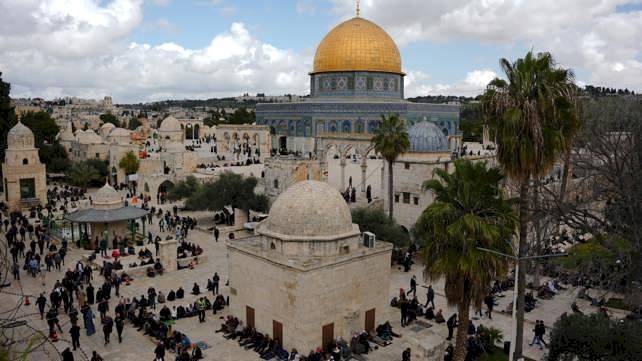
Regarding the continuous settlement aggression against the blessed Al-Aqsa Mosque, the Secretary General of the National Conference for Jerusalem stated that there are attempts to impose a new religious reality in the mosque through temporal and spatial division, warning of dragging Palestinians into unequal confrontations and exploiting incursions to change the existing situation in the restricted Al-Aqsa Mosque, which is under Hashemite custodianship.
Concerning the tourism situation, Al-Natsha stated that the occupation seeks to reshape the tourism narrative of Jerusalem, while marginalizing the Arab and Islamic character in tourism pathways. He called for confronting this by enhancing external tourism and the involvement of Palestinians from within the country to the Old City, Jerusalem, and the blessed Al-Aqsa Mosque, protecting historical landmarks from Judaization, and supporting the Palestinian narrative globally.
Al-Natsha believes that the advancement of Jerusalem requires popular resilience, national unity, renewing the Fatah movement, activating its leadership role, and providing economic support to merchants and Palestinian educational institutions capable of confronting the danger of curriculum Judaization and facing Judaization politically and internationally.
He affirmed that the coming phase requires: a unified national leadership, a clear political project, and restoring the status of Jerusalem as the first axis of conflict with the occupation.
 Follow the latest Sada News via Google News
Sheikh Meets with Representatives of Civil Society Institutions, Praising Their Role as a...

Ministry of Education Sets Friday for Announcing High School Results

مركز كارتر يصدر تقريره النهائي بشأن الانتخابات البلدية في الأراضي الفلسطينية المحتلة التي...

Al-Sharqawi from Geneva: Protecting the special status of Jerusalem requires greater coord...

Lt. General Al-Natsha Undergoes Lengthy Interrogation at Moskobiya Regarding His Represent...

The Occupation Demolishes a House in the Town of Sa'ir near Hebron

Sheikh Offers Condolences for the Martyrdom of Citizens in Deir Jareer
