

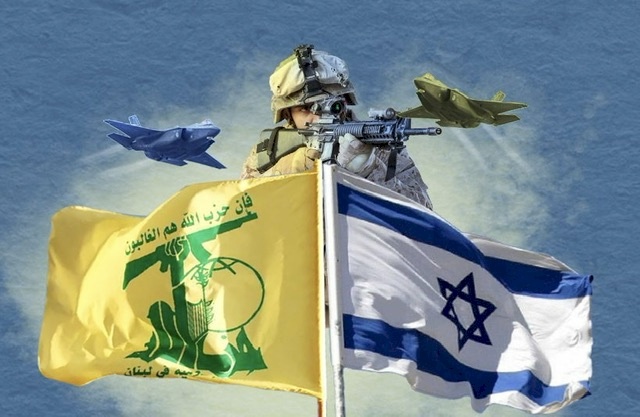
Hebrew Report: Israel Resorting to Ceasefire with Hezbollah Due to Inability to Confront It
SadaNews - The newspaper "Israel Hayom" revealed that there is a consensus within the Israeli military establishment that ending Hezbollah through military force has become "unrealistic," given the dwindling capacity of the army to manage a war of attrition.
According to a senior Israeli official quoted by the newspaper, the government has not issued any instructions to completely "eliminate" Hezbollah militarily, although the declared strategic goal remains to undermine its capabilities.
The official adds that "there is practically no military means capable of completely stopping rocket fire," noting that current operations of interceptions and limited strikes "only drain the party but do not incapacitate it."
The report indicates that the Israeli military establishment is facing an increasing challenge related to operational fatigue, with a heavy reliance on reserve forces and multiple open fronts.
According to estimates provided by the newspaper, conducting a comprehensive decisive operation against Hezbollah requires a "huge expansion in troop size," which is considered impossible under current circumstances.
This reality, according to officials, makes the option of a ceasefire not only a political necessity but also an "operational necessity" aimed at relieving pressure on the army and rearranging its priorities after months of ongoing fighting on several fronts.
The report suggests that Israel has effectively shifted from a "military decisiveness" strategy to a long-term attrition management, where the goal has become to reduce Hezbollah's capabilities and prevent major threats, such as ground incursions or extensive attacks, instead of seeking to completely eliminate it.
Israeli military officials confirm that Hezbollah has not been defeated militarily, according to the newspaper "Israel Hayom."
In addition to military considerations, the report points out that the war has resulted in an increasing political and diplomatic cost for Israel, especially in Europe and the United States, amid images and reports of destruction in southern Lebanon, and what has been described as a decline in Israel's international image.
According to the newspaper, these pressures have reflected in relatively strict Western political stances, including discussions within the U.S. Congress about restricting some arms sales, as well as European movements to reevaluate agreements with Israel.
In this context, the report presents the ceasefire brokered by U.S. President Donald Trump as a result of a balance between limited military pressure and internal fatigue, more than being a "settlement of victory."
It also notes that Lebanon sought to extend the calm for a longer period, but Israel preferred a shorter period, in an attempt to maintain a gradual military and political pressure without slipping into an open war.
"Israel Hayom" concludes that the current equation is based on the unrealistic nature of complete military decisiveness against Hezbollah, increasing fatigue in the Israeli army as a result of multiple fronts, and rising external political costs of the war.
Thus, Israel appears, according to the report, to be faced with two limited options: continuing to manage attrition through intermittent operations, or establishing a temporary calm as a means of containing the front with Hezbollah, while awaiting different strategic conditions that may allow for the redefinition of the rules of engagement.
 Follow the latest Sada News via Google News
Monitoring the Fall of Two Drones from Lebanon in Western Galilee

Ben Gvir Threatens: A Thousand Hezbollah Killed for Every Hair of an Israeli Soldier

Smotrich Calls for Demolition of Buildings in the Southern Suburb of Beirut

Raids and Arrests in the West Bank

Growing Israeli Concern as Washington and Tehran Agreement Approaches

New York Times: Iran Emerges from War More Hardline

Israeli Opposition Leader Criticizes Upcoming Agreement with Iran
