

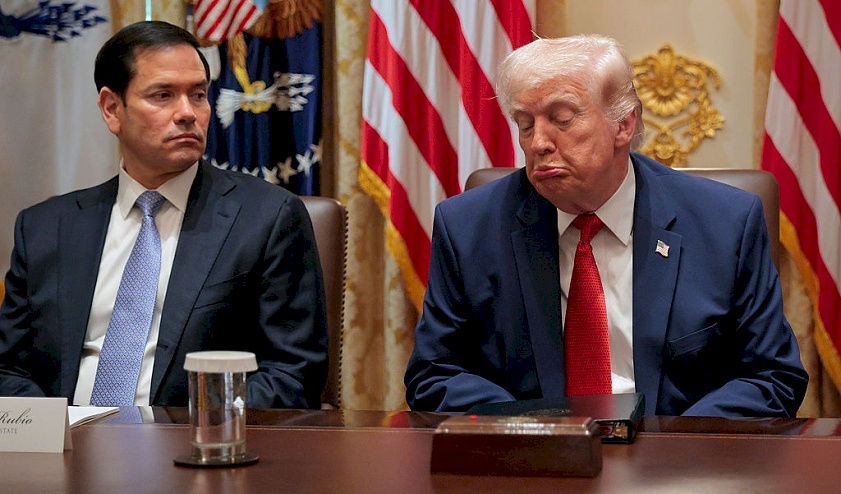
Report Highlights Trump Administration's Confusion in Managing the War with Iran
SadaNews: An analytical report published by the British newspaper Telegraph paints a chaotic and troubled picture of the peace process led by U.S. President Donald Trump with Iran, as the administration seems engulfed in contradictions without a clear plan.
Connor Stringer, the newspaper's senior Washington correspondent, states that the American campaign has shifted from a "calculated" military plan to prevent Iran from acquiring a nuclear weapon, to an overwhelming chaos based on the president's mood.
A source informed the newspaper said, "It seems no one in the administration knows what is going on, what the plans are, or what we are aiming for now. There is utter chaos, and there is no accountability."
Officials indicate that Trump has become detached from the traditional management structures that define Washington's strategy in wars, and he has started venting his frustrations instead on social media, making his daily posts a tool for determining the course of the war.
The analysis explains that Trump has grown impatient with lengthy, organized national security meetings, preferring to rely on his instincts and the advice of a close circle of loyalists who "sugarcoat" the realities of the battlefield.
Susan Wiles, a senior staff member in the White House, expressed her concern that his aides present him with a "rosy view" of the conflict far removed from the real deadlock on the ground, leading him to be convinced that everything is going according to plan despite 52 days passing without resolution in the war.
According to the analysis, Trump is shown a daily video showcasing the successes of American forces, with no mention of military failures or complexities.
For his part, former U.S. National Security Advisor John Bolton told the newspaper, "The president is now doing what he wants," whereas in his first term he listened to his aides within a defined process, discussing the benefits and drawbacks of the decisions.
Connor Stringer outlined the decision-making circle surrounding the president as he oversees a war whose effects have extended almost globally.
War Secretary Pete Hegseth emerges as one of the strongest advocates for continuing the conflict, adding a "religious" dimension to military operations, far removed from pragmatic tactics. Trump has publicly stated that Hegseth "does not want the war to end," according to the analysis.
The writer notes that dissenting voices within the administration have been marginalized, as J.D. Vance – a U.S. vice president known for his "isolationist" political views – has been assigned to manage peace negotiations, keeping him occupied and away from criticizing the war.
Meanwhile, National Intelligence Director Tulsi Gabbard, one of the fiercest opponents of foreign wars, remains silent to avoid being dismissed.
With this stalemate, panic prevails in the White House as officials realize that Europeans will not intervene to save the situation, according to the analysis.
This frustration is compounded for Trump, as he has begun confiding to those close to him that he "no longer wishes to deal with this issue" and is seeking a quick exit.
Trump announced a extension of the ceasefire in response to what he described as intensive mediation efforts led by Pakistan, but negotiations remain stalled, raising questions about the ability of a "disorganized" administration, as characterized by the analysis, to reach a solution to the ongoing crisis.
 Follow the latest Sada News via Google News
Occupation Demolishes Homes, Buildings, and Commercial Facilities in Eastern Bartaa Near J...

Iranian Media: Tehran's Decision on the Agreement is "Under Review"

Occupation forces storm the central vegetable market "Hesbeh" east of Nablus (Video)

"Ministry of Development": No truth to the announcement of registration for financial aid...

Qatari Negotiators Head to Tehran to Finalize Agreement to End War

Monitoring the Fall of Two Drones from Lebanon in Western Galilee

Ben Gvir Threatens: A Thousand Hezbollah Killed for Every Hair of an Israeli Soldier
